

Forest, wall and soda lake
648.7 square kilometres at the foot of the Rift Valley, tree-climbing lions and the official 2026/27 tariff in shillings, documented by TANAPA and UNESCO.
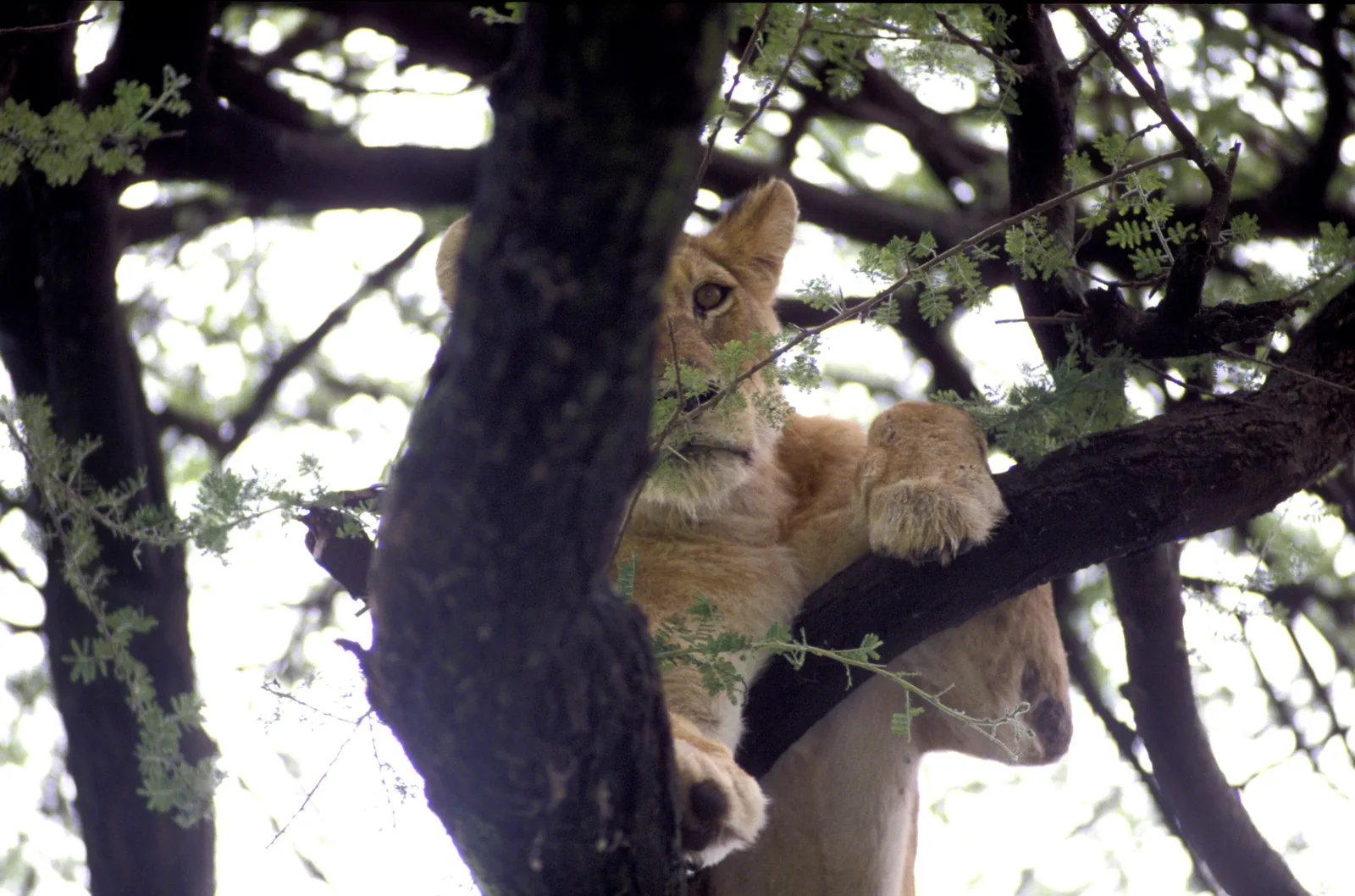
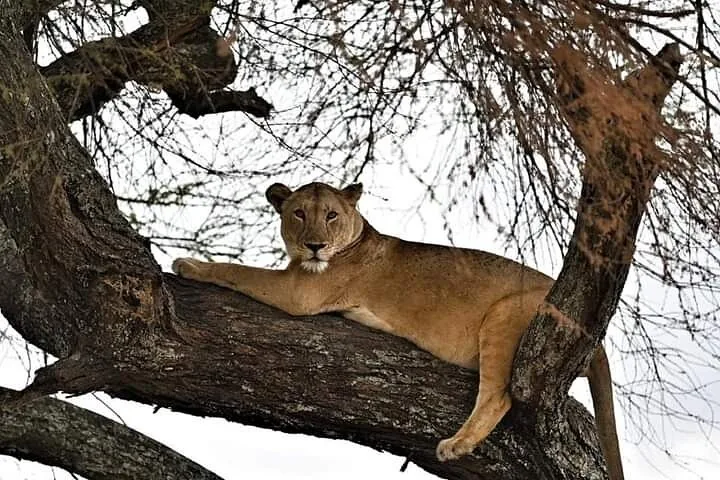
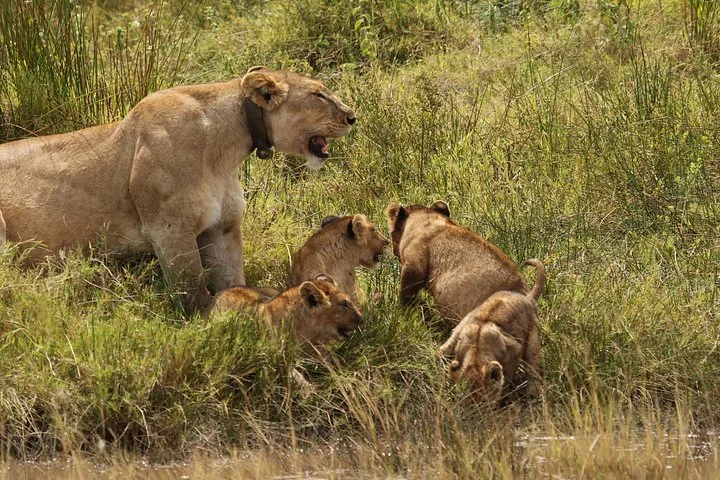
Lake Manyara National Park is small and narrow: a strip of land between the western wall of the Rift Valley and a shallow soda lake, on the way from Arusha to the Ngorongoro Crater. Within 30 km (19 mi), groundwater forest, acacias, grassland and lakeshore follow one another; the park is known for lions that rest in the trees and for the birds on the lake.
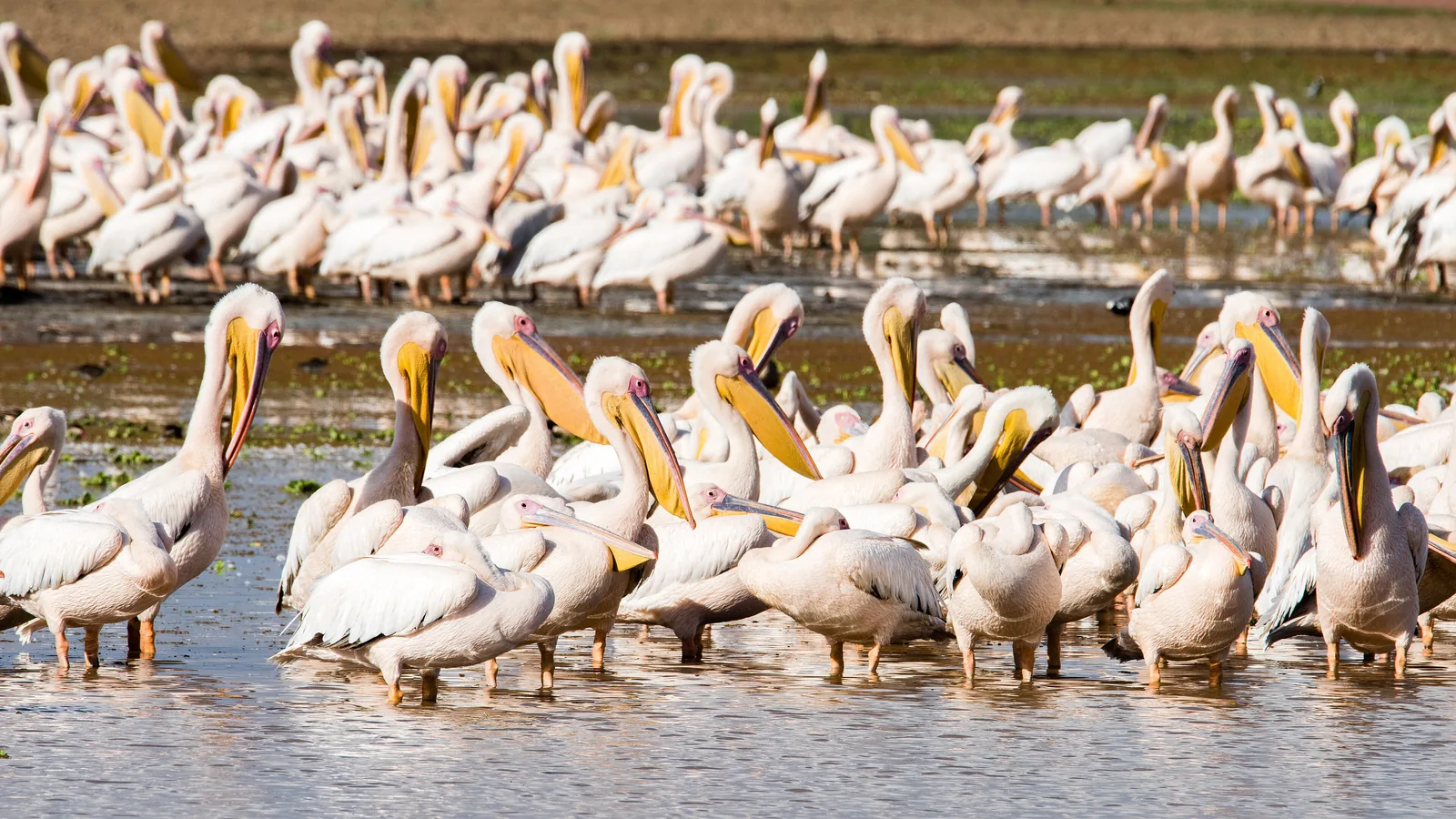
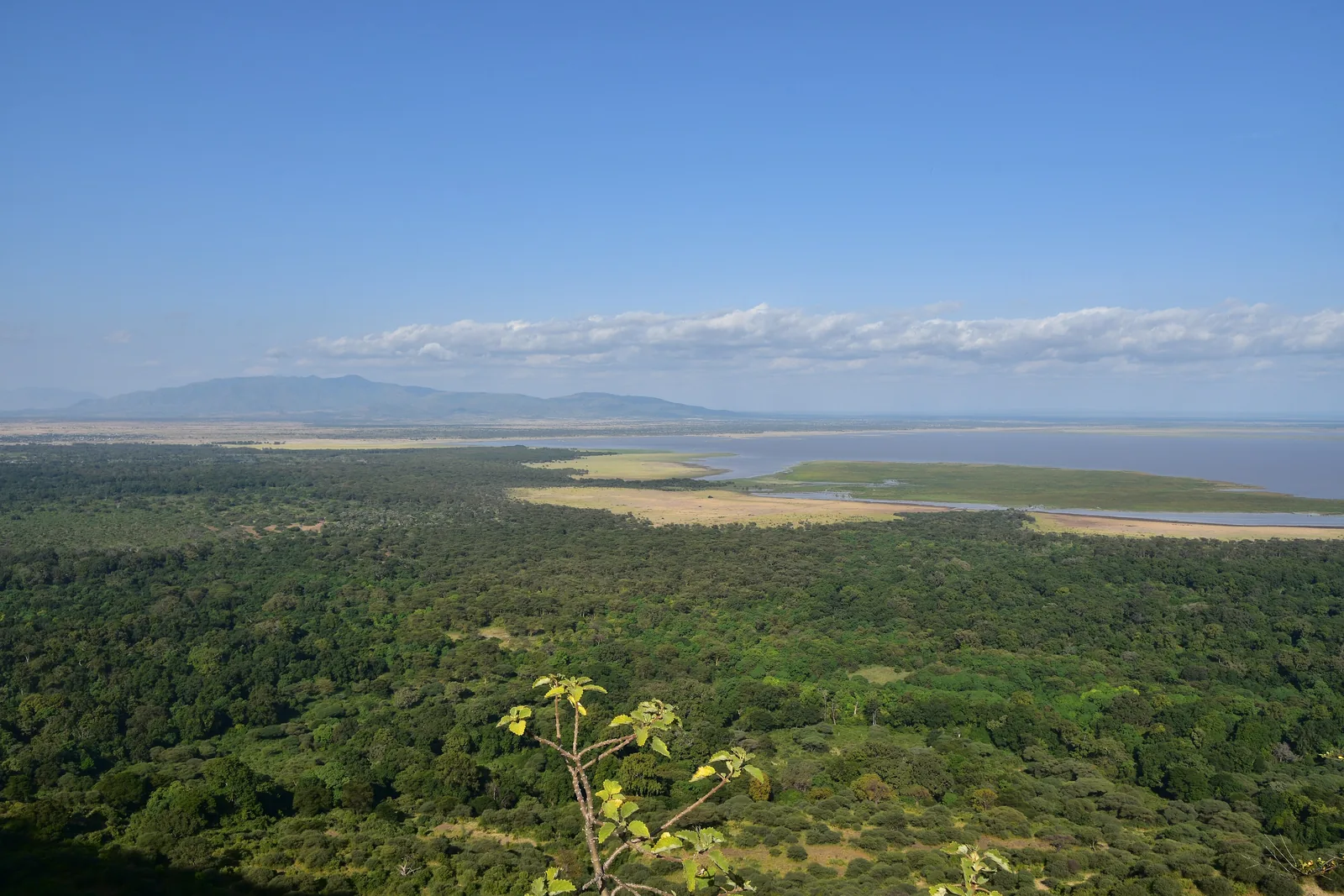
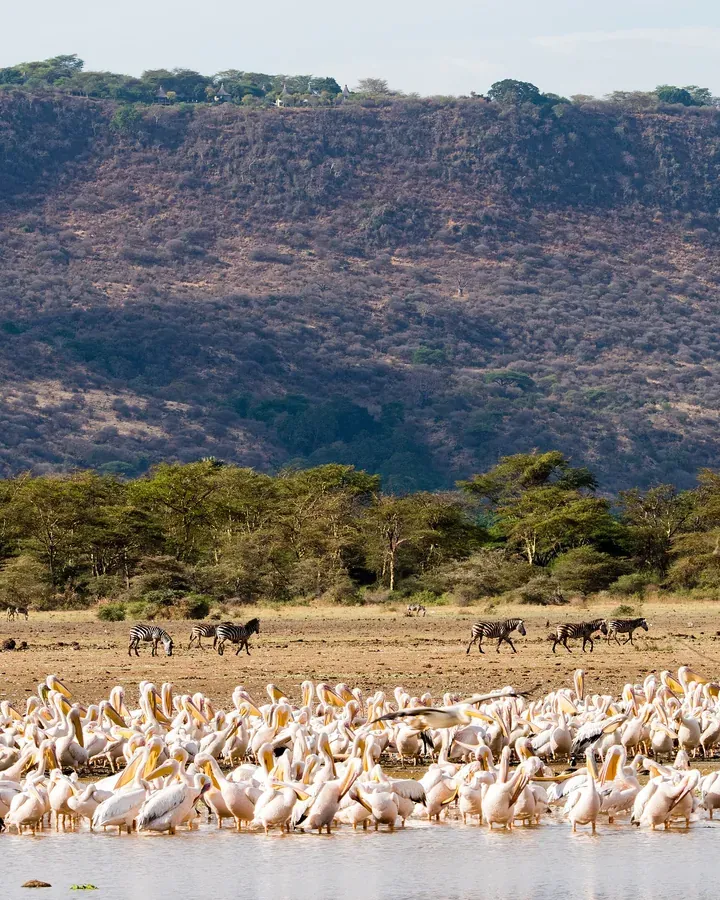
Coming from Arusha, you first see the park from above: beyond Mto wa Mbu the road climbs the Rift Valley wall, and below lies a dark green forest, behind it the lake, where white pelicans and pink flamingos gather along the shore. The park was established in 1960 and became a UNESCO biosphere reserve in 1981. It takes its name from Euphorbia tirucalli, "Emanyara" in Maa, a plant the Maasai use as a hedge around their bomas.
The cost of a visit is set out in the authority's tariff database, valid from 1 July 2026 to 30 June 2027: 127,750 Tanzanian shillings per adult per 24 hours in the high season from 16 May to 14 March, children aged 5 to 15 38,325, including 18% tax. On top come the vehicle, 102,200 shillings if registered abroad, and any extra activity: treetop walkway 51,100, canoeing 51,100, night drive 127,750.
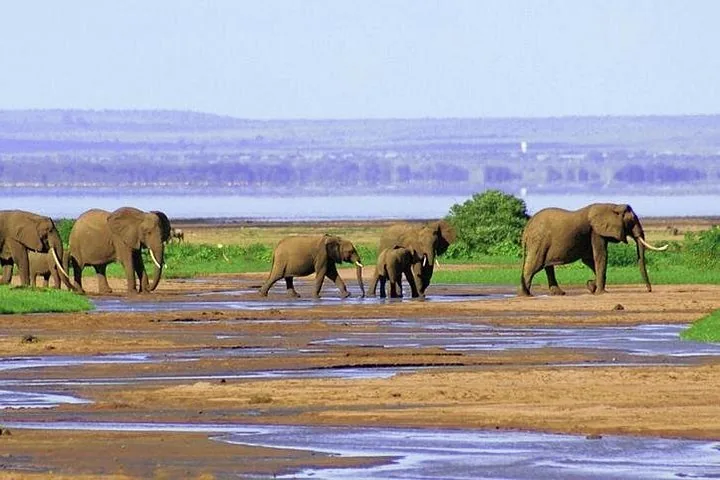
Right behind the gate the groundwater forest begins, fed by springs at the foot of the wall. Here the treetop walkway leads through the canopy up to 18 m (59 ft) above the ground. To the south the forest opens into acacias where the lions rest, into grassland with buffalo, zebras and wildebeest, and onto the lakeshore. In the far south, about 30 km (19 mi) from the gate according to the authority, the hot springs of Maji Moto steam.
Most visitors come with an operator for a day or on the way to the Ngorongoro Crater and the Serengeti. Those who stay longer sleep in the authority's cottages, at the campsites inside the park, or in Mto wa Mbu and on the escarpment, outside the park. For walking safaris, night drives and canoeing the authority provides armed rangers.
The park in numbers
- Area
- 648.7 km², of which 262.7 km² lake
- Entry
- 127,750 TZS per 24 hours, incl. 18% tax
- Children 5 to 15
- 38,325 TZS
- Vehicle
- 102,200 TZS up to 2 t, registered abroad
- Treetop walkway
- 51,100 TZS per person
- National park since
- 1960
- Biosphere reserve
- since 1981
- Access
- 115 km (71 mi) from Arusha, about 2 hours
- Altitude
- 960 m (3,150 ft) according to the authority