The largest intact caldera on Earth: more than 25,000 animals on 260 square kilometres (100 sq mi), an entrance fee per person per day, a crater fee per vehicle, and descents only until 16:00.
A caldera where the gates open at six, the descents close at four, and with a fee that self-drivers rarely plan for, documented by the management authority.
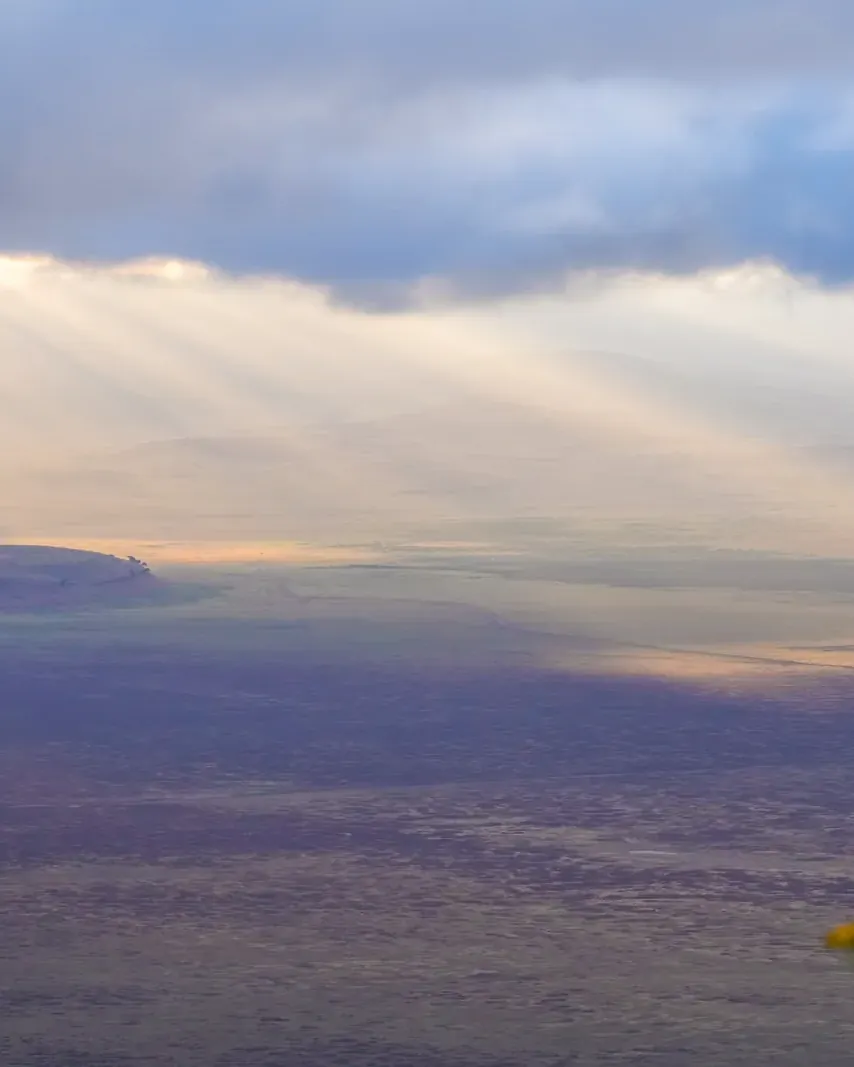
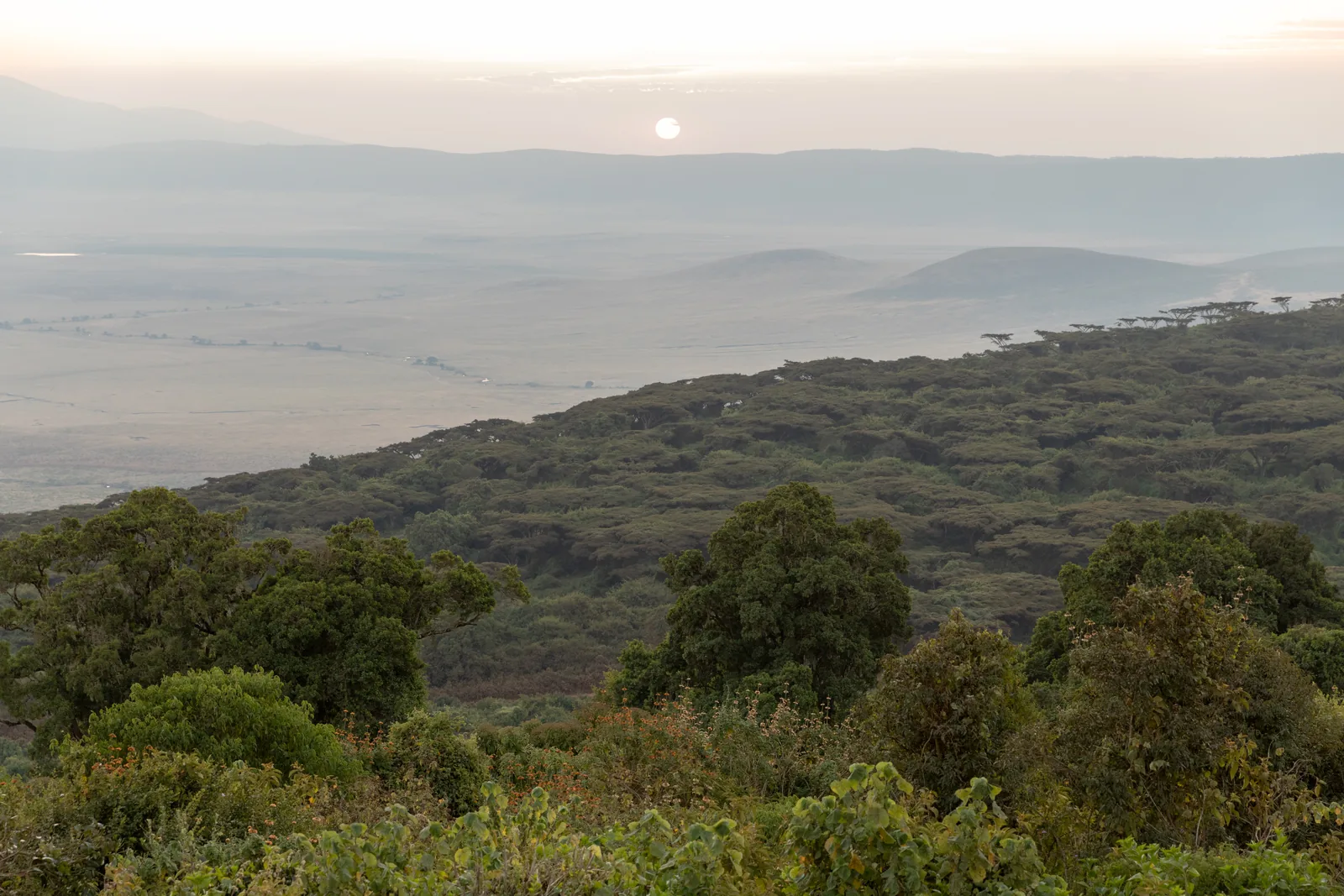
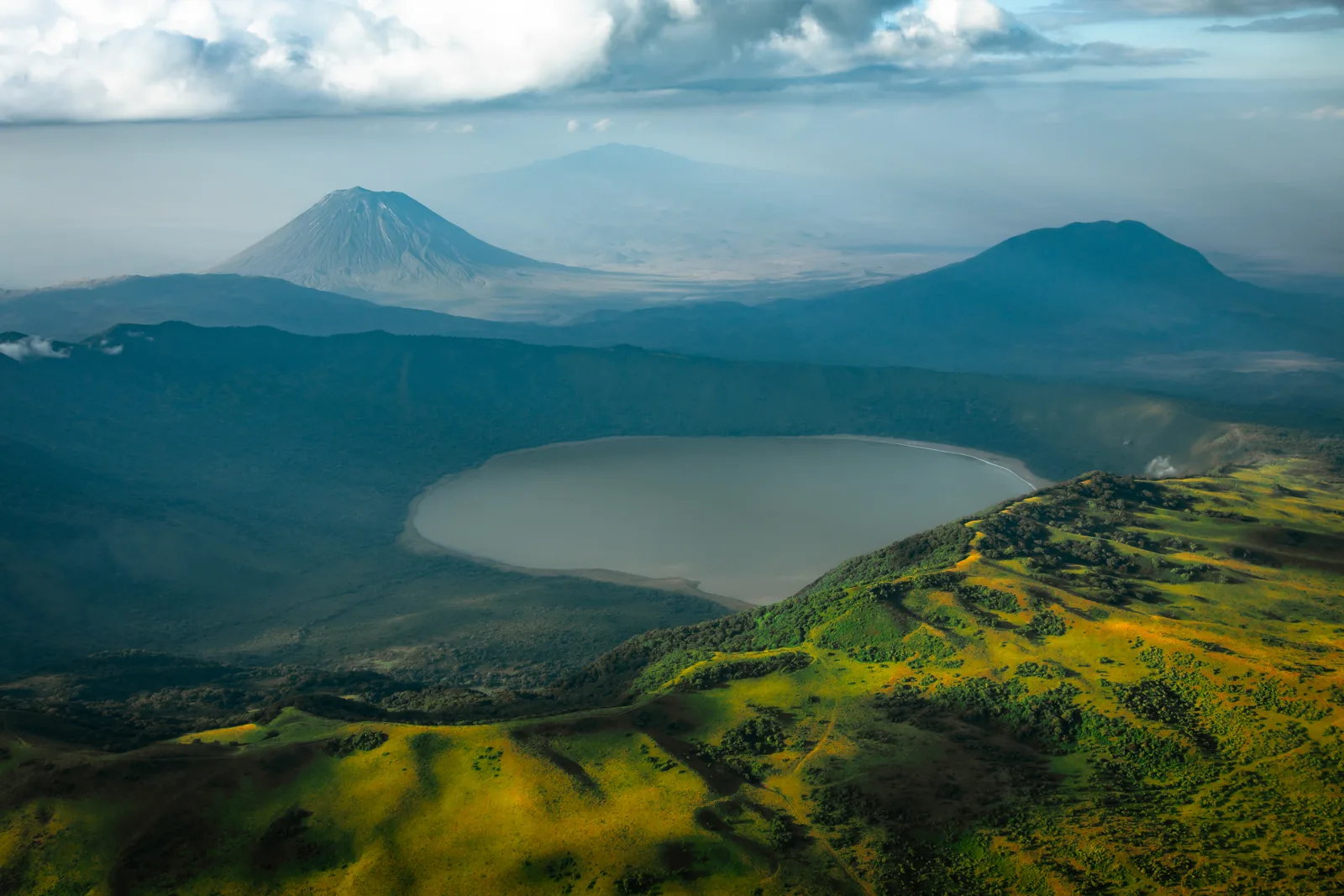
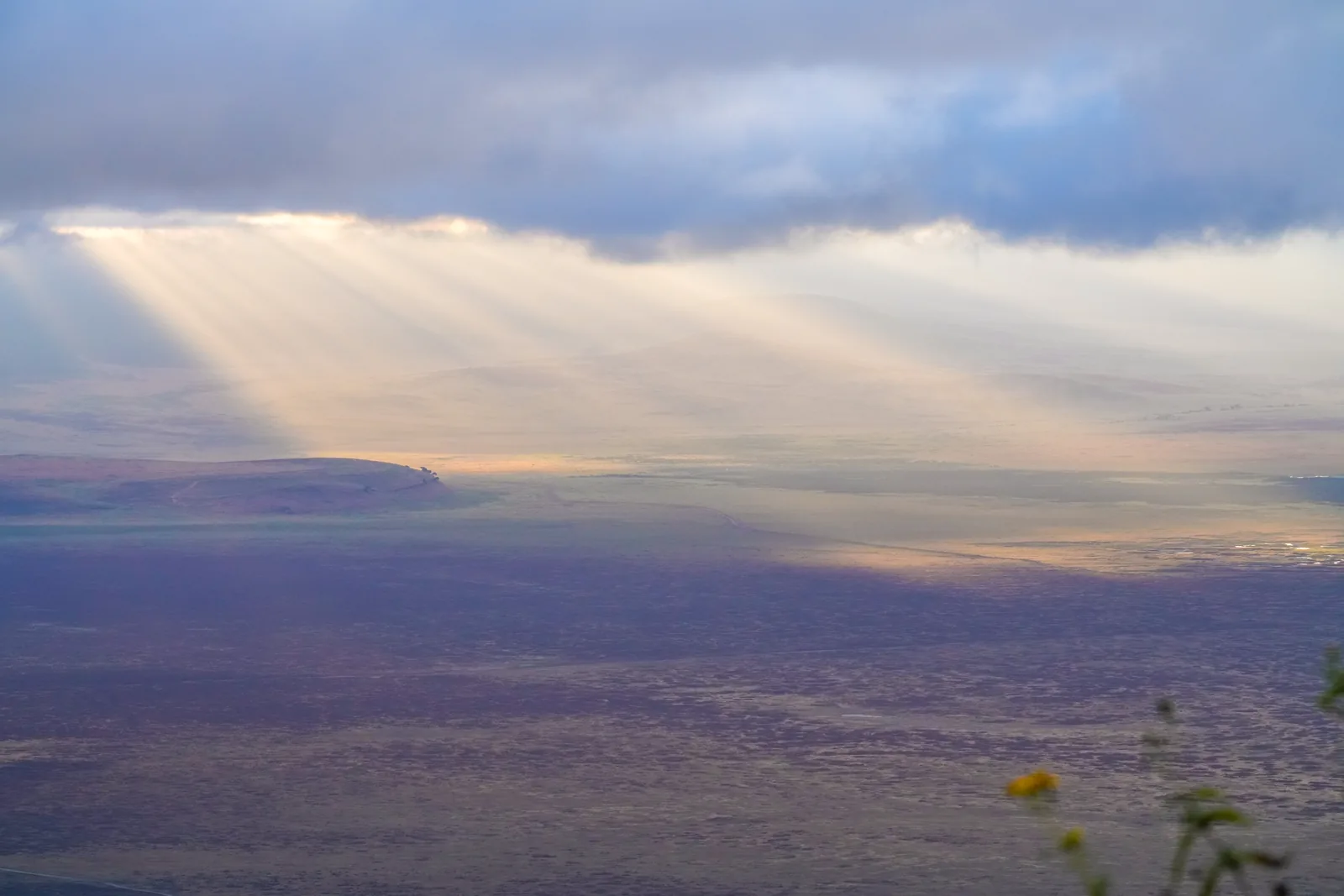
The Ngorongoro Crater is the largest intact caldera on Earth: a floor of 260 square kilometres (100 sq mi), 610 metres (2,001 ft) deep, with more than 25,000 animals, most of which never leave. It is not a national park but the heart of a conservation area, where the Maasai live with their herds and a dedicated authority makes the rules.
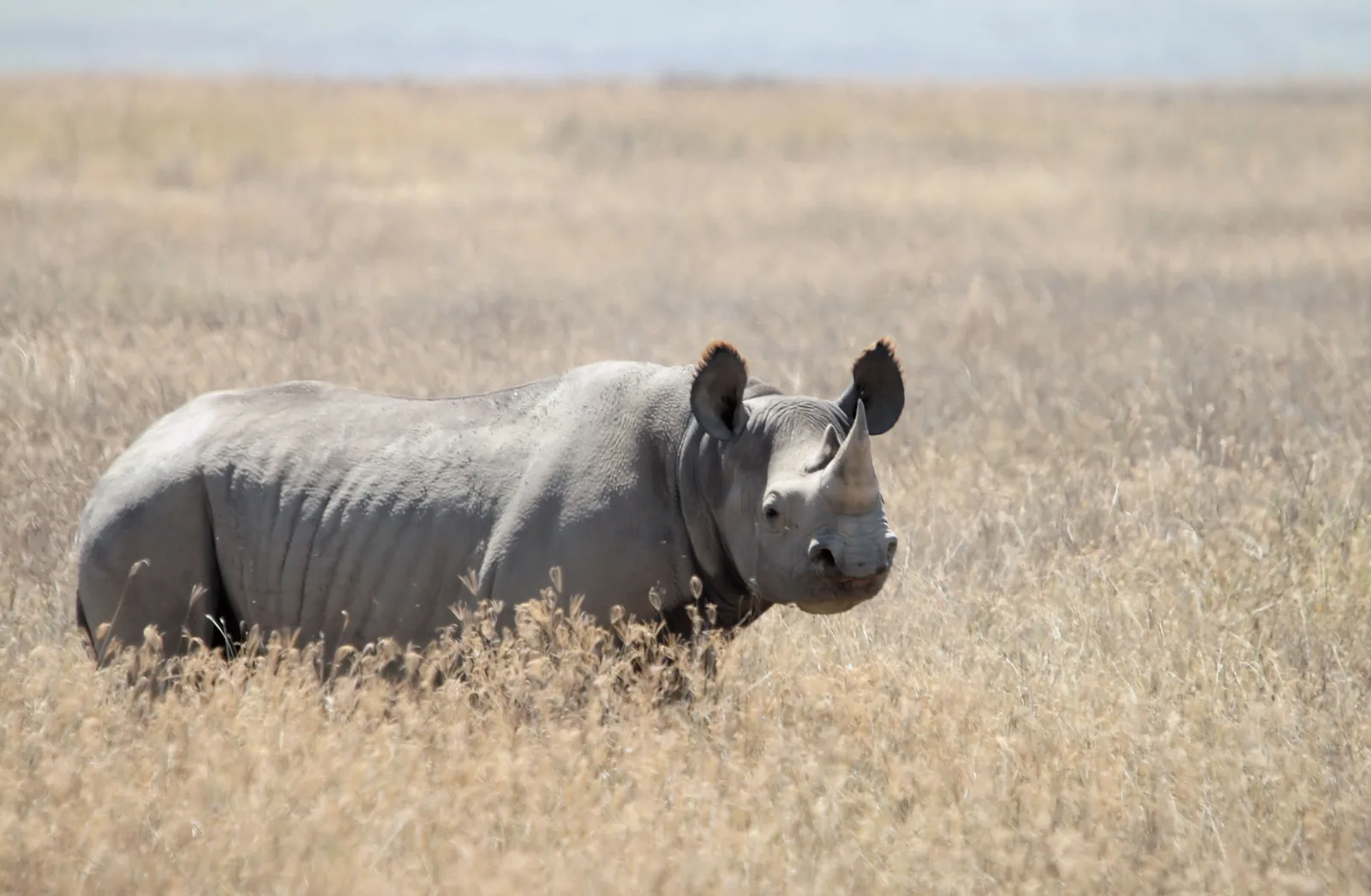
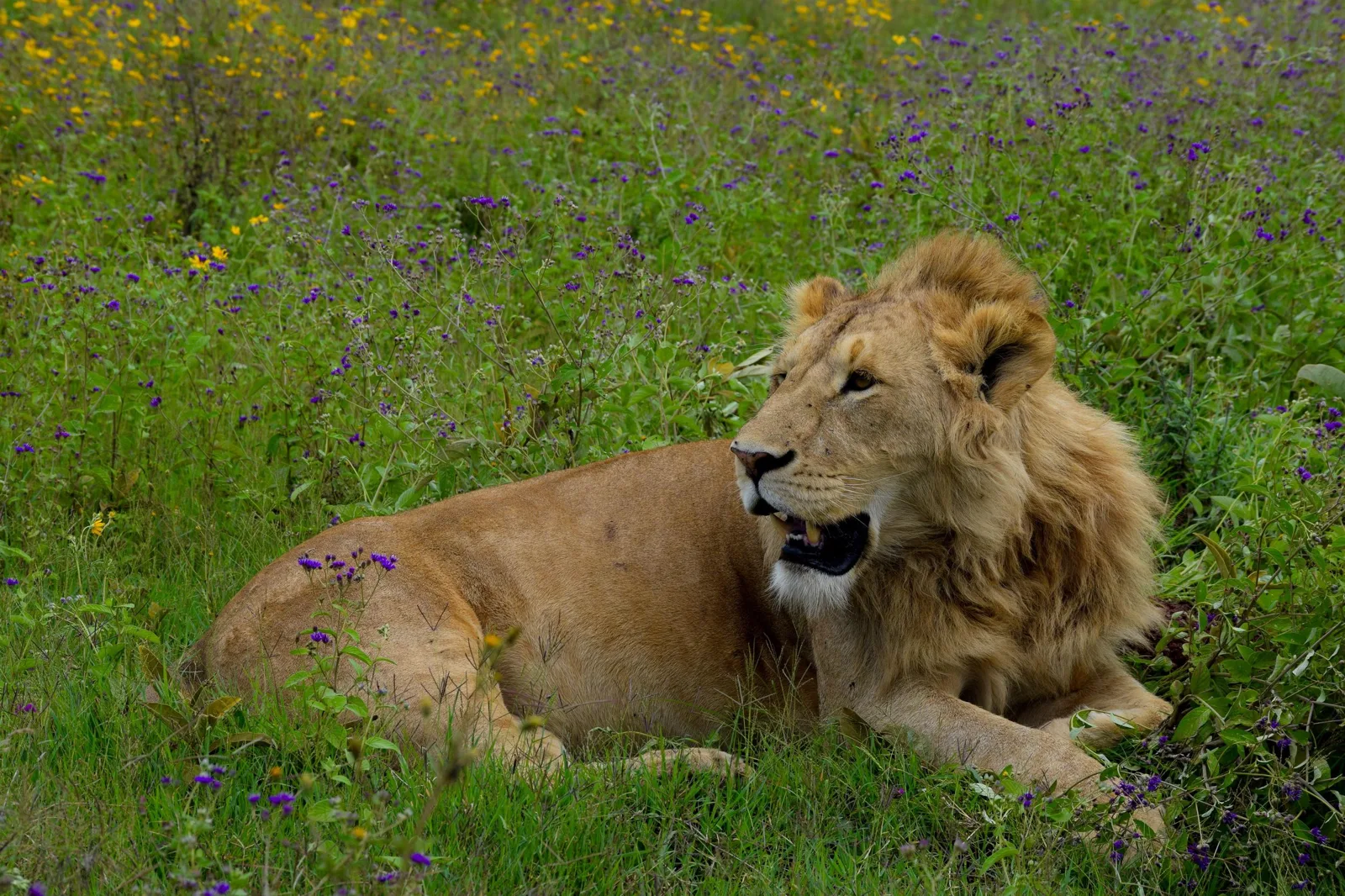
Around 2.5 million years ago a volcano as big as Kilimanjaro collapsed in on itself. The basin that remained has grassland, swamps, a soda lake and a fever tree forest, and because there is water all year, the animals stay: buffalo, black rhinos, old elephant bulls, hippos and, according to UNESCO, the densest known lion population. There are no giraffes; the walls are too steep for them.
What a visit costs is set out in the authority's tariff list: US$70.80 per person per day for visitors from outside East Africa, plus US$47.20 for a foreign-registered vehicle and, the special feature, US$295 per vehicle for each descent into the crater. Each permit is valid for a single entry within 24 hours. Day trips from Arusha include all this in the price; if you drive yourself, you pay at the gate, and the authority asks you to pay online in advance.
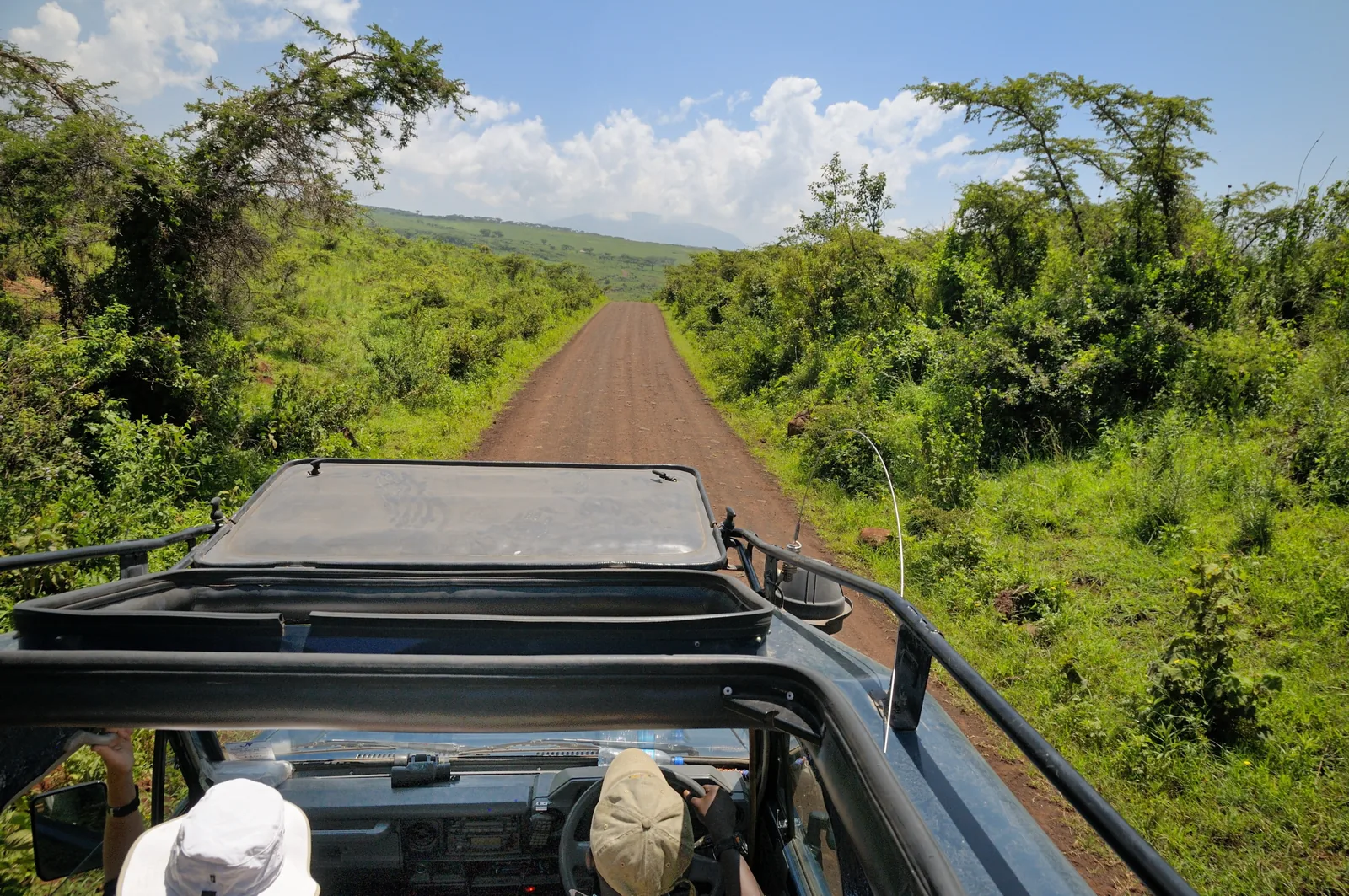
The day has fixed limits. The gates of the conservation area open at 6:00 and close at 18:00, the descents into the crater close at 16:00, and every vehicle must be back up by 18:00. Only four-wheel-drive vehicles of up to 3.5 tonnes with a licensed guide may go down to the floor, no more than five at a sighting, 25 metres (82 ft) away, and nobody gets out. Walking is prohibited in the crater and allowed on the rim, in Empakaai and in Olmoti only with an armed ranger.
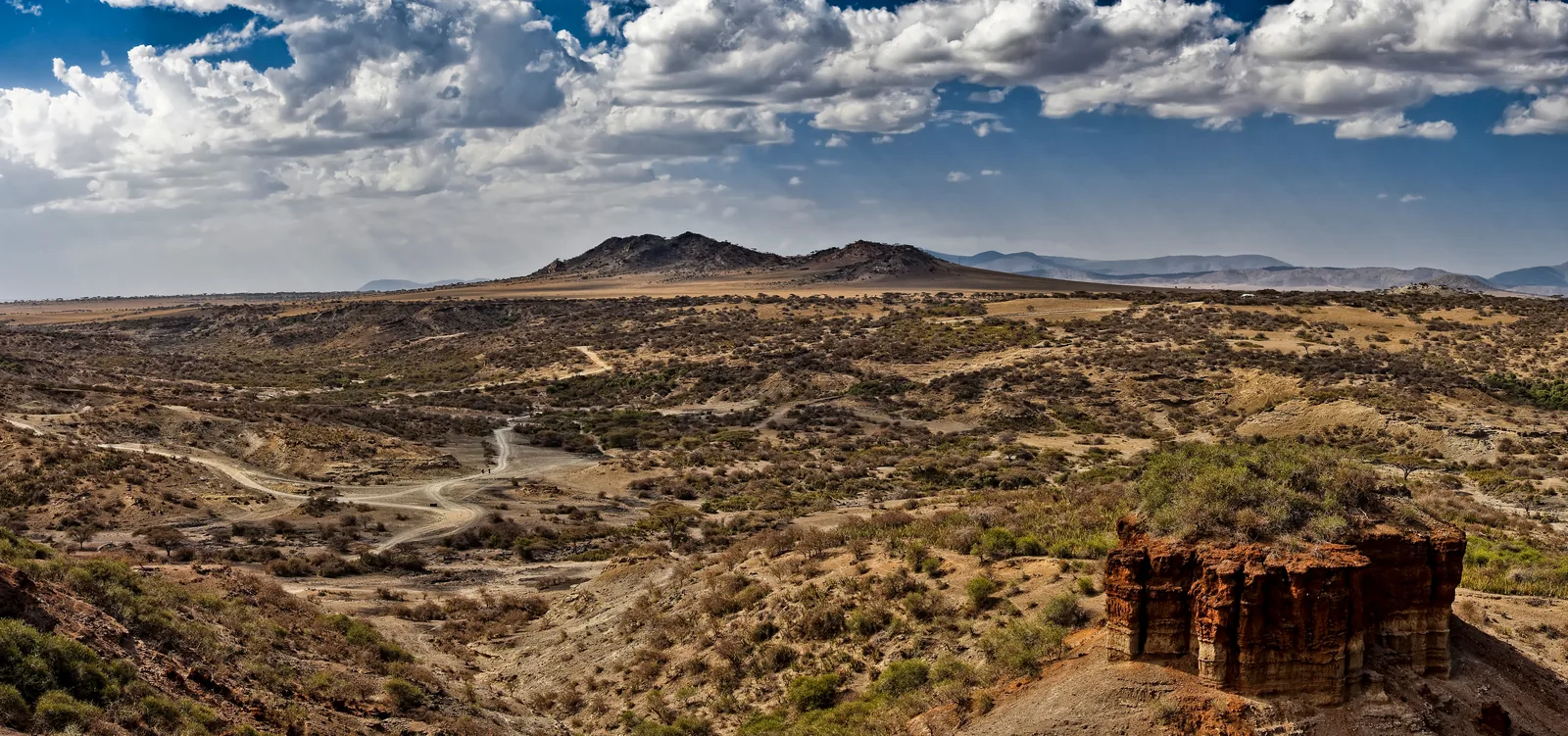
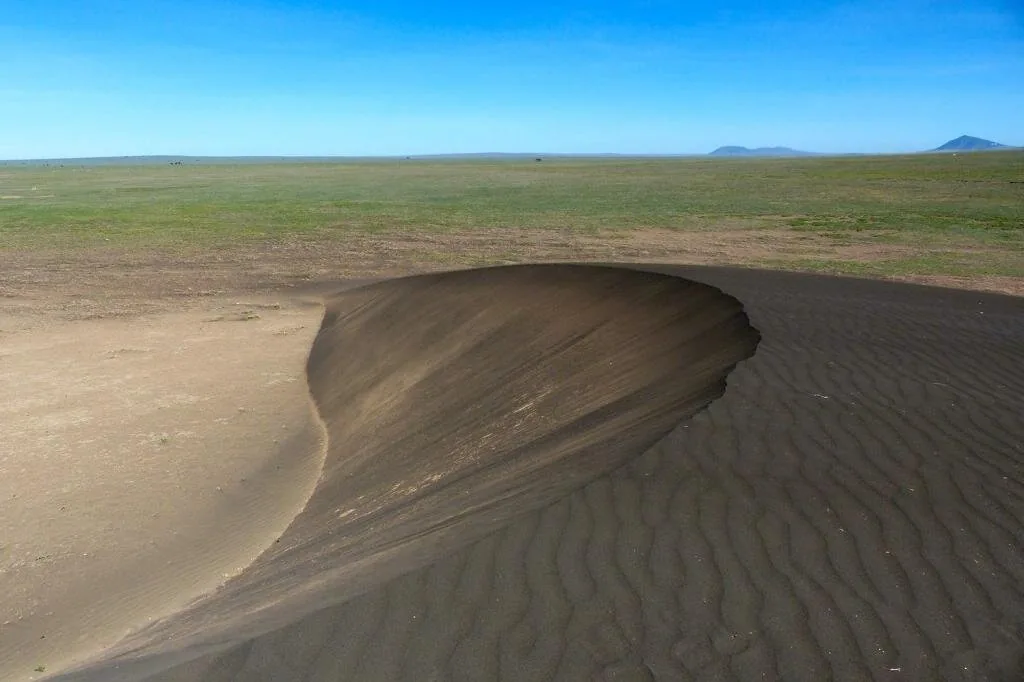
The conservation area is more than the crater. In the west lie Olduvai Gorge, where the Leakeys found Zinjanthropus and Homo habilis, the migrating ash dune of Shifting Sands, and Laetoli with its 3.6-million-year-old footprints; UNESCO listed the area as natural heritage in 1979 and as cultural heritage in 2010. To the north lie the Olmoti and Empakaai craters, and at Ndutu the wildebeest of the great migration calve from December to March.
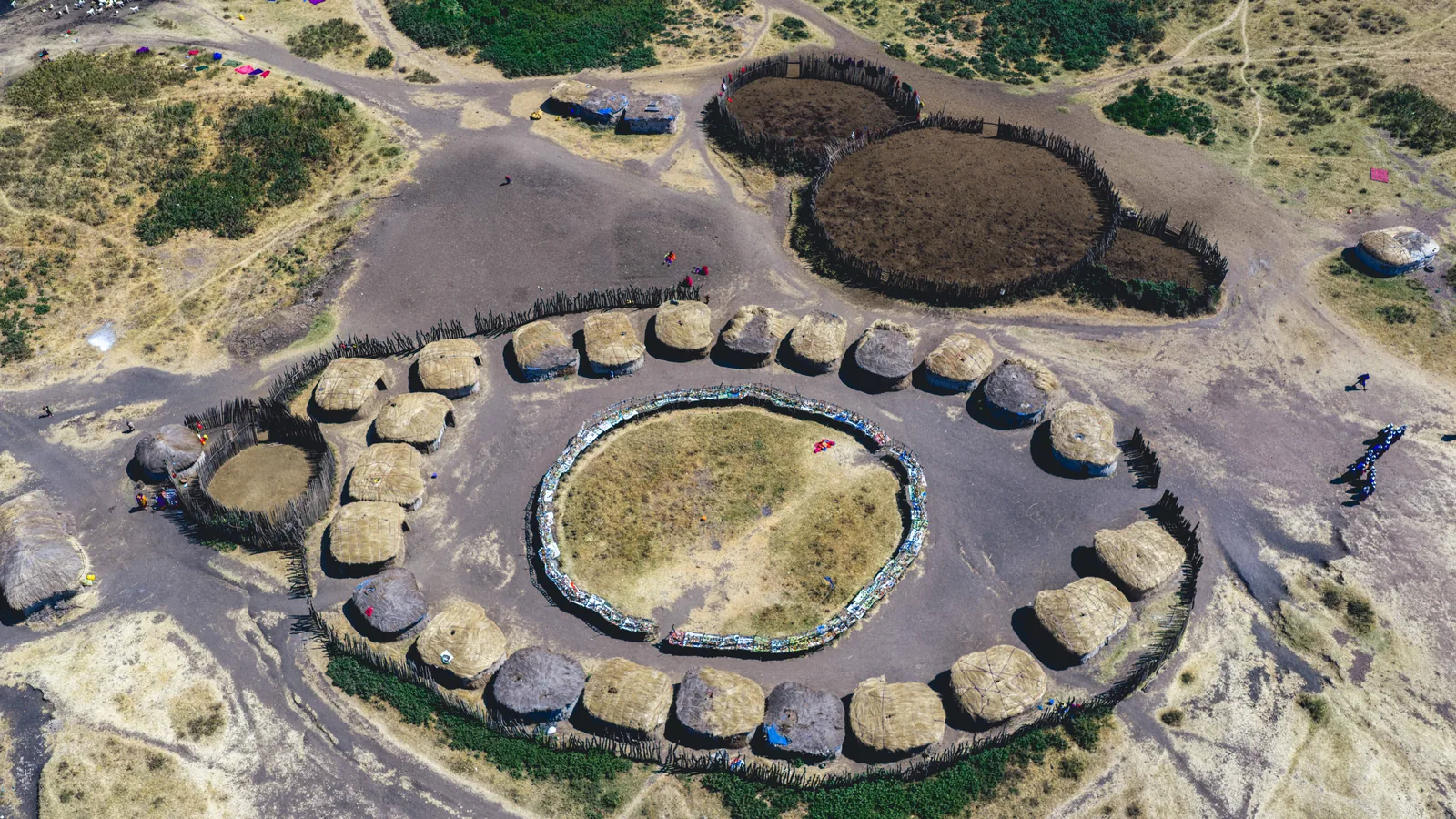
The Ngorongoro Conservation Area Authority has managed the area since 1959 with three tasks: protecting nature and culture, developing tourism and improving the well-being of its residents. Around 20,000 Maasai lived here when the area became World Heritage; farming is prohibited, and their cattle are part of the landscape. They may only be photographed in the designated villages.
260 km² (100 sq mi), 20 km (12.4 mi) across, 610 m (2,001 ft) deep
Animals in the crater
more than 25,000
Entrance fee
US$70.80 per person per day
Crater fee
US$295 per vehicle per descent
Gates
6:00 to 18:00, crater 6:00 to 16:00
Protected since
1959
World Heritage since
1979, cultural heritage since 2010
Management
Ngorongoro Conservation Area Authority
Visiting the Ngorongoro Crater: a crater with opening hours
01
Not a national park but a conservation area
The area was set up in 1959 as a multiple land-use conservation area: wildlife and the Maasai with their herds share the land. It is run by its own authority, the Ngorongoro Conservation Area Authority, not by Tanzania National Parks. World Heritage Site since 1979, biosphere reserve, and since 2010 also listed for its sites of human origins.
All gates of the conservation area open at 6:00 and close at 18:00. The gates to the crater floor open at 6:00 and close at 16:00; every vehicle must have left the floor by 18:00. Driving is only allowed between 6:00 and 18:00.
Only four-wheel-drive vehicles with an unladen weight of up to 3.5 tonnes may go down to the crater floor. Every group in the crater must have a licensed guide or an authority guide on board. Commercial vehicles need a TALA licence; walks are only allowed with an armed ranger.
The authority asks you to pay online before you arrive: Visa, Mastercard and mobile payment services such as M-Pesa. Both shillings and US dollars are accepted. A permit is valid for a single entry within 24 hours.
The main gate is Loduare, 14 kilometres (8.7 mi) from Karatu. Other entrances: Naabi on the border with the Serengeti, Endoro near Karatu for the waterfalls and elephant caves, and a gate at Nasera Rock towards Loliondo. Information offices in Arusha, Karatu, at Loduare Gate and at the old headquarters on the crater rim.
Kilimanjaro International Airport is 227 kilometres (141 mi) from the conservation area, Arusha Airport 174 (108 mi), the Lake Manyara airstrip 74 (46 mi). Day trips from Arusha therefore start before sunrise and return after dark; Karatu is the closer base.
„Orgirra le kkorongorro, the big bowl: that is what the Maasai called the basin that gave the crater its present name.“
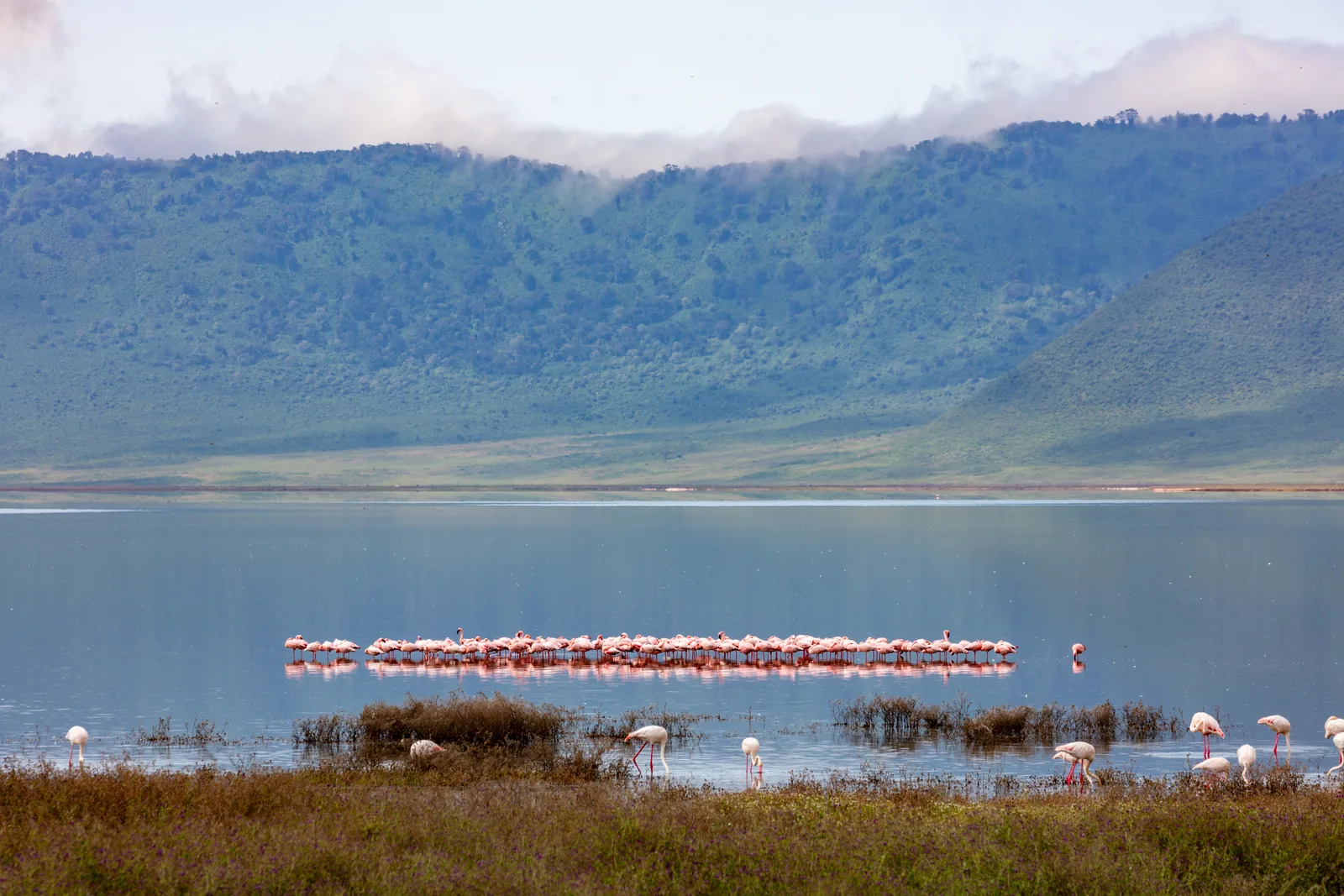
Ngorongoro Crater · Lake Magadi from the rim
Game drives & walks: down into the crater, on foot only on the rim
Game drives in the crater
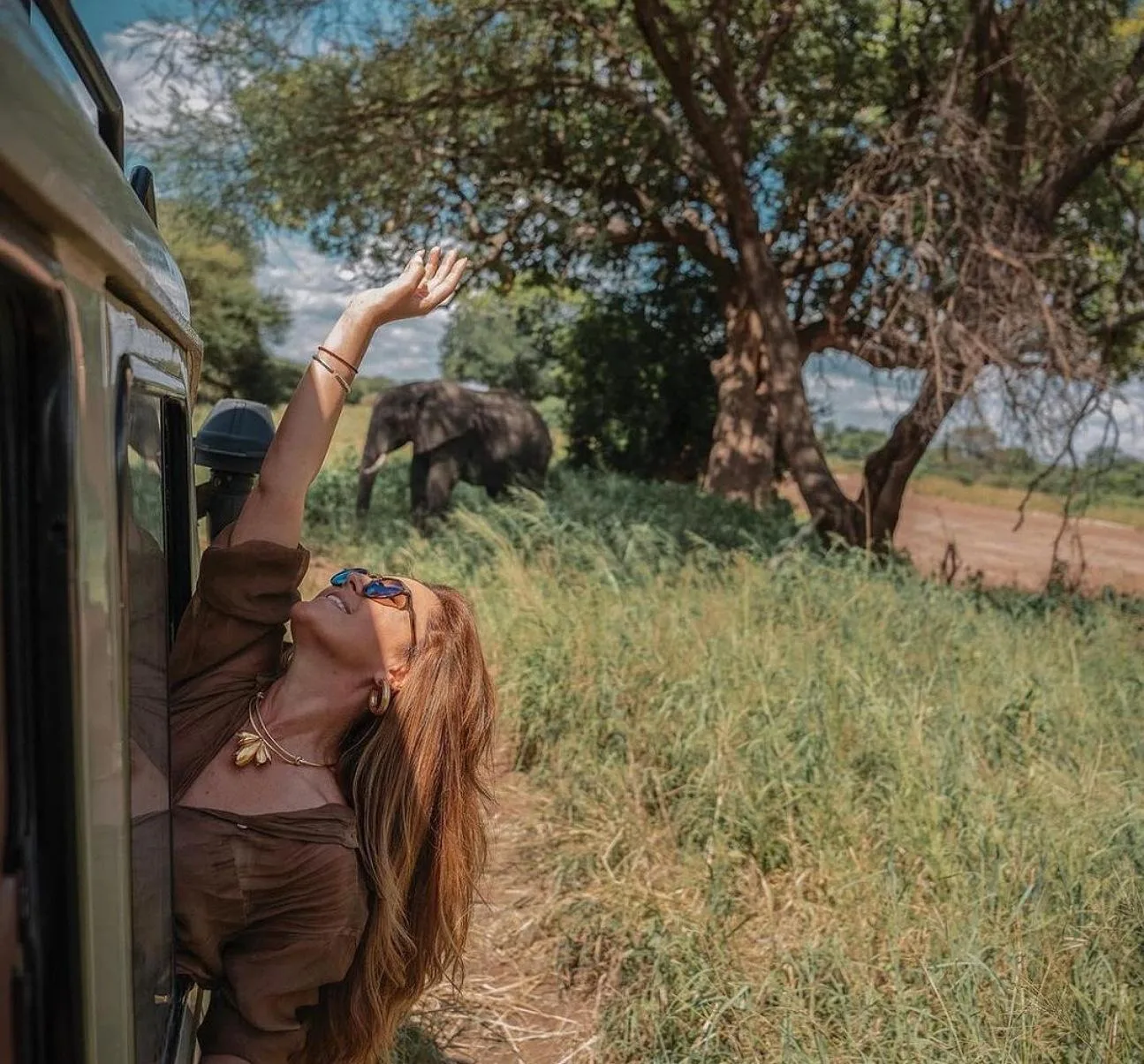
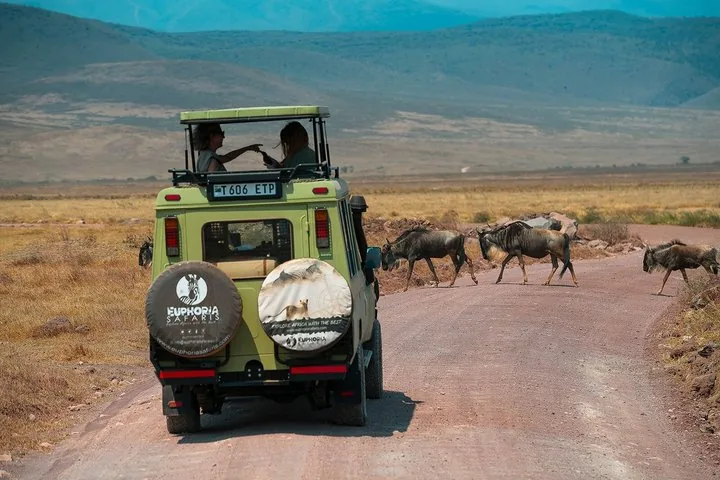
The descent leads through the highland forest, then comes the floor with grassland, swamps, forest and a soda lake. The authority counts more than 25,000 animals, including all of the Big Five; there are no giraffes. No more than five vehicles at a sighting, 25 metres (82 ft) distance, getting out only at designated sites.
Walking is prohibited in the crater itself but allowed on the rim and in the other areas: crater rim, Empakaai, Olmoti, Makarot, Lolmalasin, Olduvai, Endoro waterfalls. Every walk needs an armed ranger and advance booking; short walks last up to four hours, long ones longer.
The new museum on the gorge rim, six kilometres (3.7 mi) from the main road, shows the Leakeys' finds and the history of the excavations. Add Shifting Sands twelve kilometres (7.5 mi) further on and Laetoli with its 3.6-million-year-old footprints.
In designated Maasai villages you may visit, take photos and buy things, for US$20 per vehicle. Outside them, photographing residents is prohibited. The authority names the Maasai, the Datoga and the Hadzabe at Lake Eyasi as the communities of the area.
More than 550 species according to the authority, 500 according to UNESCO: flamingos, saddle-billed storks, crowned cranes, kori bustards, ostriches on the plains, turacos and hornbills in the forest. The best time for birds is the wet months, when the migrants are here.
The tariff list includes fees for balloon safaris, horse riding and mountain bike tours; operators book them with their own permits. A hot bush lunch costs US$23.60 per vehicle in permit fees.
Full-day safari to the Ngorongoro Crater from Arusha
Hotel pick-up in Arusha, drive via Karatu to the crater rim, descent to the floor with a game drive to see rhinos, lions, hippos and flamingos at Lake Magadi, picnic and return in the evening.
11 hours
All fees included
Lunch and water
English-speaking guide
Departure Hotel pick-up in Arusha.
Entrance fees, transport, lunch, water and guide are on the list of inclusions; this covers the vehicle and crater fees. If you want more choice, GetYourGuide mainly offers two- to five-day safaris that include the Serengeti; we have not listed those so far.
View tour ↗Ad · partner link · checked 25 Sep 2026
Provider's product photo · GetYourGuide
SED Adventures Tours & Safaris Ltd · Viator
Olduvai Gorge and Shifting Sands: private day trip from Arusha
Twelve hours from Arusha via Karatu to the Ngorongoro gate, then to the migrating dune of the Shifting Sands and to Olduvai Gorge, one of the most important sites of early humans, with a talk on site and a picnic. In the afternoon, a stop at the viewpoint above the crater.
12 hours
Private tour
English
Taxes and fees included
Departure Pick-up in Arusha.
Included are taxes and fees, lunch, drinking water and private transport with an English-speaking driver-guide; alcoholic drinks, tips and airport transfer are not. The itinerary does not include a drive down to the crater floor. Free cancellation up to 24 hours in advance.
View tour ↗Ad · partner link · checked 26 Sep 2026
Provider's product photo · Viator
Ngorongoro Conservation Area Authority (NCAA) · Walk with a ranger · authority
Walks with an authority ranger: Empakaai, Olmoti and the crater rim
In the conservation area you only walk with an armed ranger from the authority: along the crater rim, down into Empakaai to the soda lake, up to the rim of Olmoti with a view of the Munge waterfall, onto Makarot or Lolmalasin, at Olduvai Gorge and to the Endoro waterfalls. Walking inside the crater itself is prohibited.
short walk up to 4 hours, long walk beyond
advance booking only
ranger fee per person as per the tariff list
Empakaai: about 1 hour down, 2.5 hours up
Meeting point Starting points depend on the destination: Nainokanoka for Olmoti, the rim of Empakaai, the crater rim; book in advance through the authority or your tour operator.
The authority requires an armed ranger and advance booking for every walk. The ranger fee is set out in the authority's tariff list, graded by duration, plus the daily conservation area fee; travel there in your own vehicle or with a tour operator. Best time according to the authority is the dry months from June to December. There is a special campsite on the rim of Empakaai that must be reserved in advance.
Park authority page ↗Park authority programme · no partner link · checked 2 Oct 2026
Balloon Safari & Bush Breakfast, Ndutu launch option
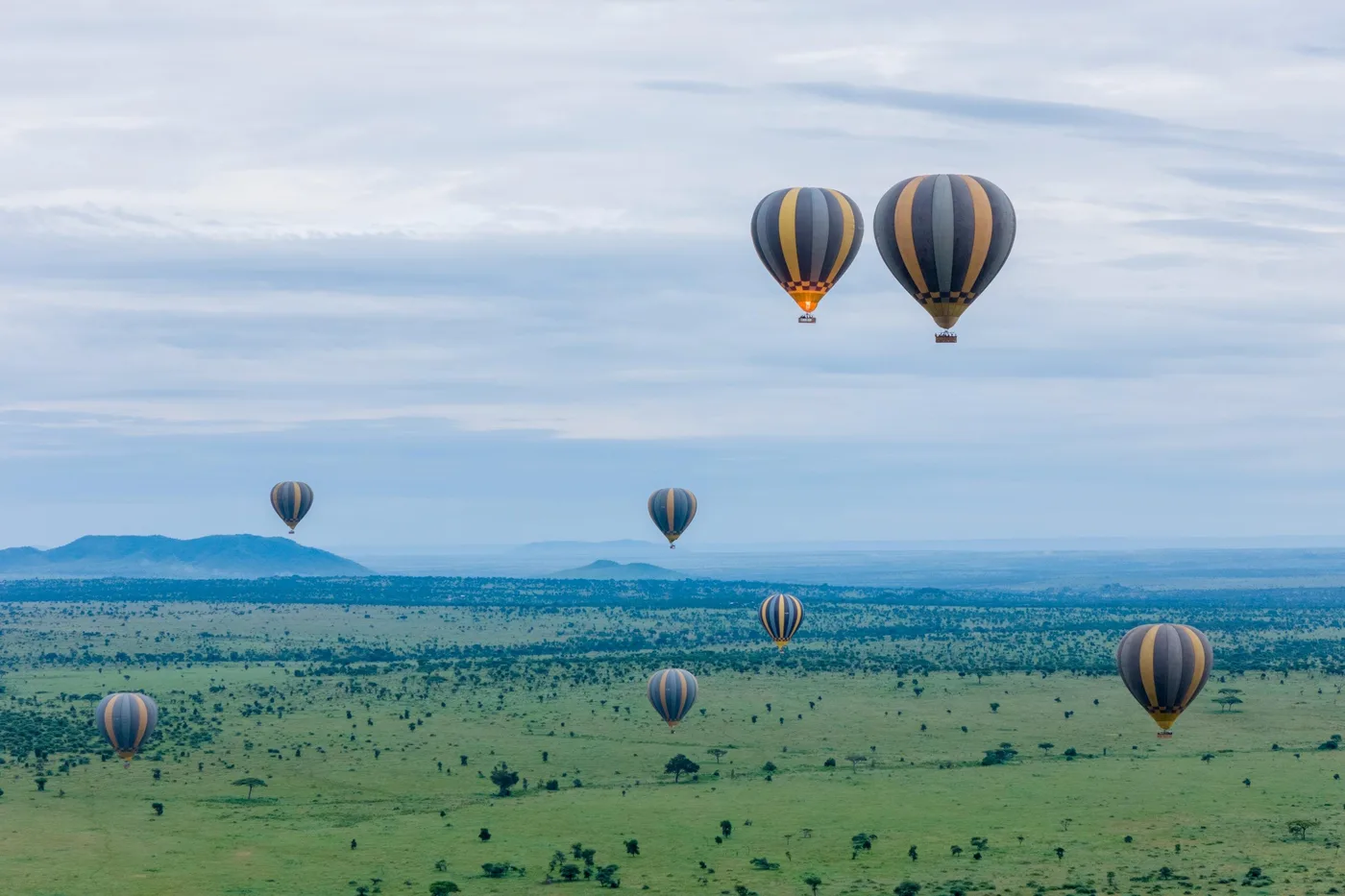
About an hour's balloon flight at sunrise, then a sparkling wine toast on landing and breakfast in the bush. Of the four launch sites, only Ndutu lies in the Ngorongoro Conservation Area, on the grass plains bordering the Serengeti where the wildebeest calve from late December to March. The other three options launch in the Serengeti.
5 hours, flight about 1 hour
Pick-up at camps near Ndutu
Breakfast and sparkling wine
not under 120 cm, not over 120 kg
Departure Choose the option “Ndutu (Southern Serengeti)” when booking; pick-up at the camps and lodges on the list, including several near Ndutu and at Lake Masek. Arrival at the launch site around 5:45.
Included according to the list: balloon flight, breakfast, sparkling wine after landing, binoculars on board, certificate, tea and coffee, transport from your accommodation to the launch site. Not included: park fees for guests staying at camps and lodges outside the national park; the authority's tariff list sets a separate per-person fee for balloon safaris in the conservation area. Contradictions disclosed: the title names only the Serengeti, while the option describes Ndutu as part of the Ngorongoro Conservation Area; the exclusions say transfers from outside Serengeti National Park are not included, yet the pick-up list includes camps near Ndutu. The product does not say in which months it launches from Ndutu. Not recommended for travellers with back or heart problems or during pregnancy, not for people with impaired mobility; cancelled in bad weather, free cancellation up to 24 hours before.
Ad · we may earn a commission if you book through this partner link. Offer details checked 2 Oct 2026. See official ticket information.
Nature: the largest intact caldera on Earth
The crater
Around 2.5 million years ago a volcano the size of Kilimanjaro collapsed. What remained is a basin of 260 square kilometres (100 sq mi), 20 kilometres (12.4 mi) across and 610 metres (2,001 ft) deep. The name comes from the Maasai expression for “big bowl”.
UNESCO listed the area in 1979 for its landscape, geology, ecosystem and species, and in 2010 also as cultural heritage: Laetoli, Olduvai and the crater provide a sequence of evidence of human evolution spanning almost four million years. 809,440 hectares, bordering the Serengeti.
Black rhino, elephant, buffalo, lion, leopard; hyenas, wild dogs, cheetahs; wildebeest, zebras, eland, gazelles, hippos. Apart from giraffes, almost all species occur on the crater floor. UNESCO cites the densest known lion population.
More than a million wildebeest, 72,000 zebras and around 350,000 gazelles pass through the area every year and calve on the short-grass plains on the border with the Serengeti. UNESCO calls this an outstanding natural phenomenon.
From the 1930s onwards the Leakeys found Zinjanthropus, Homo habilis and Homo erectus in the layers of the gorge, along with tools 1.6 to 1.8 million years old. At Laetoli, 3.6 million years ago, two ancestors walked through wet volcanic ash. The authority gives the gorge a length of 55 kilometres (34 mi), UNESCO 14.
Olmoti in the north, shallow and grassy, 6.5 kilometres (4 mi) across; Empakaai further east, eight kilometres across, half of it a deep soda lake with flamingos, its rim up to 3,200 metres (10,499 ft). All three belong to the East African Rift, with the active Lengai as a neighbour.
When the area was listed in 1979, around 20,000 Maasai lived here with 275,000 head of livestock; farming is not permitted. Nobody lived in the crater, in Empakaai or in the forest. UNESCO names population growth, overgrazing and tourism pressure as concerns.
Since 2018 the area, together with Lengai, has been a UNESCO Global Geopark, according to the authority the only one in sub-Saharan Africa, with geo-routes to craters, gorges, the Mbozi meteorite and the migrating dune.
What you need to know about the Ngorongoro Conservation Area (NCA)
A little over eight minutes in English from the channel of the authority that manages the conservation area: the crater, the neighbouring craters, Olduvai, the Maasai and the rules for visiting. Otherwise the channel mostly streams live footage from the crater floor.
Nothing saved yet. Every place card has a pin, and so does every place on the Map. What you save collects here, with days, notes and a preview you can share.
Reality check
Share
The plan is stored in the link itself. Anyone who opens it sees the preview and can use the plan.
Image for your phone, with stops and map.
01Best time to visit: open all year, cold at night
What the authority itself says about weather and seasons.
Dry and wet seasons
The rainy season runs from November to May, the dry season from June to October. The authority says the crater is accessible all year, even in the rainy season, thanks to good roads and wildlife that is abundant all year round.
Temperatures range from 3 to 35 °C (37 to 95 °F), depending on altitude. It is colder on the crater rim than on the floor, the nights are cold, and June to August is the coldest period. Pack a jumper and a jacket even in summer.
From late December to March the great migration is on the short-grass plains around Ndutu in the west of the conservation area; this is where the calves are born, and the predators follow.
The soda lake on the crater floor often holds thousands of lesser flamingos. In the wet months migratory birds from Europe join them: white storks, yellow wagtails, swallows.
UNESCO counts around 25,000 large animals in the conservation area and the densest known lion population. Unlike in the Serengeti, buffalo, rhinos and the old elephant bulls stay on the floor all year.
Best months by the climate data: May to October. Average daytime highs of 21 to 26 °C, lows of 10 to 13 °C, 5 to 95 mm of precipitation a month. The wettest month is April (190 mm), the driest July (5 mm).
5°10°15°20°25°30°
Jan2313
Feb2413
Mar2313
Apr2213
May2112
Jun2111
Jul2210
Aug2311
Sep2512
Oct2613
Nov2414
Dec2313
High °CLow °C
Daily highDaily lowPrecipitation
All monthly values as a table
Monthly averages 2001–2020, NASA POWER model
Month
High °C
Low °C
Precipitation mm
January
23.1
12.9
143
February
23.7
12.9
101
March
23.3
13.4
153
April
22.2
13.4
190
May
21.2
12.1
95
June
21.0
10.7
18
July
21.6
9.9
5
August
23.2
10.6
13
September
25.0
11.7
19
October
25.5
12.7
79
November
23.8
13.6
167
December
23.0
13.4
151
Year
1,134
Modelled values, not a weather station: NASA POWER (MERRA-2) for a grid cell of about 55 × 70 km around the map point Lake Magadi (3.19° S, 35.54° E), with an average cell elevation of about 2,010 m. Averages for 2001–2020. Higher ground and valleys can differ markedly.
Road, air and how the timing of a crater day works out.
From Arusha
The road runs from Arusha via Makuyuni and Mto wa Mbu, past Lake Manyara, to Karatu and on to Loduare Gate, 14 kilometres (8.7 mi) beyond Karatu. The authority gives 174 kilometres (108 mi) from Arusha Airport to the conservation area.
The nearest international airport is Kilimanjaro, 227 kilometres (141 mi) away. There are two airstrips in the conservation area: one on the crater rim next to Simba A campsite, one at Ndutu. Landing fees per aircraft are in the tariff list.
Coming from the Serengeti, you pass Naabi Gate on the border between the two areas and drive across the plains, past Olduvai, to the crater rim. The conservation area's daily fee applies to the transit.
Three roads lead into the crater: the Seneto descent in the west, the Lerai ascent in the south and the Lemala road in the east, used in both directions. The descents close at 16:00. Speed limit 50 km/h (31 mph) in the area, 25 km/h (16 mph) in the crater.
There is a fuel station at the old headquarters on the crater rim. The clinic in the area is Endulen Hospital, plus dispensaries; the authority provides an ambulance for transfers to Karatu. Rangers guard the gates around the clock.
There is no public transport in the conservation area, and commercial vehicles need a licence. In practice that means going with an operator from Arusha, Moshi or Karatu, as a day trip or as one stop on a multi-day safari.
Season Master Adventures · Three-day safari from Arusha · small group
3-day Serengeti and Ngorongoro Crater camping safari from Arusha
Day one through the Ngorongoro highlands into the Serengeti with a first game drive, day two in the Serengeti in the morning and a drive to the crater rim, day three down into the crater with a picnic and return to Arusha. Nights in tents at the public campsites Tumbili (Serengeti) and Simba (Ngorongoro), full board with a safari cook, Land Cruiser with a pop-up roof, a maximum of twelve participants.
Departure Pick-up between 6 and 7 in the morning at accommodation in Arusha; drop-off between 17:30 and 18:30 at your accommodation or Arusha Airport.
The list of inclusions explicitly names all park fees, including concession, camping and crater fees. A balloon ride appears as an option on the list of inclusions (“Hot-air balloon adventure (if option selected)”); the page does not say whether it is included in the base price. Not included: insurance, tips, airport transfer on request. You sleep in a tent, not in a lodge. Not suitable for pregnant women.
From Arusha: Ngorongoro Crater day trip with picnic
Ten hours from Arusha, around seven of them in the crater: a game drive where almost all East African species live, including the rare black rhino, with a picnic lunch on the way.
Departure Pick-up within 7 to 10 km (4.3 to 6.2 mi) of central Arusha; further away for a surcharge.
According to the list of inclusions, all taxes and fees, a picnic lunch and water, and a vehicle with binoculars are included; the crater item of the itinerary lists entry as included. Not included: visas and tips. Not recommended during pregnancy. Free cancellation up to 24 hours in advance.
View tour ↗Ad · partner link · checked 26 Sep 2026
WILD TRACKERS ADVENTURES · Day trip from Karatu · private
From Arusha/Karatu: Ngorongoro Crater Day Trip with Lunch
Private game drive in a four-wheel-drive vehicle with a guide: pick-up in Karatu, at Lake Manyara Airport or at Arusha Airport, drive to the crater rim and down to the floor, picnic at a designated site in the crater, and in the afternoon the drive back to your chosen location. From Karatu it is only 14 kilometres to Loduare Gate.
Departure Hotel pick-up in Karatu, at Lake Manyara Airport or at Arusha Airport; drop-off at any of the three.
Included according to the list: safari jeep with guide, all entry and crater fees and government taxes, lunch at the picnic site and mineral water; not included: hotel accommodation, personal expenses, tips. Contradictions on the page: it gives a duration of 12 hours, 10.25 of them in the crater, which only works from Karatu, not from Arusha; the description promises giraffes, which according to the authority do not live in the crater; the key facts say “wheelchair accessible” without explanation.
US$70.80 for everyone aged 16 and over, US$23.60 for children aged 5 to 15, free under 5. East Africans pay 11,800 shillings, foreigners resident in Tanzania US$35.40. The permit is valid for a single entry within 24 hours.
US$295 per vehicle for each descent into the crater, regardless of the number of people. It comes on top of the entrance fee and, like all permits, is valid for one entry only. Day trips include it in the price; if you drive yourself, you pay it at the gate.
Foreign-registered vehicles up to 2,000 kilograms unladen weight pay US$47.20 per day, from 2,001 to 3,000 kilograms US$177. Tanzanian number plates pay 23,600 and 41,300 shillings respectively. A driver with the ID of a registered operator pays 1,770 shillings.
Public campsite US$35.40 per person per night, special campsite US$70.80. If you sleep in a lodge or a permanent tented camp in the conservation area, you also pay a concession fee of US$59 per person per night, children US$11.80.
Olduvai Gorge and Shifting Sands US$35.40 per person, Laetoli US$23.60. Rangers for walks: US$23.60 for up to four hours, US$29.50 for longer, Endoro trail and elephant caves US$17.70. Cultural boma US$20 per vehicle, sundowner US$5.90 per person.
Speeding, leaving the road or parking in the wrong place costs 118,000 shillings per vehicle. Anyone who cheats on fees pays the amount again as a fine. Tariffs may change without notice.
04Where to stay: eleven lodges, 49 special campsites, one public campsite
Inside the conservation area you sleep on the rim or at Ndutu; outside, in Karatu.
Lodges on the crater rim
The authority counts eleven lodges in the conservation area; five of the six large ones stand on the crater rim with a view into the basin, one is at Ndutu. There are also tented lodges at Ndutu, at Olduvai Gorge and at Esirwa on the way to Laetoli. The authority's concession fee is added for every night.
The only public campsite, 19 kilometres (11.8 mi) from Loduare Gate on the crater rim, for more than 200 people, US$35.40 per person per night. Nights here are cold, and animals pass through the camp.
49 remote sites without facilities, US$70.80 per person per night. They must be reserved and paid for in advance; vehicles may only stand in the designated area. Fires only with care; collecting firewood is prohibited.
If you sleep outside, you save the concession fee and the daily fee for the night. Karatu is 14 kilometres (8.7 mi) before the gate; the daily fee then counts from your entry in the morning.
Outside designated sites, all visitors stay in the vehicle. Do not attract or feed animals, no animal calls, no knocking on the bodywork, no horn, no music. At least 25 metres (82 ft) distance, no more than five vehicles at a sighting.
Driving off the roads is prohibited and costs 118,000 shillings; that is why the authority recommends cameras with telephoto lenses. Speed limit 50 km/h (31 mph), 25 km/h (16 mph) in the crater.
Plastic bags are banned in the conservation area. Cigarette packets, lunch boxes and tissues stay in the vehicle until you reach the lodge. No open fires except when camping, and then put out carefully.
People, bags and vehicles may be searched at the gate and inside the area; the authority can refuse items. Permits must be shown on request. Drones and commercial filming need a permit.
The crater rim is above 2,200 metres (7,218 ft), the Empakaai rim up to 3,200 (10,499 ft). At night temperatures drop to a few degrees; the authority recommends a jumper and a jacket, and in summer light clothing with a warm layer.
Residents are not photographed, except in the cultural bomas. Pets are prohibited. If you ignore rangers' instructions you risk fines; the authority accepts no liability for damage.
How much does it cost to visit the Ngorongoro Crater?
US$70.80 per person per day from age 16 and US$23.60 for children aged 5 to 15, plus US$295 per vehicle for each descent into the crater and a vehicle fee of US$47.20 for foreign-registered vehicles up to two tonnes. Each permit is valid for a single entry within 24 hours.
All gates of the conservation area are open from 6:00 to 18:00. The gates to the crater floor open at 6:00 and close at 16:00; every vehicle must have left the crater by 18:00. Driving is only allowed between 6:00 and 18:00.
Yes, but only in a four-wheel-drive vehicle up to 3.5 tonnes unladen weight, with a licensed or authority guide on board; private vehicles do not need a TALA licence, commercial ones do. The crater fee of US$295 per vehicle and the entrance fee are best paid online in advance.
The authority gives 174 kilometres (108 mi) from Arusha Airport and 227 (141 mi) from Kilimanjaro International Airport to the conservation area; the main Loduare Gate is 14 kilometres (8.7 mi) beyond Karatu. A day trip from Arusha therefore starts before sunrise.
No. Walking is prohibited in the crater but allowed on the crater rim, in Empakaai, in Olmoti and in other areas, always with an armed ranger and advance booking. Short walks of up to four hours cost US$23.60 in ranger fees, long ones US$29.50.
In one of the eleven lodges, five of them on the crater rim, at one of the 49 special campsites, or at Simba A, the only public campsite, on the rim. Lodges inside the area cost an extra US$59 concession fee per person per night; Karatu, outside the gate, is the alternative.
What is the best time to visit the Ngorongoro Crater?
Any time of year: the authority says the crater is accessible all year round. The dry season runs from June to October, the rainy season from November to May; the wildebeest calve at Ndutu from late December to March, and migratory birds arrive in the wet months. Nights are always cold, coldest from June to August.
No, it is a multiple land-use conservation area, established in 1959, where the Maasai live with their herds. It is managed by its own authority, not by Tanzania National Parks. World Heritage Site since 1979, cultural heritage since 2010, biosphere reserve and geopark.
What animals can you see in the Ngorongoro Crater?
Lions, black rhinos, elephants, buffalo and, with luck, leopards; plus hyenas, jackals, hippos, zebras, wildebeest, eland, gazelles and warthogs, and flamingos at Lake Magadi. There are no giraffes in the crater.
Getting out outside designated sites, driving off the road, more than five vehicles at a sighting, feeding or attracting animals, noise, plastic bags, open fires, collecting firewood, pets, drones without a permit, and photos of residents outside the bomas.
Why are there no giraffes in the Ngorongoro Crater?
Because the crater walls are too steep for them. Almost every other large animal of East Africa lives on the crater floor, but giraffes are missing, and so are impalas.
It is the largest intact caldera on Earth: a floor of 260 square kilometres (100 sq mi), 610 metres (2,001 ft) deep, with more than 25,000 animals, most of which never leave. UNESCO lists the area as World Heritage for its landscape, geology, ecosystem and species, and since 2010 also for the evidence of human evolution at Olduvai and Laetoli.
Layers. The authority recommends a jumper and a jacket, and in summer light clothing with a warm layer: the crater rim is above 2,200 metres (7,218 ft), and the nights are cold, coldest from June to August.
Ngorongoro Conservation Area Authority (NCAA) and UNESCO. Check fees and times there before you travel; the authority reserves the right to make changes without notice.
Researched 25 Sep 2026. Not a live status. Dates apply only to the year stated. A successful automatic fetch is not an editorial confirmation; outdated automatic values are hidden and replaced by the source link.