

Dalmatia · near Šibenik
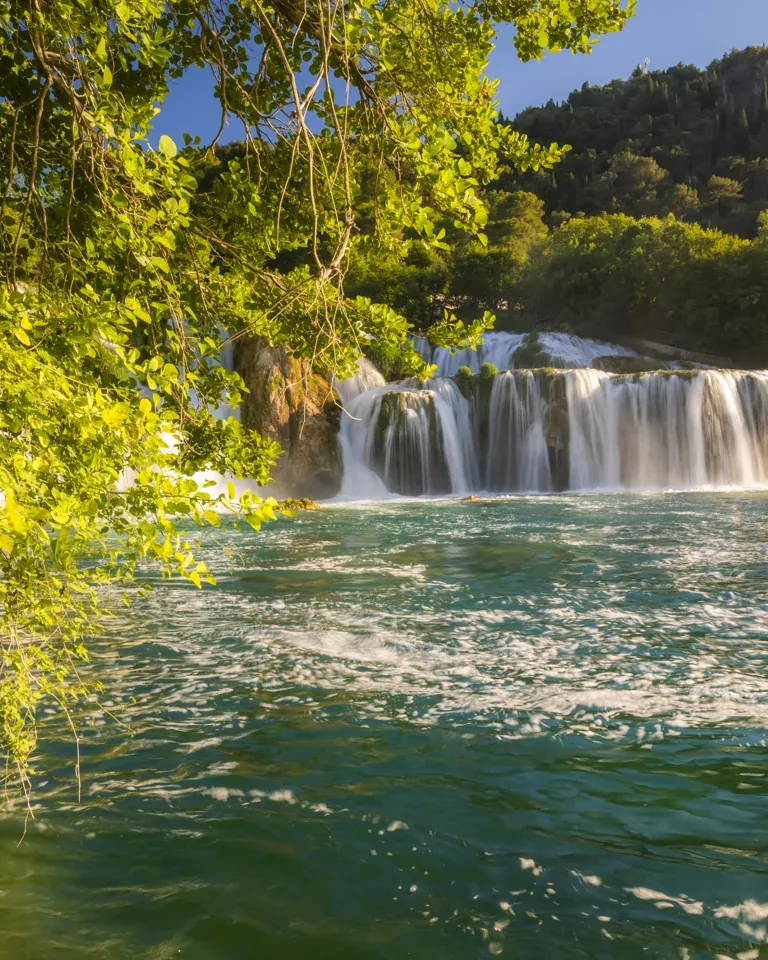
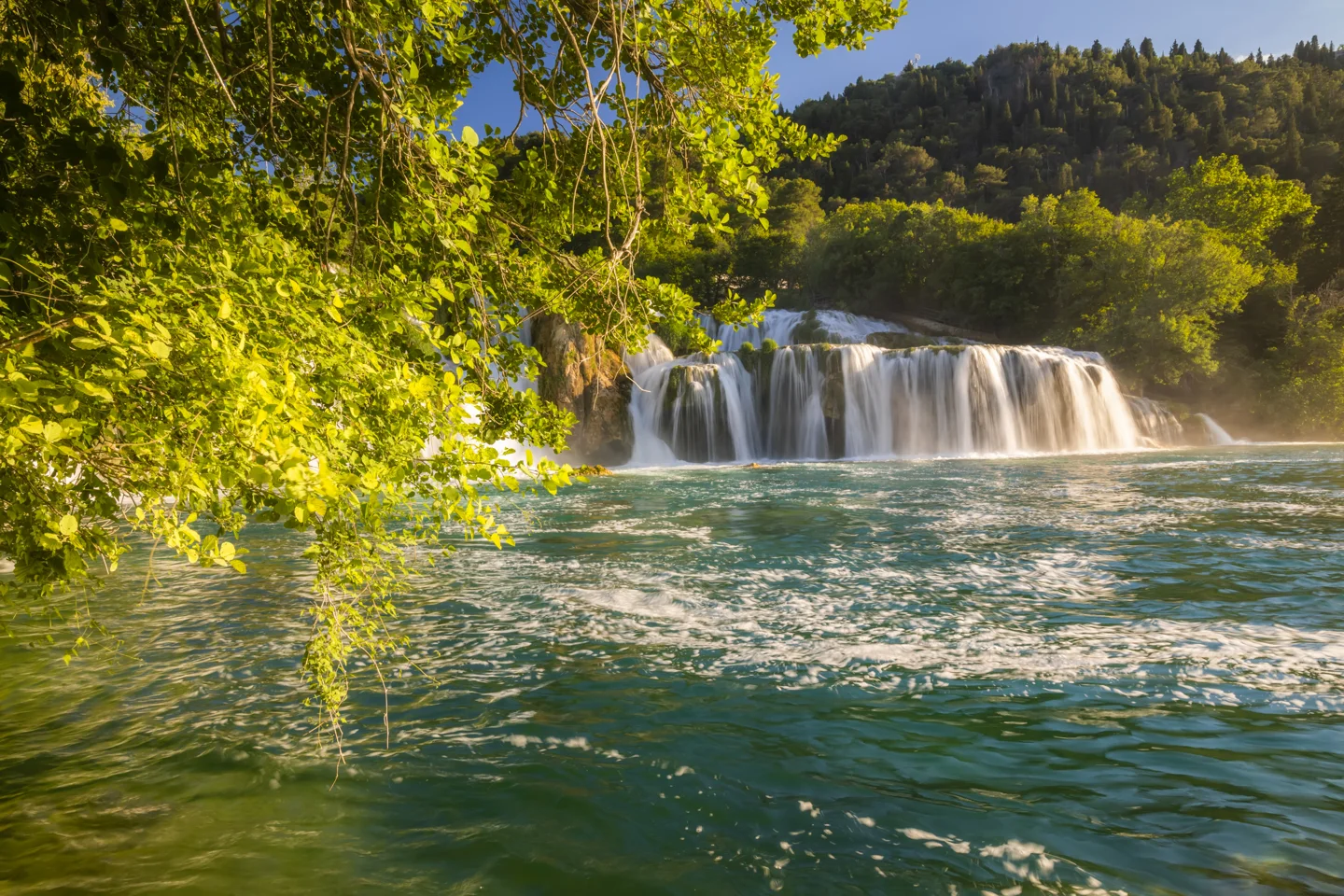
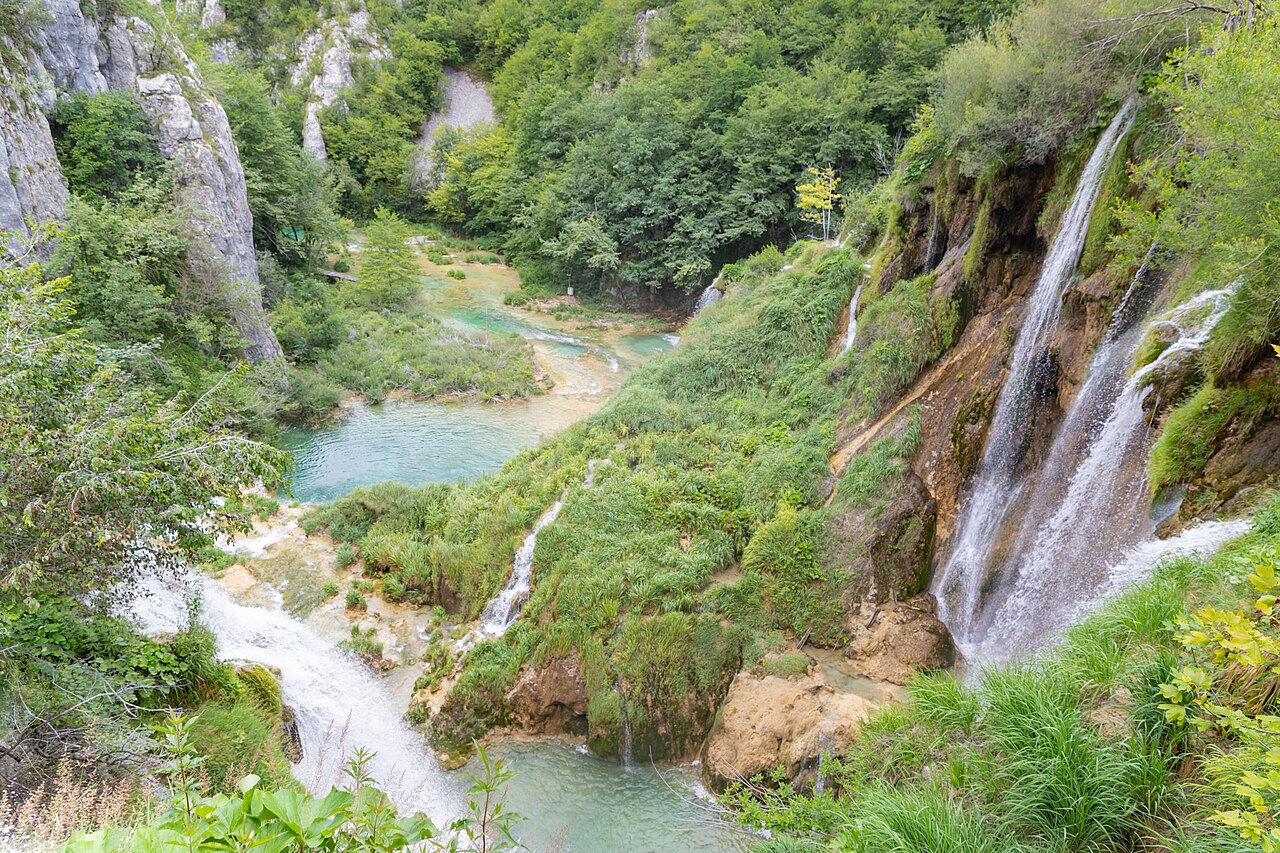
Photo: antonpetrus ↗ · Envato · Projektlizenz ↗Krka National Park
Waterfalls, riverside trails and boat trips to the places along the Krka.

National Parks Atlas · Country · checked 17 Sep 2026
Eight national parks: two of lakes and waterfalls, three at sea, three in the mountains. Each one sells its own ticket, and at several of them the visit starts at a boat pier rather than a car park.
Plitvice Lakes and Krka in full; all eight compared below
park authorities, operators and transport providers
Lakes and rivers, islands and mountains
Plitvice Lakes, founded on 8 April 1949
Last checked: 17 Sep 2026
Croatia has eight national parks, and they are very different places. Plitvice Lakes and Krka are built by water: lakes and waterfalls dammed by tufa barriers that are still growing. Brijuni, Kornati and Mljet lie at sea and are reached by boat. Paklenica, Northern Velebit and Risnjak are mountain parks with canyons, high karst and mountain forest.
This page compares all eight: what each park is, how its ticket works, when to go and how to choose. Plitvice Lakes and Krka, the two lake and waterfall parks, have full guides with routes, entrances, maps and fees taken from the park authority.
01 · Park guides
The two lake and waterfall parks, with entrances, official routes, tickets and the rules that apply on site.
02 · All eight parks
From the lakes of Lika to the islands of Dalmatia: what each park is, where it lies and how you get in.
| Park | Region | Landscape | How you get in |
|---|---|---|---|
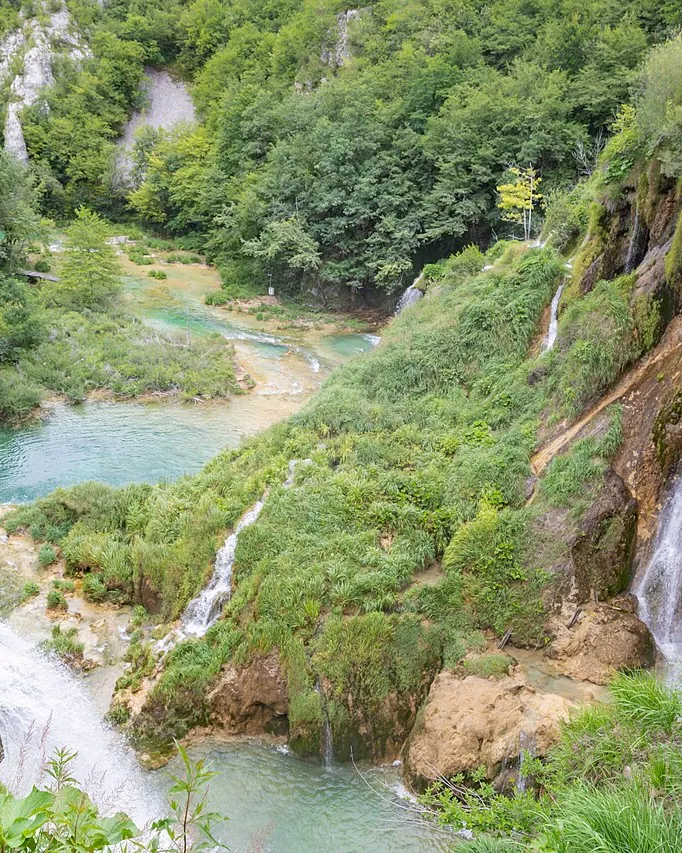
| Plitvice Lakes | Lika | 16 named lakes and waterfalls on boardwalks, just under 300 km² (116 sq mi) | Entrance 1 or 2, each serving its own official routes |
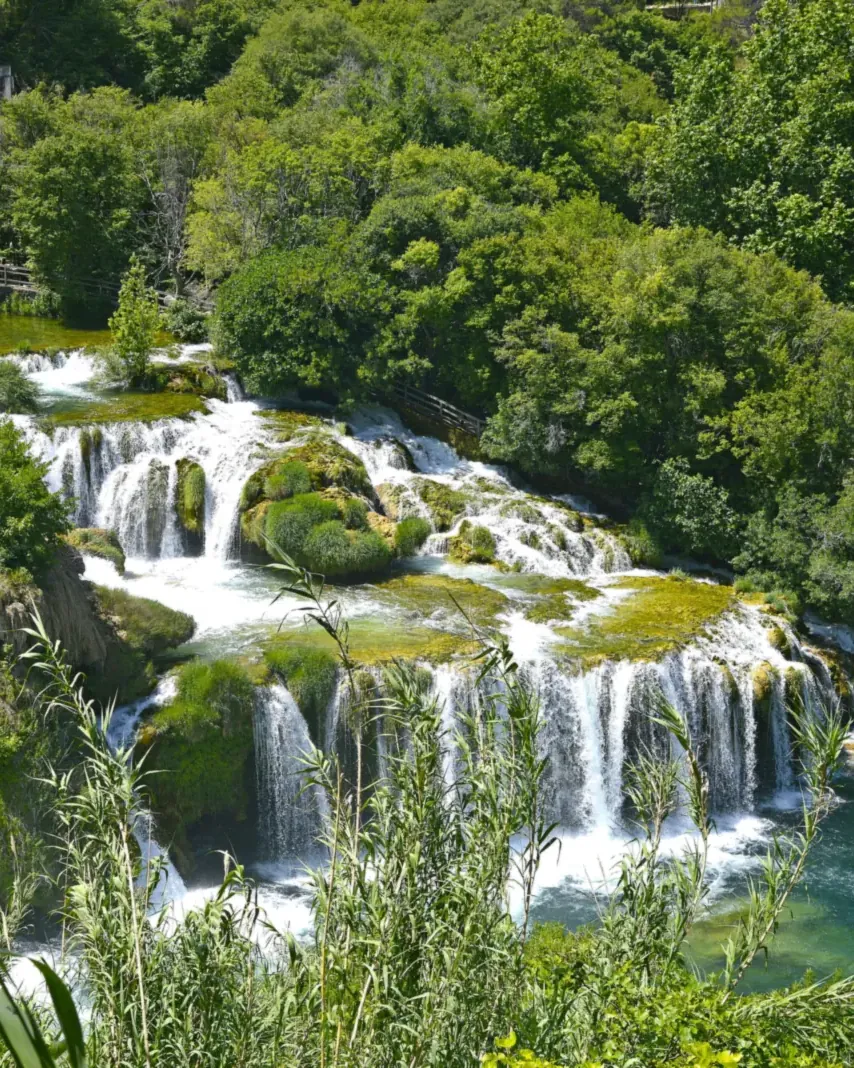
| Krka | Dalmatia, near Šibenik | A river with seven waterfalls over tufa steps | Skradin by park boat or Lozovac by park bus |
| Brijuni | Istria | 14 islands and islets; 2,652 of 3,395 hectares are sea | Boat from Fažana, about 15 minutes |
| Kornati | Northern Dalmatia | 89 islands, islets and reefs; 167 of 217 km² under water | Only by boat: your own, a hired one or an excursion |
| Paklenica | Dalmatia, Velebit | Two canyons from 20 to 1,757 m (66 to 5,764 ft), 95 km² | Velika Paklenica or Mala Paklenica, depending on your route |
| Northern Velebit | Lika-Senj | Karst, mountain trails and huts; the youngest park, from 1999 | Main entrance Babić Siča, then 7 km of gravel road towards Zavižan |
| Risnjak | Gorski kotar | Forested high karst, 6,350 ha, summit 1,528 m (5,013 ft) | Crni Lug for the Leska trail; Razloge and Hrvatsko for the Kupa spring |
| Mljet | Southern Dalmatia | Two saltwater lakes and a monastery island, about 5,300 ha | Ferry or catamaran to the island, then Pomena, Polače or Vrbovica |
Plitvice Lakes is the oldest and largest of the eight: it was founded on 8 April 1949 as Croatia's first national park and has been a UNESCO World Heritage Site since 26 October 1979. Northern Velebit is the youngest, designated in 1999. The Velebit range joined the UNESCO network of biosphere reserves in 1978 and became a nature park three years later; Paklenica and Northern Velebit both lie inside it.
Nature parks such as Telašćica are not national parks and are not part of this list.
03 · Tickets
Every park has its own price list, and what a ticket covers differs from park to park.
Each national park sells its own ticket under its own price list. At Plitvice Lakes and Krka the adult fee changes with the season: one rate from January to March and in November and December, a higher one in April, May and October, and the highest from June to September. Both parks also have a cheaper afternoon rate in summer. At Plitvice it applies from 16:00 in June, July and August and from 15:00 in September; at Krka from 15:00 between June and September. The current amounts are in each park guide under Plitvice tickets and Krka tickets, taken daily from the park authority's price list.
04 · Seasons
Opening seasons, boats and snow decide more than the weather forecast.
Plitvice Lakes is open all year, but the opening hours of individual services change with the seasons. In winter the Upper Lakes are usually closed, depending on the weather, while the Lower Lakes are normally open. At Krka the park boat from Skradin and the bus from Lozovac, both included in the ticket, run from 1 April to 31 October. Swimming in Krka is allowed only at Roški slap, Stinice and Pisak, from 1 June to 30 September; at Plitvice swimming is not allowed at all.
Mljet asks visitors from November to April to arrange their visit with the park authority in advance. Brijuni receives groups on request in January and February. Kornati depends on the sea: check the weather and sea conditions with your skipper or excursion operator.
The usual season in Northern Velebit runs from early May to mid-November and depends on the snow. In Paklenica the park's campsite on the beach is open from 15 March to 15 November, and the reception at Mala Paklenica opens only in the main season. At Risnjak the Leska nature trail is described as open all year, but conditions on the summit are a different matter.
Plitvice and Krka in summer, and Mljet all year, reward a later start with a cheaper afternoon ticket. Check the last return connection before you choose one, above all on Mljet, where the ferry back to the mainland sets the end of your day.
05 · Choosing
Start with the landscape you want, then check how you get there.
Both parks show water falling over tufa barriers. Plitvice Lakes is a walking park: official routes of 3.5 to 17.5 km (2.2 to 10.9 mi) lead over boardwalks past 16 named lakes, and you need between two and eight hours, depending on the route. Krka is a river park: the Skradinski buk circular trail is 1.9 km (1.2 mi) long, the official programmes take two to four hours, and the day can include a boat from Skradin.
Brijuni is the easiest to reach: about 15 minutes by boat from Fažana in Istria, either as a guided excursion or on your own with a pocket guide. Kornati is a park seen from the water; without a boat there is no visit. Mljet takes the most planning: the car ferry from Prapratno to Sobra takes 45 minutes at sea, and the park lies in the west of the island, around two deep bays that look like lakes but hold seawater. The park authority calls Mljet the oldest marine protected area in the Mediterranean.
Paklenica is a canyon park on the coast: the Velika Paklenica canyon is 14 km long with vertical walls of over 700 m (2,300 ft) on both sides, and the park rises from 20 to 1,757 m in just 95 km². Northern Velebit is karst country with mountain huts and shepherds' houses, visited mainly between May and November. Risnjak, in Gorski kotar between the coast and the interior, is forest: the 4.2 km (2.6 mi) Leska trail starts near the park administration at Crni Lug.
06 · Lakes or river
If you can visit only one, choose by how you want to spend the day. Plitvice Lakes is for walking: two entrances about 3 km (1.9 mi) apart, routes A, B, C and K1 from Entrance 1 and E, F, H and K2 from Entrance 2, and no swimming anywhere. If you are short on time, the park authority recommends programmes A, B and F through the Lower Lakes. Krka is for a shorter loop and the river: the longest barrier on the river, Skradinski buk, reached by boat from Skradin or by bus from Lozovac, and three places where you may swim in summer.
Without a car, Plitvice works well: scheduled buses stop at both Plitvice entrances; check the timetable with Zagreb bus station or Likaline. At Krka, Skradinski buk can be reached from Skradin on the footpath and cycle path or with the seasonal park boat. Read the Plitvice getting-there guide and the Krka getting-there guide for entrances, parking and buses.
07 · Editorial
Every fee, date and rule on this page comes from the park guides below, each linked to the official source.
Fees, opening times and reservation rules change. Check the official page before you travel.