

Regions
Photo: Giles Laurent ↗ · CC BY-SA 4.0 ↗Etosha National Park
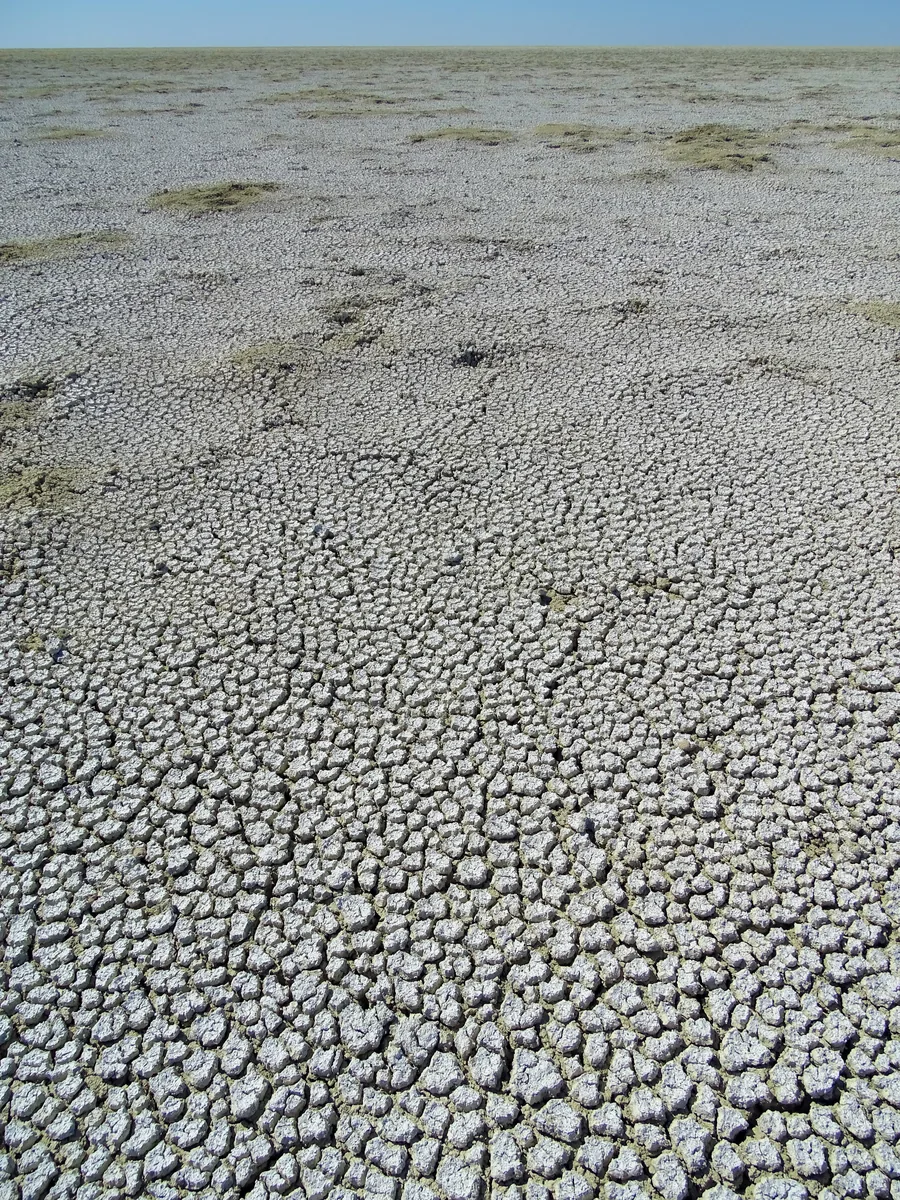
A salt pan of some 4,800 km² (1,853 sq mi), with wildlife gathering at the waterholes around its edge, and a park you drive through yourself.

National Parks Atlas · Country · checked 25 Sep 2026
A salt pan the size of a small country, and around it waterholes where the wildlife gathers. Namibia is a self-drive country: you pay at the gate, every day, and you stay in your car.
Etosha in full, with fees, rules and camps
park authorities, operators and transport providers
per foreign adult, since 1 April 2026
larger than Slovenia
Last checked: 25 Sep 2026
Namibia's best-known park is Etosha National Park: 22,935 km² (8,855 sq mi) around the Etosha Pan, protected since 1907. You drive yourself, in your own or a rented car, and stop at the waterholes.
Every national park in the country issues its permit only at the gate, and Etosha's regulations are strict: you may not leave your vehicle outside the camps, and you may not drive after sunset. The guide covers the fees, the park regulations and the six camps of the state-owned operator, each linked to the environment ministry or to Namibia Wildlife Resorts.
01 · Park guides
Fees per day, gates, self-drive rules, camps and the floodlit waterholes.
02 · Fees
The fee looks small, but it is charged anew every day.
The environment ministry's fee table, valid since 1 April 2026, divides Namibia's protected areas into two price groups, plus a separate rate for Sandwich Harbour. Etosha is in the more expensive group, together with Namib-Naukluft, Skeleton Coast, Dorob, Cape Cross, Waterberg, /Ai-/Ais and Tsau //Khaeb. Every fee has two parts, the park entry and a conservation levy.
| Who | Per day |
|---|---|
| Foreign adults, 16 and over | N$280 (N$140 entry plus N$140 conservation fee) |
| SADC citizens, 16 and over | N$180 |
| Namibians, 16 and over | N$60 |
| Children aged 9 to 15 | N$180 |
| Children up to 8 | Free |
| Vehicle with up to 10 seats | N$60 |
| Vehicle with 11 to 25 seats | N$150 |
The permit is valid for the day, and the fees are payable for each day or part of a day, with a minimum charge of 24 hours. A couple in a rental car therefore pays N$620 for every day in the park: N$3,100 over five days. Unlike South Africa's Wild Card, there is no annual pass for foreign visitors. Permits are non-refundable and non-transferable.
There is no advance booking for entry: all Namibian national parks issue the permit on arrival at the gate. You pay in cash at the barrier, so bring Namibian dollars if you only have a credit card. Namibia Wildlife Resorts, the state-owned company that runs the camps, does not issue permits; if you stay overnight, accommodation and the day permit are two separate things.
Drive only on signposted roads, do not leave your vehicle outside camps and designated stopping places, and do not lean out of the window. Leaving a camp before sunrise or arriving after sunset is prohibited, as is crossing the park boundaries between sunset and sunrise. Motorcycles are banned in all Namibian national parks. To see Etosha at night, join a camp's guided night drive or sit at the floodlit waterhole of Okaukuejo, Halali or Namutoni, inside the camp fence.
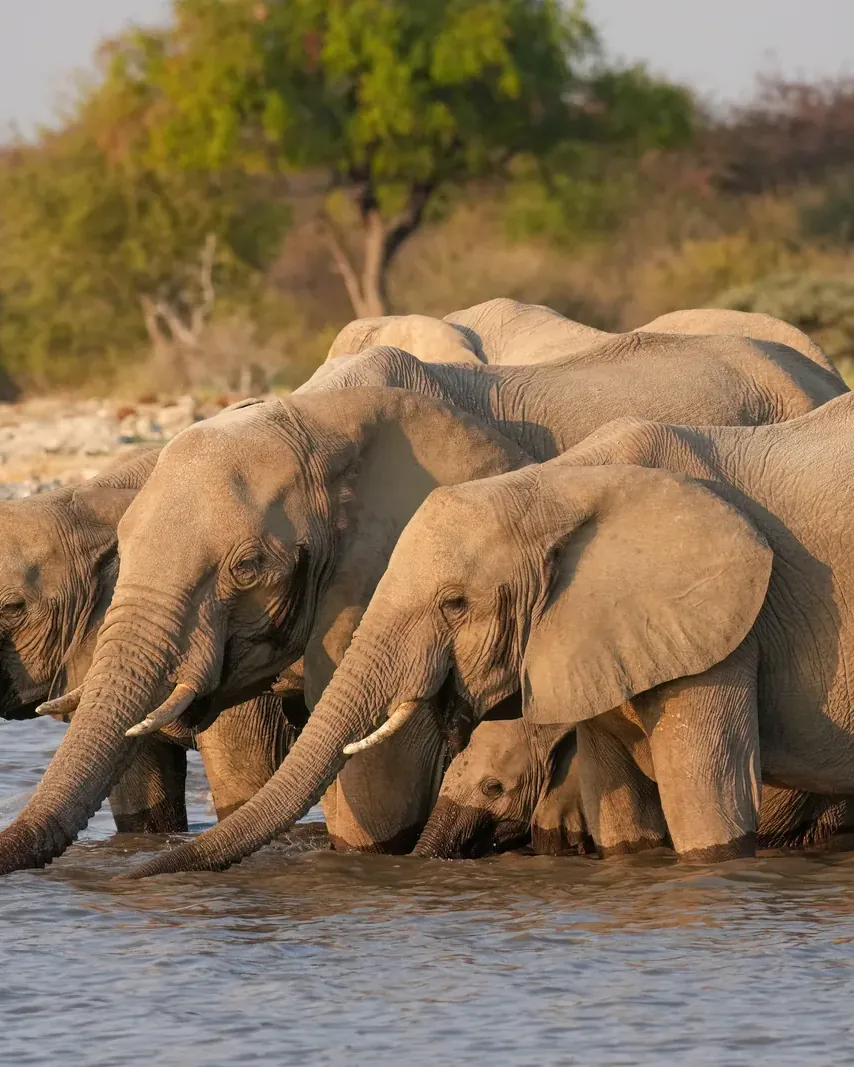
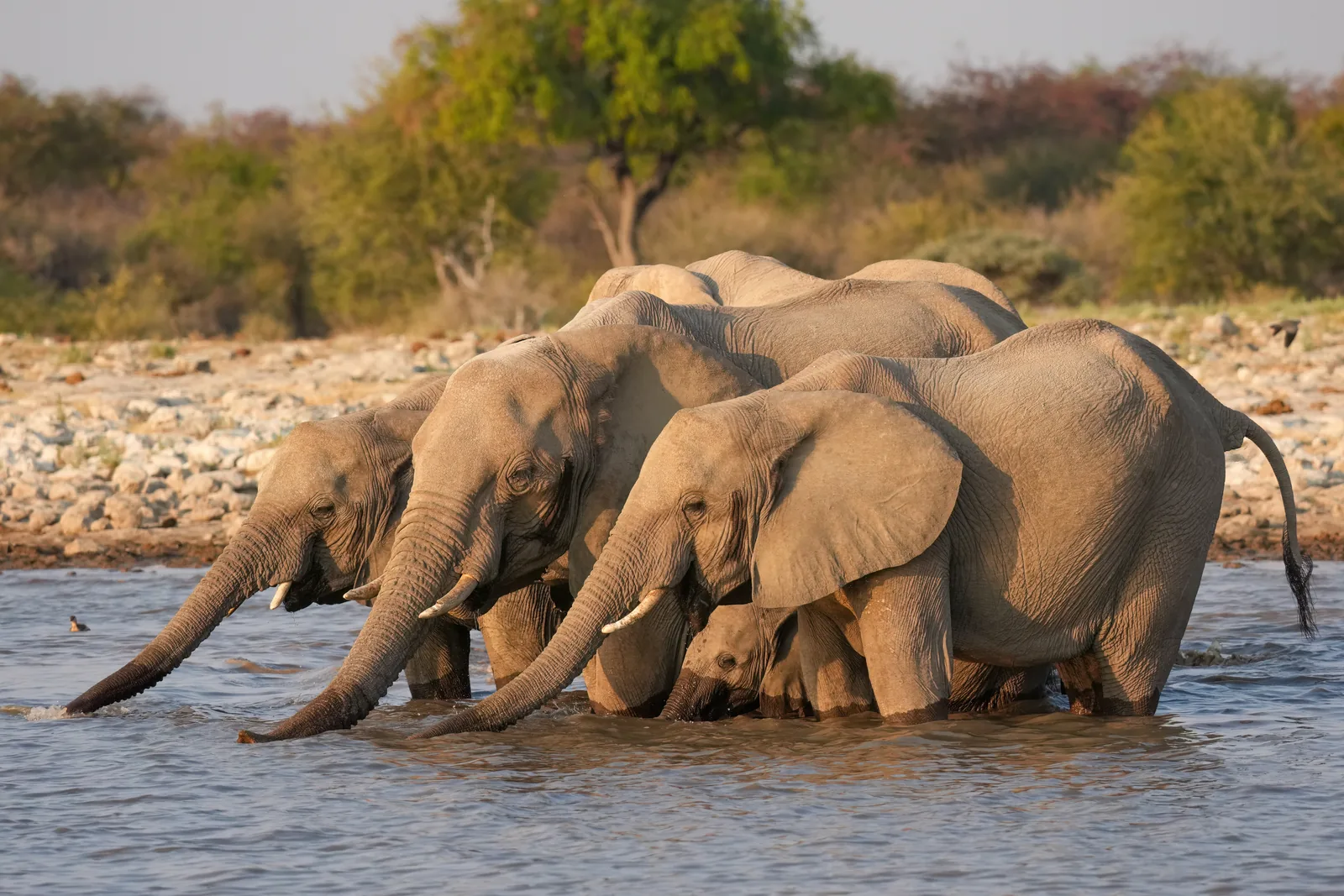
Go in the dry season. The less surface water there is, the more the wildlife concentrates at the springs and waterholes along the park roads. After rain, Fisher's Pan near Namutoni fills up, and flamingos and waders arrive: then the park shows its birding side. Lion, leopard, elephant and rhino live in Etosha; the Cape buffalo, the fifth of the Big Five, does not.
From Windhoek it is around 500 km (311 mi) to Ombika Gate in the south, via Otjiwarongo and Outjo: a full day's drive, not a day trip. Outjo is the last small town with a supermarket and filling station before the park. From the north-east you enter via Tsumeb and Von Lindequist Gate; for the western part, Galton Gate from Kamanjab.
Inside the park there are six camps, all run by Namibia Wildlife Resorts: Okaukuejo, Halali and Namutoni with chalets, rooms and a campsite; Dolomite and Onkoshi, small and upmarket; and Olifantsrus, a campsite only, with ten pitches. There is no second operator in the park. Because you may not drive after sunset, a room inside lets you stay at a waterhole into the night.
06 · Editorial
Every fee, date and rule on this page comes from the park guides below, each linked to the official source.
Fees, opening times and reservation rules change. Check the official page before you travel.