National Parks Atlas
MapPDF

01 · Kenya · Narok

Maasai Mara National Reserve

Not a national park but a reserve of Narok County, and the only protected area in the atlas whose entrance fee doubles in the middle of the year.

Photo: Daniel Case ↗ · CC BY-SA 4.0 ↗

Maasai Mara National Reserve at a glance · PDF, 2 pages

Maasai Mara National Reserve: landscape and origins

The Mara is the most expensive protected area in the atlas, and the only one whose daily fee doubles in the middle of the year.

The Conservancy's fee line is short and has consequences: foreign adults pay 100 US dollars per day from 1 January to 30 June and 200 US dollars from 1 July to 31 December. Children between 9 and 17 pay 50 dollars all year, younger children nothing. The table carries the file name 2024; tour operators quote the same amounts for 2026, one of them word for word in its list of exclusions.

A couple spending three days in the Mara in August therefore pays 1,200 US dollars in entrance fees alone. In April it would be 600. Where you stay makes no difference: the fee explicitly applies to guests sleeping inside and outside the reserve.

What matters is how a day is defined. A ticket is valid from 6:00 to 18:00, whatever time you enter, and does not carry over the night. If you arrive at 15:00 on your arrival day, you pay the full daily rate for three hours of validity. If you drive through the gate at 6:00, you get twelve.

In the Mara Triangle there is a practical hurdle as well: no cash is accepted, only M-Pesa or credit card, and proof of identity means a passport or national ID card, not a driving licence. If you cannot show that proof, you pay the non-resident rate, even if you live in Kenya.

The Conservancy itself explains the high fee with its history. Before 2001, actual revenue was around a fifth of what was possible, gate revenue disappeared, and thousands of animals were poached every year. According to the Conservancy, gate revenue pays for protection and for local communities. When tourism collapsed in 2020, the Triangle, in its own words, faced the worst crisis in its history.

Mara Conservancy: Conservation Fees (fee table, file name 2024) ↗

The park in numbers

Adults, 1 Jan to 30 Jun
100 US dollars per day
Adults, 1 Jul to 31 Dec
200 US dollars per day
Children aged 9 to 17
50 US dollars per day
Children up to 8
free
Valid
6:00 to 18:00, not overnight
Last entry
18:30
Payment in the Triangle
M-Pesa or card only
Proof of identity
passport or ID card, not a driving licence
Vehicle under 6 seats
1,000 KES per day
Accommodation inside or outside
same fee

Visiting Maasai Mara: one reserve, two administrations

02

A non-profit runs the Mara Triangle

The non-profit Mara Conservancy has managed the western part, the Mara Triangle, since 12 June 2001. The area covers 510 square kilometres (197 sq mi), around a third of the reserve. It used to fall under Trans Mara County Council; today it belongs to Narok County.

Mara Conservancy: history of the Mara Triangle ↗

03

Why management changed in 2001

The Conservancy describes the situation before then unusually openly: vehicles that could not be driven, missing gate revenue, rampant poaching. Only a third of the staff turned up, only a third of the area was considered safe, and revenue was around 20 per cent of what was possible.

Mara Conservancy: history of the Mara Triangle ↗

02 · Places

Map: places in Maasai Mara National Reserve

Gates, bridge, airstrips and rivers, on the Kenyan side only.

Photo: Laika ac from USA ↗ · CC BY-SA 2.0 ↗

Place in the park

The Mara Triangle

A third of the reserve, run by a non-profit organisation.

Area
510 km² (197 sq mi)
Share of the reserve
around a third
Managed by
Mara Conservancy
Since
12 June 2001
Boundaries
Oloololo Escarpment, Mara River, national border
Gates
Oloololo Gate, Purungat Bridge
Payment
cashless only

Mara Conservancy: history of the Mara Triangle ↗

Map

15 places on the map

Gates, bridge, airstrips and rivers, on the Kenyan side only.

Open map3D terrain · details and photos for every place
  • Viewpoints1
  • Water4
  • Trails4
  • Arrival5
  • Nature1

03 · Out and about

Game drives & safaris: on the plains, at the river, by balloon

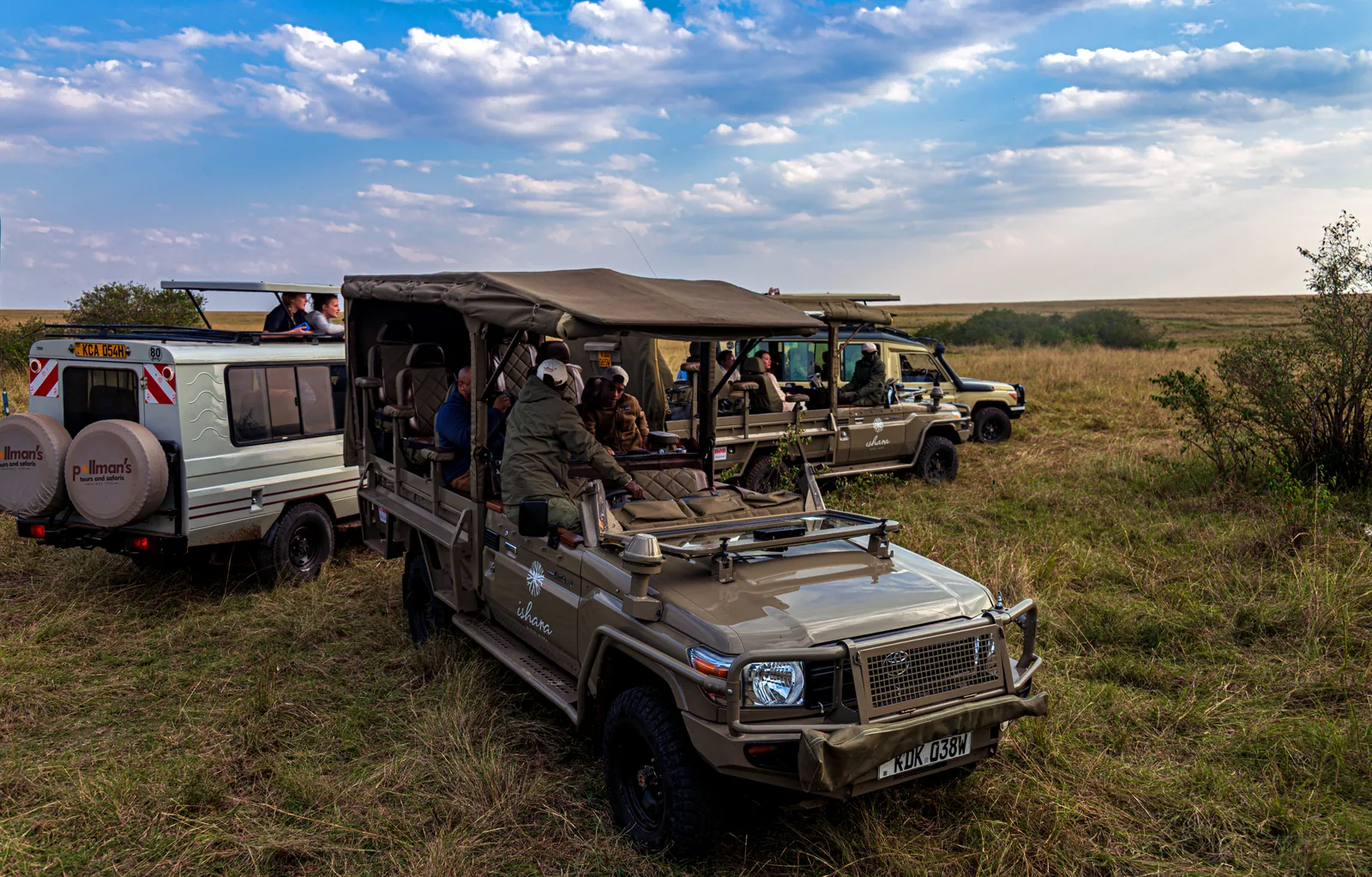
You experience the Maasai Mara from a vehicle.

Photo: Ninara ↗ · CC BY 2.0 ↗

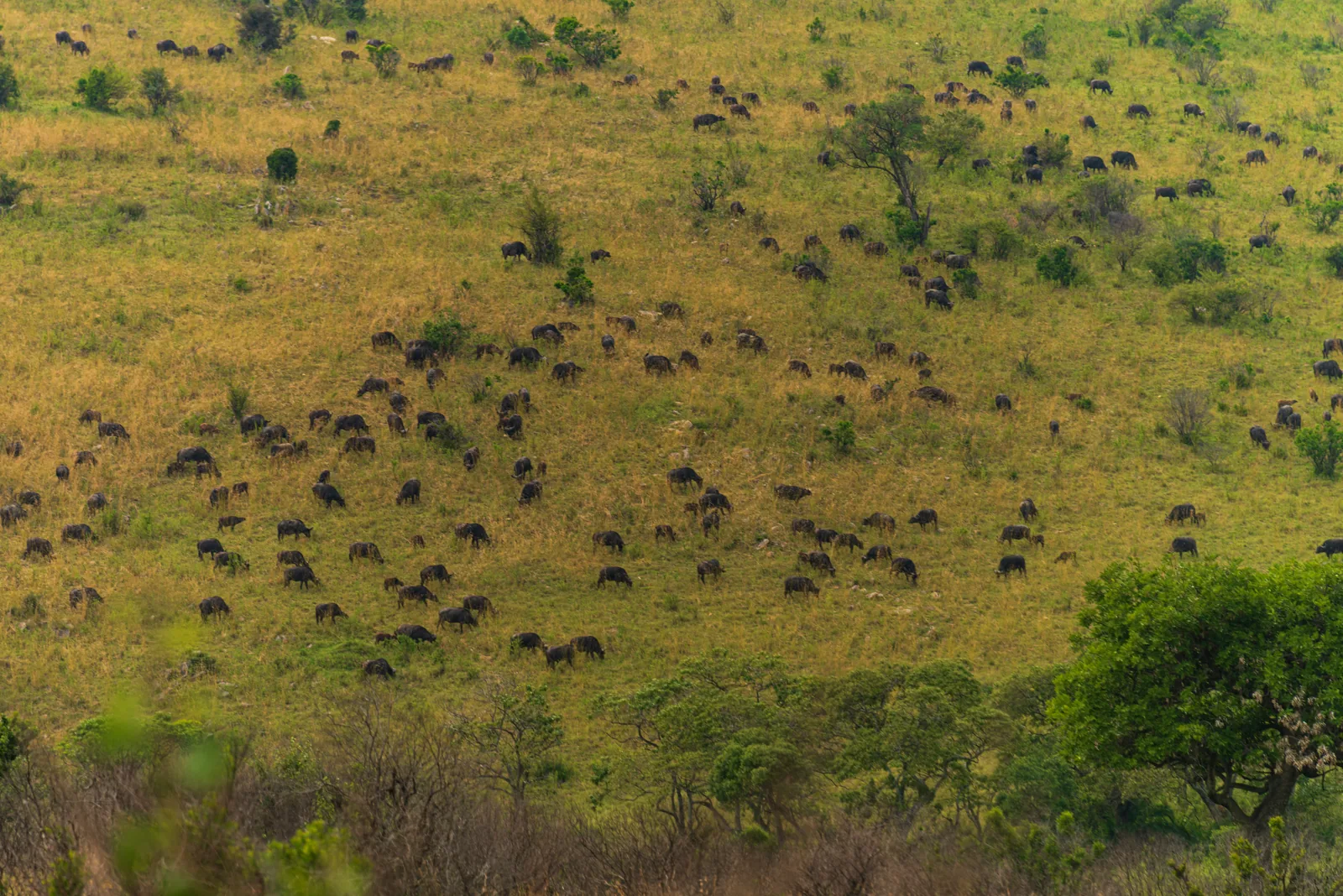
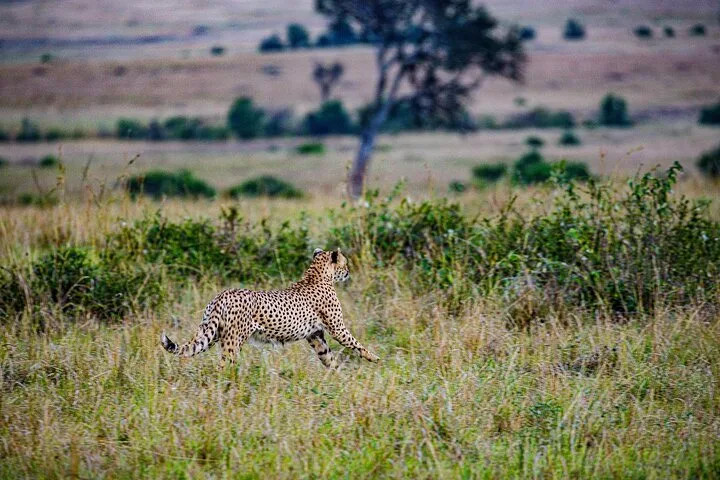
„In Etosha the buffalo is missing. Here it lies in the grass, as prey.“

Maasai Mara · Lion with a Cape buffalo kill

Game drives & safaris: on the plains, at the river, by balloon

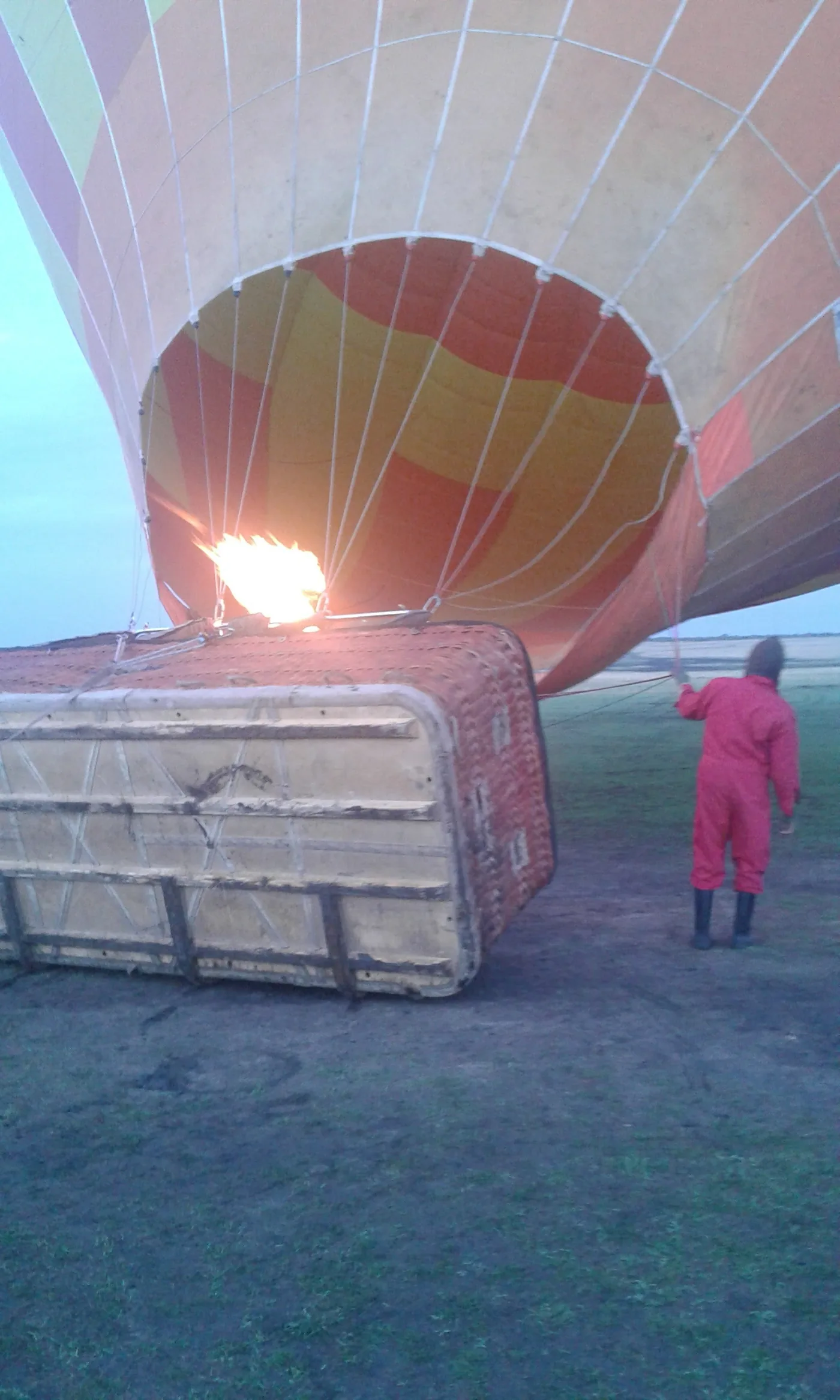
Offer photo: Sunrise hot-air balloon flight with bush breakfast

Perfect Wilderness Tours and Safari · GetYourGuide

Sunrise hot-air balloon flight with bush breakfast

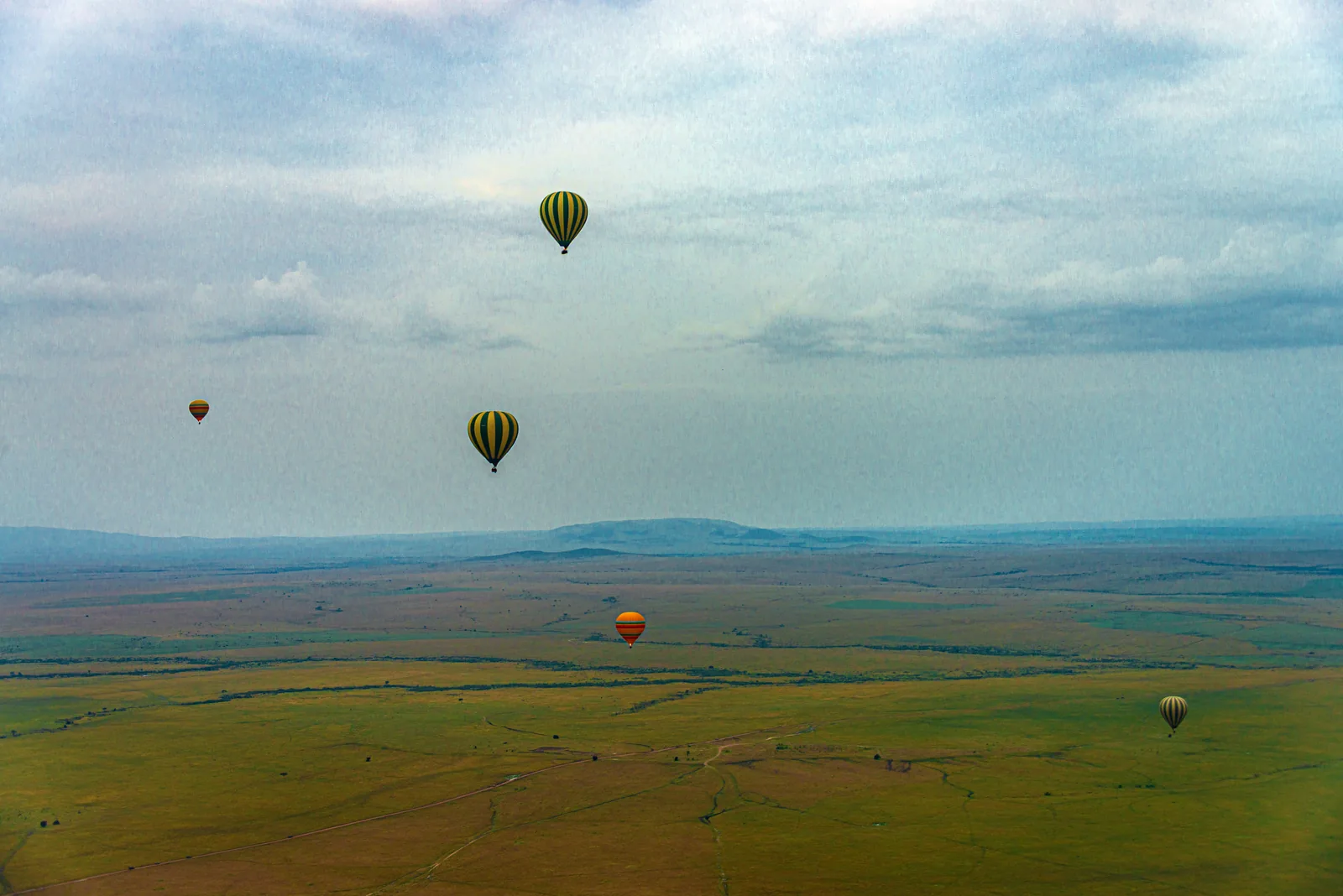
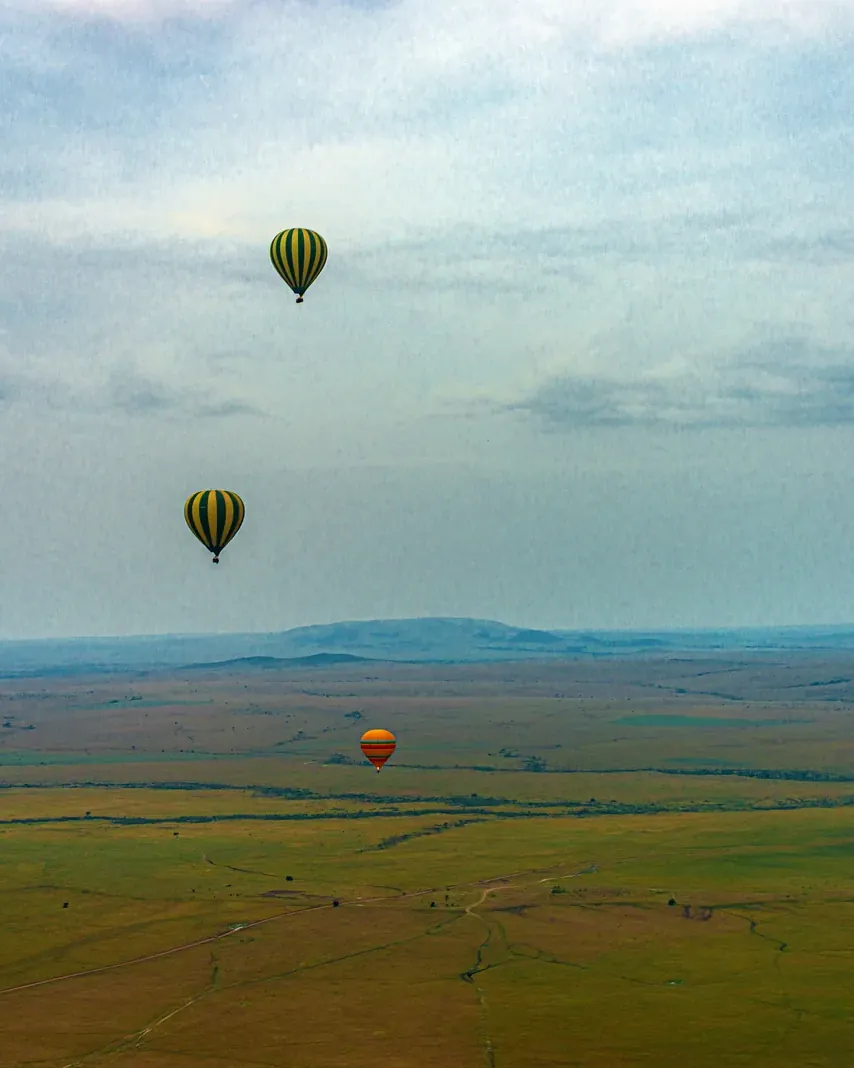
About 70 minutes in the balloon basket over the Mara, taking off at sunrise. After landing there is breakfast in the bush, then an open jeep takes you back to your lodge with a short game drive.

  • 70-minute flight
  • Breakfast with sparkling wine
  • English
  • Pick-up in the Mara

Departure Pick-up from lodges and camps in the Maasai Mara.

Included are pick-up and return, the balloon flight, a guide and breakfast with a glass of sparkling wine; the title speaks of champagne. Pick-up from lodges in the far west is excluded (Mara West Camp, Mara Serena Safari Lodge, Neptune Mara Rianta). The page does not mention park fees. Not suitable for children under 8 and not wheelchair accessible, because you have to climb into the basket. Free cancellation up to 24 hours in advance.

View tour ↗Ad · partner link · checked 2 Oct 2026

Provider's product photo · GetYourGuide

Offer photo: Private full-day game drive from your lodge to the Mara River

Perfect Safaris · Game drive · full day · private

Private full-day game drive from your lodge to the Mara River

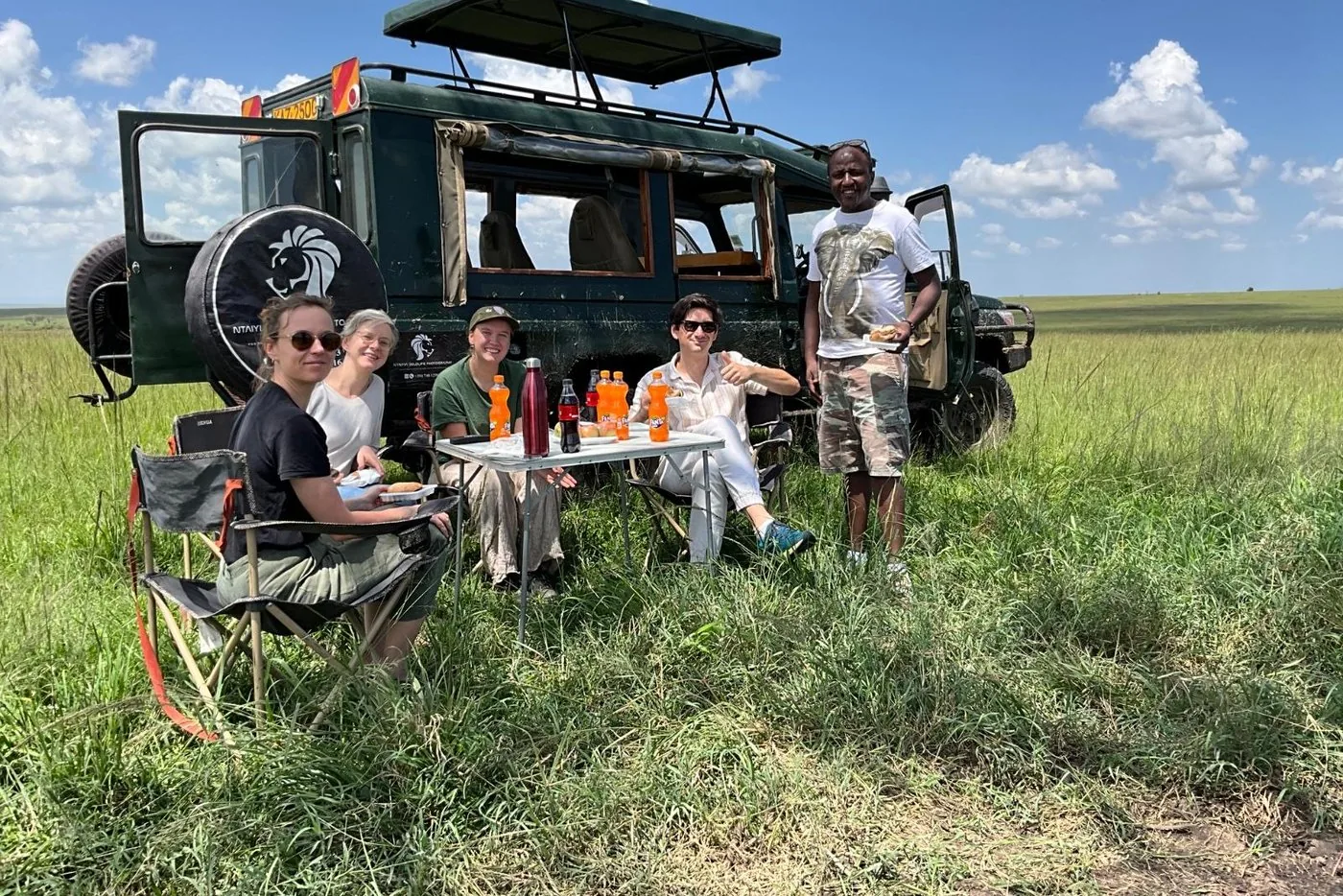
Early-morning pick-up at your lodge or camp, then a private game drive in a Land Cruiser with a local driver-guide through the reserve to the Mara River. At the bridge over the river a walk along the bank with rangers is possible, followed by a picnic in the bush and, in the afternoon, the drive back to your lodge or, on request, to the airstrip.

  • 8 to 10 hours
  • Private Land Cruiser
  • Pick-up at your lodge
  • Optional riverbank walk with rangers

Departure Pick-up from lodges and camps in and around the Maasai Mara; the driver asks for you at reception. If you arrive by plane, give your flight details.

Included are the private Land Cruiser, drinking water and pick-up and drop-off at your lodge; park admission and tips are not. Lunch is only mentioned as a picnic in the booking option, not in the list of inclusions; according to the itinerary it is usually pre-ordered from your own lodge. Whether the riverbank walk with rangers costs extra is not stated. The pick-up list also includes camps outside the reserve, for instance in the neighbouring conservancies; according to the itinerary the game drive itself goes into the reserve to the Mara River. Contradiction: the key facts give 8 to 10 hours, the booking option 10 hours, and the itinerary starts at 6:00 with the drive back from 15:00. Guide in English, instant confirmation, free cancellation up to 24 hours in advance. Check dates and prices with the provider.

View tour ↗Ad · partner link · checked 2 Oct 2026

Provider's product photo · Viator

Ad · we may earn a commission if you book through this partner link. Offer details checked 2 Oct 2026. See official ticket information.

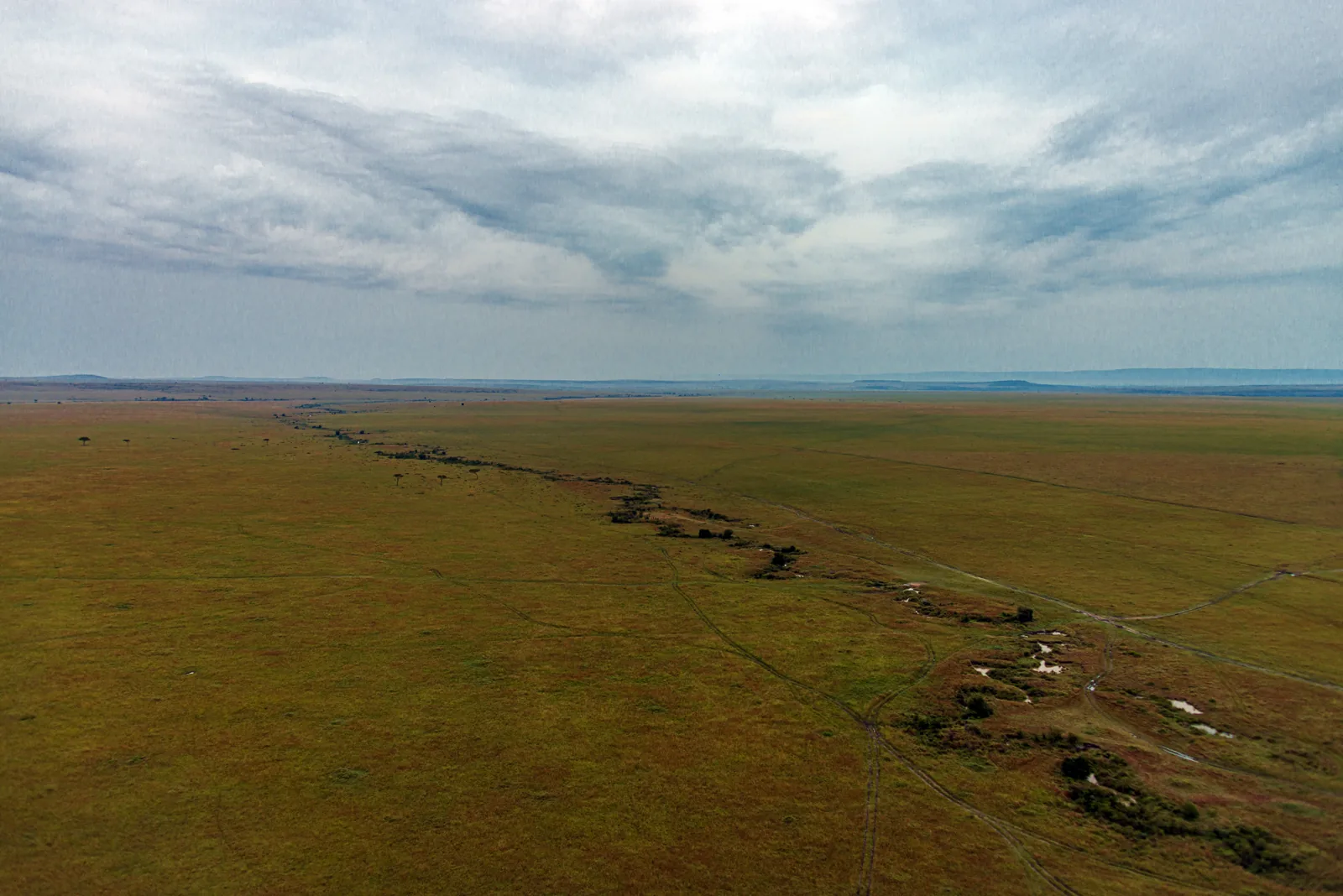
Nature: grassland on the edge of the Serengeti

Poaching as the yardstick

Before 2001, according to the Conservancy, thousands of wild animals were killed in the Triangle every year. Handing it over to its own management was above all a response to that.

Mara Conservancy: history of the Mara Triangle ↗

04 · Before you go

Park film and places nearby

Photo: Daniel Case ↗ · CC BY-SA 4.0 ↗

Film by the reserve management

The Mara Triangle needs your help.

Just over three minutes from the Mara Conservancy's channel, June 2020. When tourism collapsed during the pandemic, the Triangle, in its own words, faced the worst crisis in its history. The film explains what the daily gate fee pays for. In English.

Source: Mara Triangle (Mara Conservancy) · View channel ↗

Field book · Maasai Mara National Reserve

checked 25 Sep 2026

Maasai Mara National Reserve at a glance · PDF, 2 pages ↓

00My visit

Nothing saved yet. Every place card has a pin, and so does every place on the Map. What you save collects here, with days, notes and a preview you can share.

01Best time to visit: the fee doubles on 1 July

The fee table gives no reason for it.

Two fee seasons

From 1 January to 30 June the lower daily rate applies, from 1 July to 31 December twice that. A week in August therefore costs twice as much in entrance fees alone as a week in April.

Mara Conservancy: Conservation Fees (fee table, file name 2024) ↗

The herds come across the border

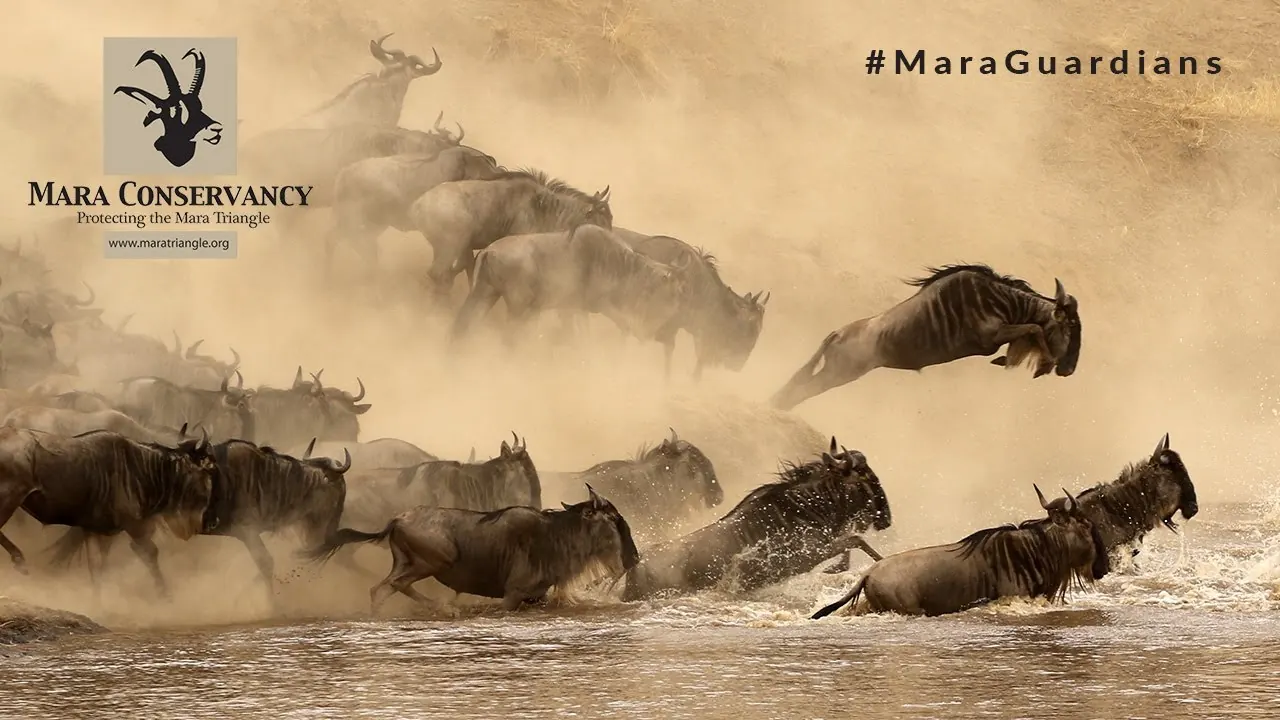
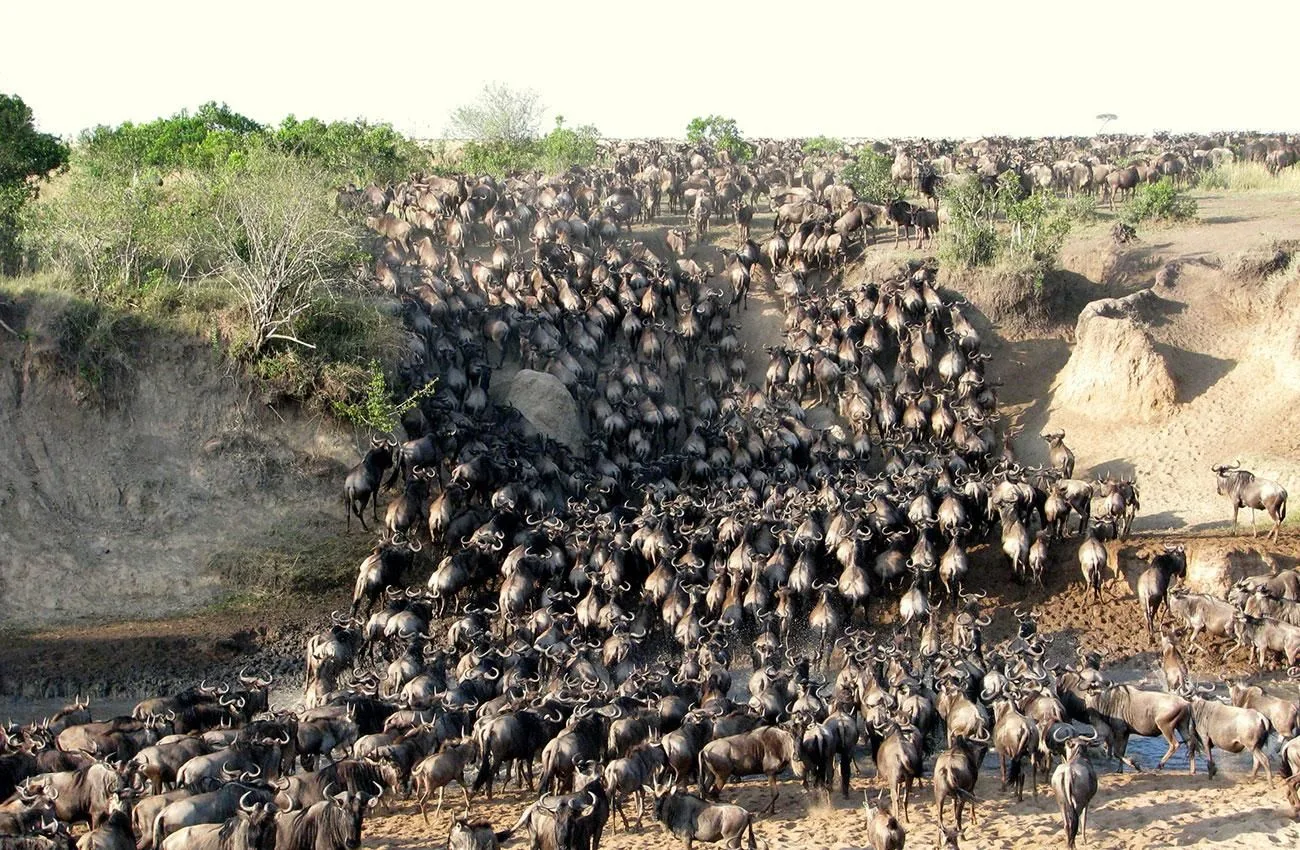
The Mara Triangle is enclosed by the Oloololo Escarpment, the Mara River and the national border with Tanzania. The wildebeest herds cross this border from the Serengeti. Exactly when they arrive depends on the rain and shifts from year to year.

Mara Conservancy: Experience Mara Triangle, gate hours ↗

Starting early pays twice

Because the ticket starts at 6:00 and ends at 18:00, you get the most time for the same price if you enter when the gate opens.

Mara Conservancy: Conservation Fees (fee table, file name 2024) ↗

Climate through the year

Weather and climate in Maasai Mara National Reserve

Best months by the climate data: June to August. Average daytime highs of 25 to 28 °C, lows of 13 to 14 °C, 26 to 46 mm of precipitation a month. The wettest month is April (173 mm), the driest July (26 mm).

Climate chart in Maasai Mara National ReserveAverage daily highs from 25 °C to 29 °C, lows from 13 °C to 16 °C; monthly precipitation from 26 mm to 173 mm.
All monthly values as a table
Monthly averages 2001–2020, NASA POWER model
MonthHigh °CLow °CPrecipitation mm
January27.815.0106
February29.415.469
March28.715.7148
April26.315.3173
May25.114.5103
June25.313.746
July26.513.226
August27.613.846
September28.614.555
October29.215.175
November27.615.3136
December27.215.0140
Year1,123

Modelled values, not a weather station: NASA POWER (MERRA-2) for a grid cell of about 55 × 70 km around the map point Talek River (1.42° S, 35.10° E), with an average cell elevation of about 1,640 m. Averages for 2001–2020. Higher ground and valleys can differ markedly.

Source: NASA POWER, climatology 2001–2020 ↗ · retrieved 3 Oct 2026

02How to get there: around 165 km (103 mi) from Nairobi as the crow flies

A long day by car, a short hop by light aircraft.

Tarmac as far as Sekenani

The road is surfaced from Narok to Sekenani Gate. If you stay outside the reserve, the quickest way to the Triangle is via Aitong.

Mara Conservancy: driving there and driving rules ↗

Four-wheel drive only

The Conservancy recommends any vehicle with four-wheel drive and requires that the four-wheel drive actually works. You will not get far in an ordinary hire car.

Mara Conservancy: driving there and driving rules ↗

Scheduled flights to the Mara

The Conservancy lists several airlines with daily scheduled flights to the Mara, including Air Kenya and Safarilink. There are several airstrips in the reserve and in the Triangle.

Mara Conservancy: flying to the Mara Triangle ↗

Landing fees in Nairobi or at the airstrip

If you fly into the Triangle, you pay the landing fee at the KAPS ticket office in Nairobi or at Serena airstrip.

Mara Conservancy: flying to the Mara Triangle ↗

An hour across the Triangle

From Oloololo Gate in the north to Purungat Bridge in the south takes a little over an hour at 50 km/h. The Triangle is smaller than the Narok side, but it is not a quick side trip.

Mara Conservancy: driving there and driving rules ↗

Jae Travel Expeditions · Day safari from Nairobi · 1 day

Day safari from Nairobi with two game drives and a packed lunch

Early pick-up in Nairobi, a drive through the Rift Valley to the Mara, morning and afternoon game drives with a packed lunch in the reserve, back in the evening. Guided in English.

Departure Hotel pick-up in Nairobi early in the morning.

Only for those who really have exactly one day. The park fee is explicitly not included (the operator itself gives 100 US dollars per person from January to June and 200 US dollars from July to December), nor are the optional visit to a Maasai village for 30 dollars and tips. The ticket is valid until 18:00; with around 165 km (103 mi) as the crow flies to Nairobi, only part of a day's fee is left for the game drive. Cancellation up to 24 hours in advance.

View tour ↗Ad · partner link · checked 25 Sep 2026

JOYINA SAFARIS · Three-day safari from Nairobi · daily

3 days in the Maasai Mara from Nairobi by Land Cruiser, tented camp with bathroom

Day one: pick-up in Nairobi between 7:00 and 8:00, a stop at the Rift Valley, an evening game drive from 16:00 to 18:30. Day two: full-day game drive with a picnic and a visit to the Mara River. Day three: drive back, arriving in Nairobi by 15:30. Two nights in a private tent with bathroom, full board, pop-up roof, at most eight people per vehicle, guaranteed daily departure.

Departure Pick-up from hotels in central Nairobi and in Westlands near the expressway; otherwise meeting point at City Market, Muindi Mbingu Street.

The list of inclusions names the park fees for both days at the Mara's half-year rates (200 US dollars until 30 June, 400 from 1 July, for two days). Not included: balloon safari 430 US dollars, Maasai village 20 US dollars, drinks at the camp, tips. English only.

View tour ↗Ad · partner link · checked 25 Sep 2026

Perfect Wilderness Tours and Safaris · Transfer from Nairobi · private

Private transfer from Nairobi to the Maasai Mara

A private ride for your group only, by road from the airport or your hotel in Nairobi to the Mara, with a stop at the viewpoint above the Great Rift Valley. Meant for anyone who has already booked a lodge or camp in the Mara and will do their game drives from there.

Departure Pick-up from hotels in Nairobi and at Nairobi airport (give your flight details); the pick-up list also names Wilson Airport and hotels at Lake Naivasha and in Nakuru. Give the name of your lodge or camp in the Mara when booking.

According to the provider, the lodges' open safari vehicles are not allowed on the highway and therefore only collect their guests at the gate; this transfer covers the road from Nairobi. Included are the private ride and drinking water; Maasai Mara park admission is explicitly not. The standard drop-off area is the Narok side around Talek, Oloolaimutia and Keekorok; for lodges in the Mara Triangle, at Musiara and north of the Mara River (Serena, Governors and Ashnil are named) the provider charges a surcharge, payable on arrival. The offer does not say clearly whether the car stops at the gate or at your lodge: the description speaks of a drop-off in the Mara, the surcharge rule of the distance from the main gate. The return to Nairobi can be booked as a separate option. The provider's name matches that of the balloon flight (there "Perfect Wilderness Tours and Safari"). Wheelchair accessible according to the provider, child seats on request. Free cancellation up to 24 hours in advance. Check dates and prices with the provider.

View tour ↗Ad · partner link · checked 2 Oct 2026

Ad · we may earn a commission if you book through this partner link. Offer details checked 2 Oct 2026. See official ticket information.

03Tickets & entrance fees: 100 dollars in the first half of the year, 200 in the second

Per person and per day, and the day ends at 18:00.

Fees for foreign visitors

Adults pay 100 US dollars per day from 1 January to 30 June and 200 US dollars from 1 July to 31 December. Children aged 9 to 17 pay 50 dollars all year; children up to 8 pay nothing. The Conservancy's table carries the file name 2024; tour operators quote the same amounts for 2026.

Mara Conservancy: Conservation Fees (fee table, file name 2024) ↗

Inside or outside: the same price

The fee line explicitly applies to guests staying both inside and outside the reserve. If you sleep more cheaply in a camp outside the gate, you save nothing on the entrance fee.

Mara Conservancy: Conservation Fees (fee table, file name 2024) ↗

A ticket is valid for 12 hours

The ticket is valid from 6:00 to 18:00, whatever time you enter, and it does not carry over the night. If you arrive at 15:00, you pay the full daily rate for three hours.

Mara Conservancy: Conservation Fees (fee table, file name 2024) ↗

No cash in the Triangle

The Mara Triangle does not accept cash for the park fee, only M-Pesa and credit cards. You can buy tickets online through the KAPS ticket office with a Visa card, or on site at Purungat Bridge, Oloololo Gate and Serena airstrip.

Mara Conservancy: Conservation Fees (fee table, file name 2024) ↗

Bring your passport, not your driving licence

When you buy a ticket, the Conservancy asks for a passport or national ID card. Driving licences are explicitly not accepted. If you cannot show suitable proof, you pay the non-resident rate.

Mara Conservancy: Conservation Fees (fee table, file name 2024) ↗

You pay where you sleep

If you stay overnight in the Mara Triangle and arrive through Sekenani Gate on the Narok side, you do not pay there yet, only when you cross into the Triangle at Purungat Bridge.

Mara Conservancy: Conservation Fees (fee table, file name 2024) ↗

The vehicle costs extra

Per day, a vehicle with fewer than six seats pays 1,000 Kenyan shillings, one with 6 to 12 seats 1,500 shillings. Larger vehicles and trucks cost more.

Mara Conservancy: Conservation Fees (fee table, file name 2024) ↗

04Where to stay: inside the reserve, outside, or in a neighbouring conservancy

For the entrance fee it makes no difference where you sleep.

Public campsite at Oloololo Gate

The Mara Triangle runs a public campsite at its northern gate. The Conservancy has its own camping fees and its own booking.

Mara Conservancy: Conservation Fees (fee table, file name 2024) ↗

Outside: the conservancies

Around the reserve lie independent protected areas, recorded in OpenStreetMap as conservancies, such as Olare Orok, Mara North or Naboisho. They are not part of the national reserve, and the reserve's fee table does not apply to them.

OpenStreetMap: boundary of the Maasai Mara National Reserve ↗

05Rules: what the Mara Conservancy requires

They apply in the Triangle and are handed out at the gates.

Speed limits 50 and 30

The limit is 50 km/h (31 mph) on graded roads and 30 on all other tracks.

Mara Conservancy: driving there and driving rules ↗

Off-road driving only by exception

Leaving the tracks is prohibited in high-use zones. In low-use zones it is allowed, but only to approach big cats.

Mara Conservancy: driving there and driving rules ↗

25 metres from big cats

You may approach cats to within 25 metres (82 ft), no closer. If an animal is standing on the road, you stop and give it right of way.

Mara Conservancy: driving there and driving rules ↗

Entry until 18:30

After 18:30 the gate lets no more vehicles in, and it closes at 19:00. If you are late on the way there, you lose the evening.

Mara Conservancy: Experience Mara Triangle, gate hours ↗

06Frequently asked questions: Maasai Mara National Reserve

Is the Maasai Mara a national park?

No, formally it is a national reserve. It is the responsibility of the County Government of Narok. Since 2001 the non-profit Mara Conservancy has run the western part, the Mara Triangle, on the county's behalf.

Mara Conservancy: history of the Mara Triangle ↗

How much is the entry fee to the Maasai Mara?

For foreign adults, 100 US dollars per day from 1 January to 30 June and 200 US dollars from 1 July to 31 December. Children aged 9 to 17 pay 50 dollars; up to the age of 8, entry is free. On top of that there is a vehicle fee, for example 1,000 Kenyan shillings per day for a vehicle with fewer than six seats.

Mara Conservancy: Conservation Fees (fee table, file name 2024) ↗

How long is a Maasai Mara ticket valid?

For 12 hours, from 6:00 to 18:00, whatever time you enter. The ticket does not carry over the night. If you arrive in the afternoon, you still pay the full daily rate.

Mara Conservancy: Conservation Fees (fee table, file name 2024) ↗

Can I pay the park fee in cash?

Not in the Mara Triangle: there the Conservancy only accepts M-Pesa and credit cards for the park fee. You can buy tickets online through the KAPS ticket office with a Visa card, or on site at Purungat Bridge, Oloololo Gate and Serena airstrip.

Mara Conservancy: Conservation Fees (fee table, file name 2024) ↗

What ID do I need?

A passport or national ID card. The Conservancy explicitly does not accept driving licences. If you cannot show suitable proof, you pay the non-resident rate.

Mara Conservancy: Conservation Fees (fee table, file name 2024) ↗

Is it cheaper to stay outside the Maasai Mara?

Not on the entrance fee. The fee explicitly applies to guests staying inside and outside the reserve. If you sleep in the Triangle and arrive through Sekenani Gate, however, you only pay at Purungat Bridge, not twice.

Mara Conservancy: Conservation Fees (fee table, file name 2024) ↗

How do I get to the Maasai Mara from Nairobi?

By car via Narok: the road is surfaced as far as Sekenani Gate, and inside the reserve you need four-wheel drive. From Nairobi it is around 165 km (103 mi) as the crow flies, a long day's drive. Alternatively, several airlines fly daily scheduled services to the Mara's airstrips.

Mara Conservancy: driving there and driving rules ↗

What time do the Maasai Mara gates open?

From 6:00 to 19:00. No vehicles are let in after 18:30.

Mara Conservancy: Experience Mara Triangle, gate hours ↗

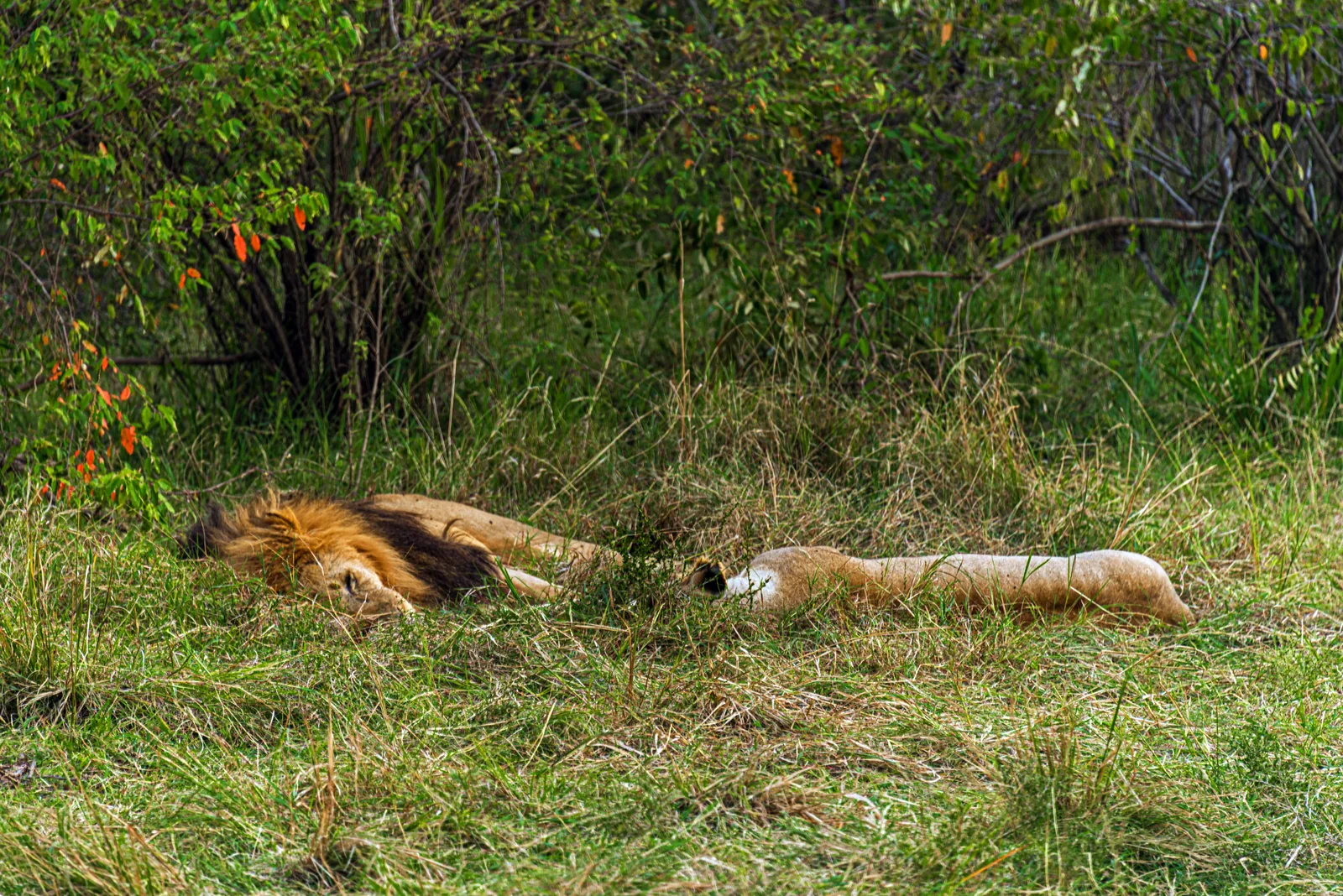
Can you see the Big Five in the Maasai Mara?

Yes. The Conservancy writes that on a good day you can see all of the Big Five in the Mara Triangle within less than two square kilometres, including the Cape buffalo, which is missing in Etosha.

Mara Conservancy: Experience Mara Triangle, gate hours ↗

Is the Maasai Mara in Kenya or Tanzania?

In Kenya. The Maasai Mara National Reserve is a reserve of Narok County, on Kenya's national border with Tanzania. South of the border the same grassland continues as the Serengeti in Tanzania.

Mara Conservancy: Experience Mara Triangle, gate hours ↗

Why is the Maasai Mara so expensive?

The Mara Conservancy explains the fee with its history. Before 2001, revenue in the Mara Triangle was only about a fifth of what was possible and thousands of animals were poached every year. Today, according to the Conservancy, gate revenue pays for protection and for local communities.

Mara Conservancy: history of the Mara Triangle ↗

Why is the Maasai Mara National Reserve famous?

For its wildlife. The Mara Conservancy speaks of one of the highest densities of wildlife in the world, and on a good day you can see all of the Big Five in the Mara Triangle within less than two square kilometres. The wildebeest herds from the Serengeti also cross the Mara River here.

Mara Conservancy: Experience Mara Triangle, gate hours ↗

07Sources and last checked

Fees and rules come from the Mara Conservancy, which runs the Triangle on behalf of Narok County. The county's ticket portal could not be reached when we checked.

  1. Mara Conservancy: Conservation Fees (fee table, file name 2024) ↗
  2. Mara Conservancy: history of the Mara Triangle ↗
  3. Mara Conservancy: Experience Mara Triangle, gate hours ↗
  4. Mara Conservancy: driving there and driving rules ↗
  5. Mara Conservancy: flying to the Mara Triangle ↗
  6. County Government of Narok ↗
  7. OpenStreetMap: boundary of the Maasai Mara National Reserve ↗
  8. OpenStreetMap: boundary of the Mara Triangle ↗

How current is this information?

Researched 25 Sep 2026. Not a live status. Dates apply only to the year stated. A successful automatic fetch is not an editorial confirmation; outdated automatic values are hidden and replaced by the source link.

Current information from the park ↗

Image and map credits

Location sources: Gates, bridge, airstrips, viewpoints and rivers are taken from OpenStreetMap and each is referenced by its object number. We only queried inside Kenya's national border: the numbered river crossings recorded in OpenStreetMap south of the border lie in the Serengeti in Tanzania and are therefore missing here. Markers do not imply that access is permitted. Base map © OpenStreetMap contributors. Coastlines of the chapter map: Natural Earth.

End of the field book · Park authority ↗