14,763 square kilometres without a fence, over a million wildebeest moving in a circle, the highest density of predators on earth: a daily entrance fee, a tent for 30 dollars, and a tariff list the authority has not renewed since 2023.
First momentNo barrier stops the herds: this is how UNESCO describes the ecosystem through which over a million wildebeest move in a circle every year.
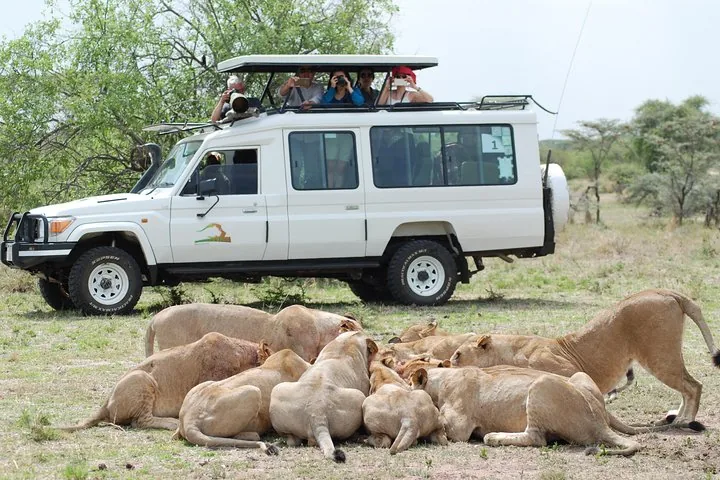
Private vehicles from East Africa may not run a tourism business in the park; commercial vehicles pay the vehicle fee in dollars. In practice almost every visitor comes with a tour operator: on a camping group safari from Arusha, on a lodge tour or on a flight to Seronera.
The tariff list has two permits: a day permit for twelve daylight hours with multiple entries and exits, and an overnight permit for 24 hours. Both run from the time you enter, not from midnight. You must show ID at the gate.
You pay through the government's electronic payment system: online through the authority's reservation system, by Visa or Mastercard at the gate, or by M-Pesa, Tigo Pesa and Airtel Money. Prices include 18 per cent VAT.
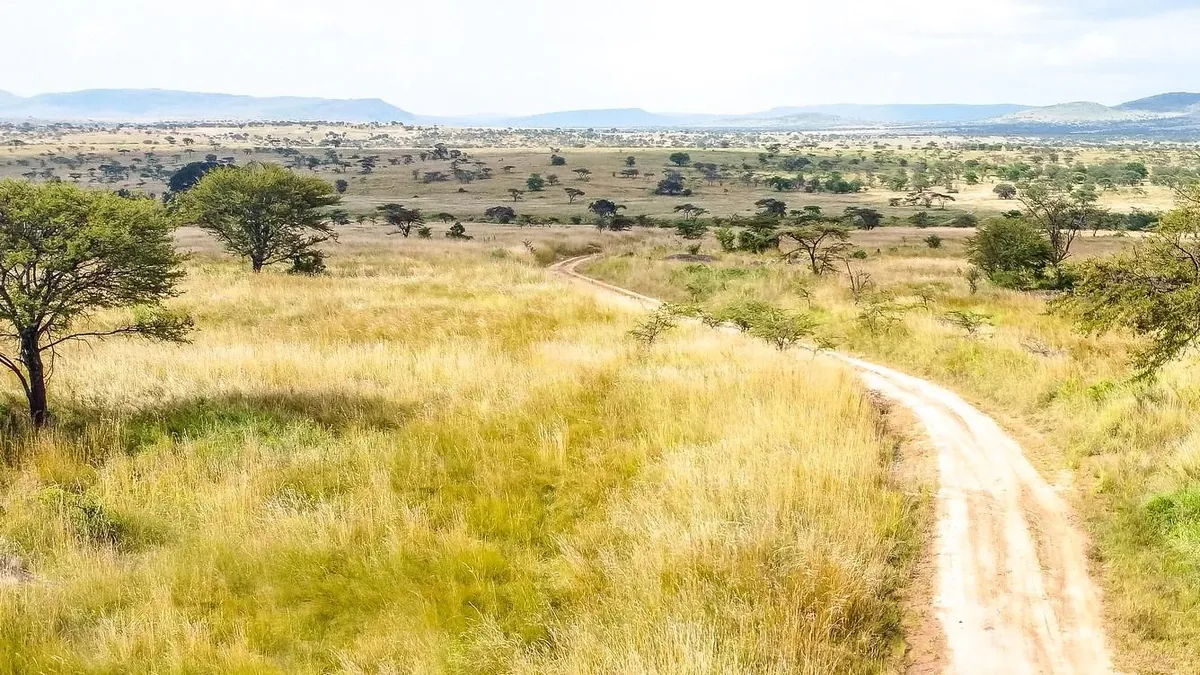
25,000 square kilometres of treeless short-grass plains on volcanic soils, dotted with kopjes, rivers and patches of woodland. Soils formed from the ash of the Ngorongoro highlands and the grazing pressure of the migration make the plains one of the most productive ecosystems in the world.
Inscribed in 1981 under two criteria: for the natural spectacle of the migration against the backdrop of the endless plains, and for the variety of habitats with the largest herds of hoofed animals and the highest density of predators. The park borders the Ngorongoro World Heritage Site; together they form the Serengeti-Mara ecosystem.
Serengeti was established as a national park in 1959. At 14,763 square kilometres it is Tanzania's third-largest park and the heart of a 30,000-square-kilometre ecosystem that reaches into Kenya's Maasai Mara. It is managed by Tanzania National Parks (TANAPA), based in Arusha; you can reach the park management at serengeti@tanzaniaparks.go.tz.
UNESCO has listed the park as a World Heritage Site since 1981 and as a biosphere reserve since 1982; the park authority gives 1982 for both. For seven years in a row, from 2019 to 2025, it won “Africa's Leading National Park” at the World Travel Awards.
The tariff page is headed “Financial Year 2023/2024” and gives June 2024 as the end of validity, but still shows the list as current. No newer list had been published on the day we checked. Check there before you travel; the authority changes its fees on 1 July.
Perfect Wilderness Tours and Safari · Four-day safari from Arusha · 6 guests per vehicle
4 days Serengeti and Ngorongoro from Arusha, camping with a cook
Three nights in a tent: day one the drive to the Serengeti with a game drive on the way, day two a full day in the Serengeti with morning and afternoon game drives, day three towards Ngorongoro with Olduvai as an option, day four the crater floor with lunch at the Ngoitokitok springs and the drive back. At most six guests per vehicle, driver and cook on board, sleeping bags provided.
4 days
Entrance fees included
Three nights in a tent, sleeping bags
Six guests per vehicle
Departure Pick-up from your hotel in Arusha, return drop-off there.
Entrance fees, tents, sleeping bags, meals, water and guide are on the list of inclusions; drinks and tips are not, and the Olduvai museum costs extra. English only.
View tour ↗Ad · partner link · checked 27 Sep 2026
Naabi Hill & the southern plains: gate and calving season
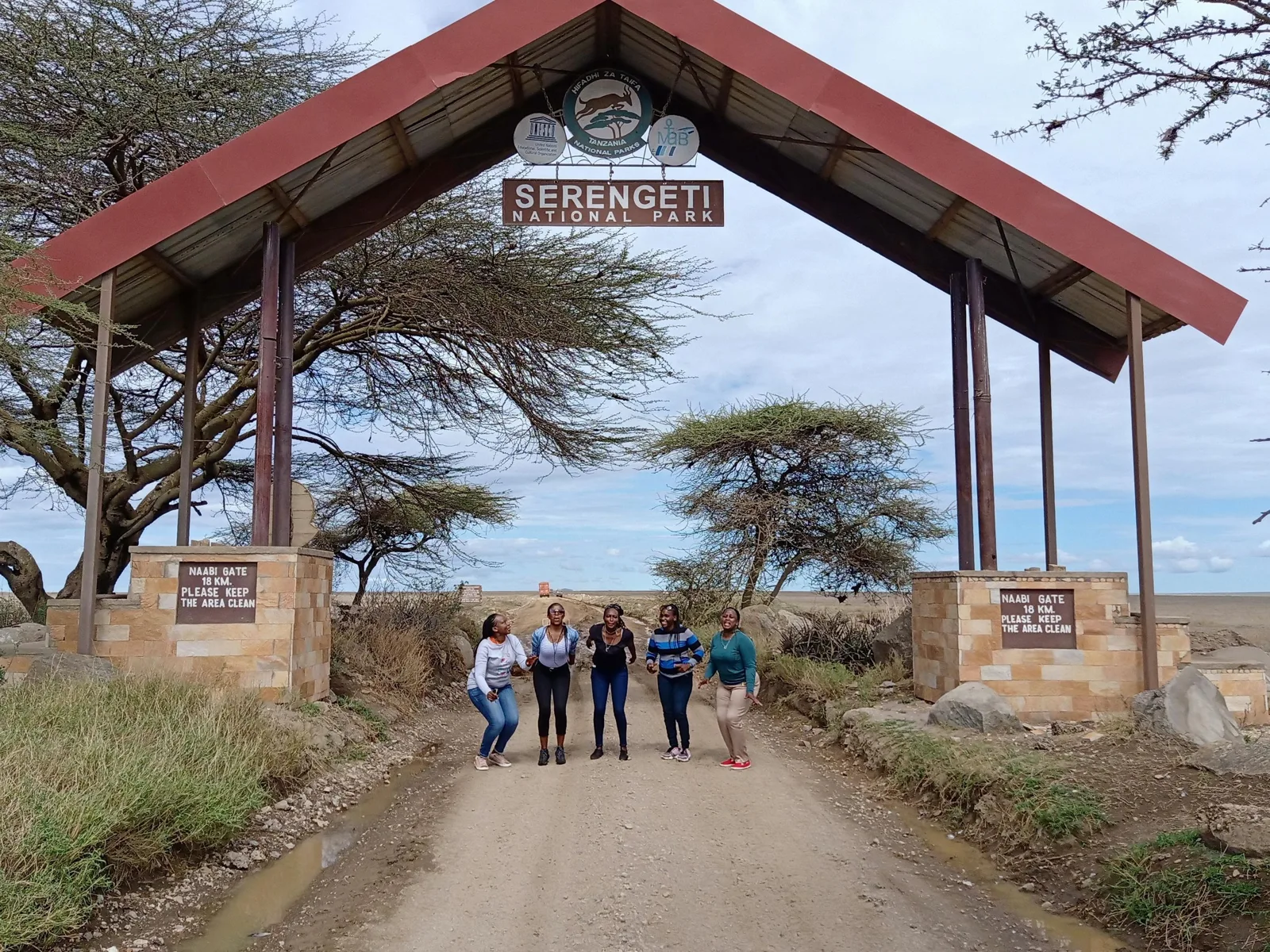
Naabi gate lies on the border between the Serengeti and the Ngorongoro Conservation Area. Beyond it begin the plains where, according to the park authority, over 500,000 calves are born within two to three weeks from January to March.
The usual road runs from Arusha via Karatu through the Ngorongoro Conservation Area, past the crater rim and along Olduvai to Naabi gate; from there a dirt track continues to Seronera. The transit costs the conservation area's daily fee; gates open 6:00 to 18:00.
From the south, the road runs through the Ngorongoro Conservation Area to Naabi gate. The conservation area's gates open at 6:00 and close at 18:00, and the transit costs its own daily fee. Other gates, according to OpenStreetMap: Ikoma in the west, Klein's and Bologonja in the northeast.
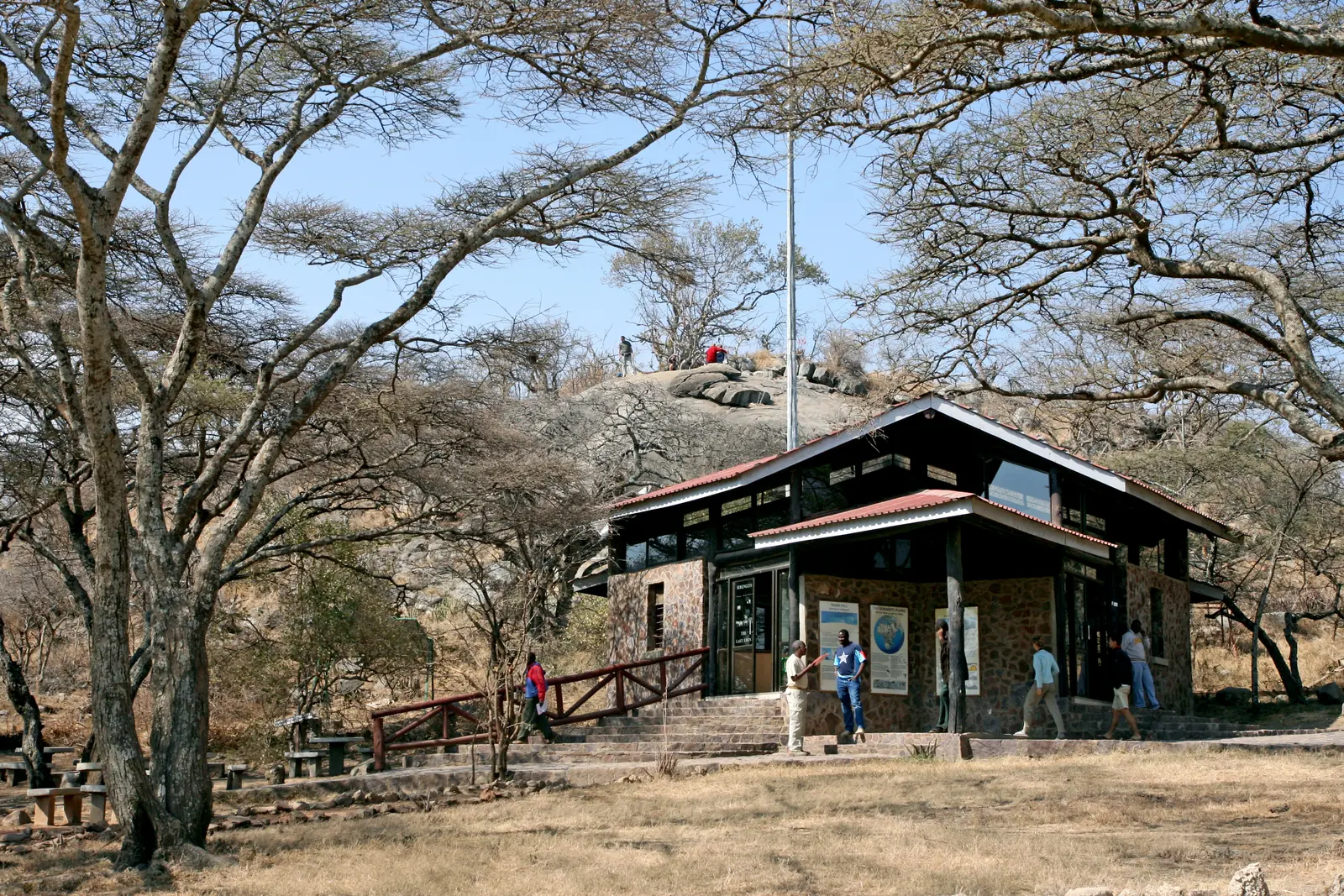
In Seronera, in the middle of the park, the map shows the visitor centre, the airstrip and the public campsites. All around, kopjes rise from the grass, rock islands that UNESCO counts as part of the backdrop of the endless plains.
The authority names the highest density of large predators: lions, leopards, cheetahs and hyenas, plus over 28 species of herbivore and more than 540 bird species. The Seronera Valley, the kopjes and the migrating herds are the main targets; a day permit is valid for twelve daylight hours.
Pimbi, Nyani, Tumbili and Dik Dik near Seronera, and others at Lobo and in the west: US$30 per person per night, children 5, toilet blocks, no fence. This is where the camping group safaris from Arusha stay; the operator provides the tent.
The authority names rock paintings and historic sites as visible traces of the Maasai, Ikoma and other groups in the park, and offers cultural tours as an activity. The neighbouring Ngorongoro Conservation Area is inhabited; the national park itself is not.
The authority lists rock paintings of the Maasai and Datoga, Gong Rock and historic Ikoma sites as traces of people in the park, and offers cultural tours as an activity.
Great Migration: which month, and where the herds are
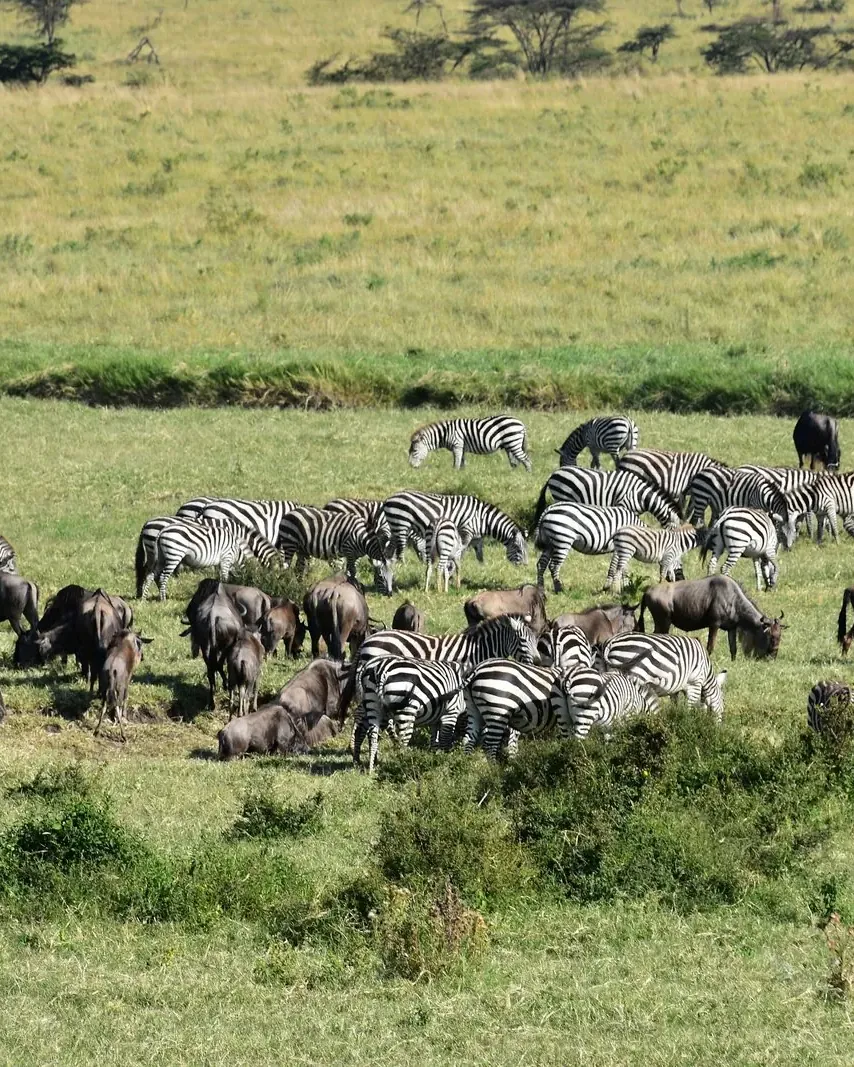
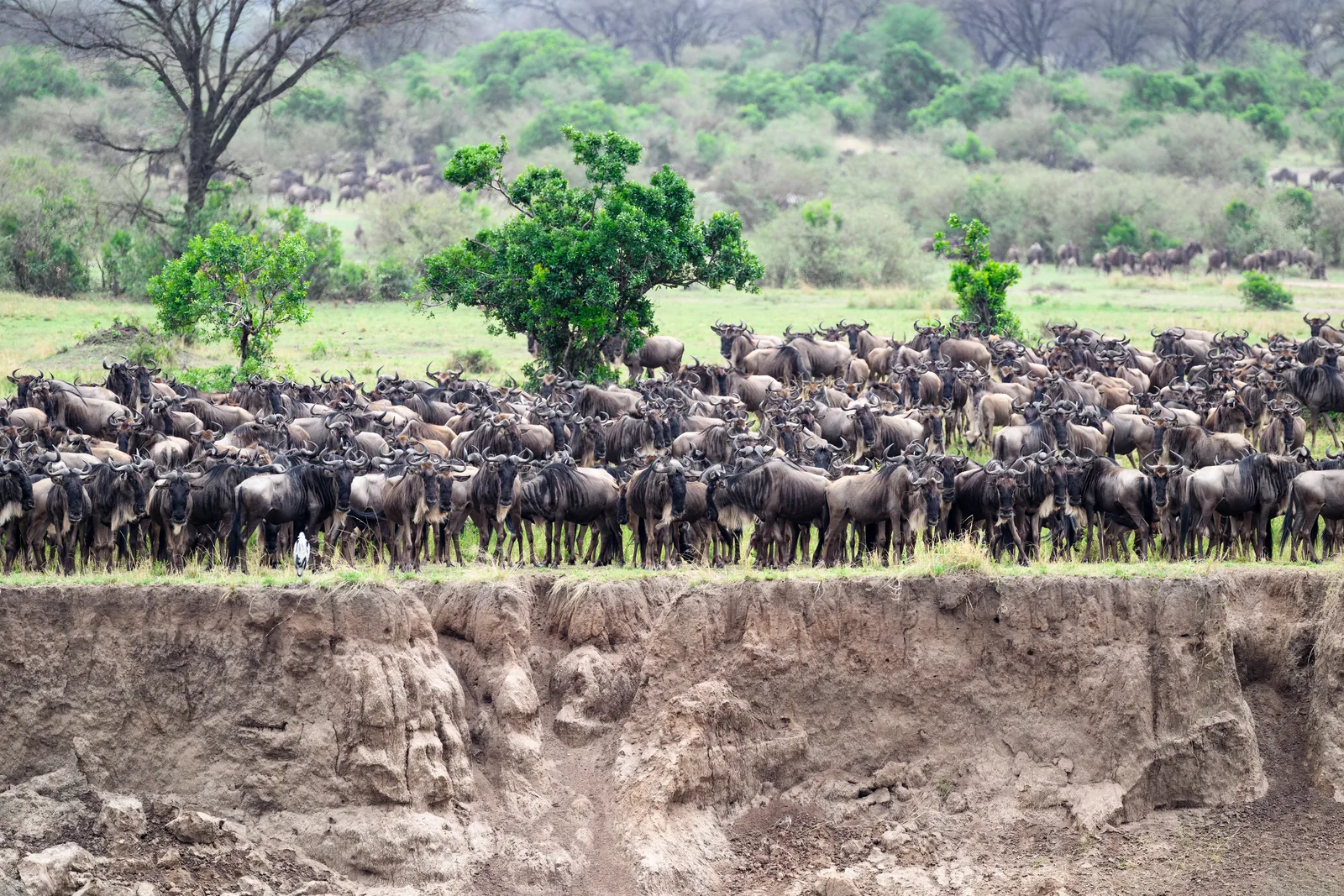
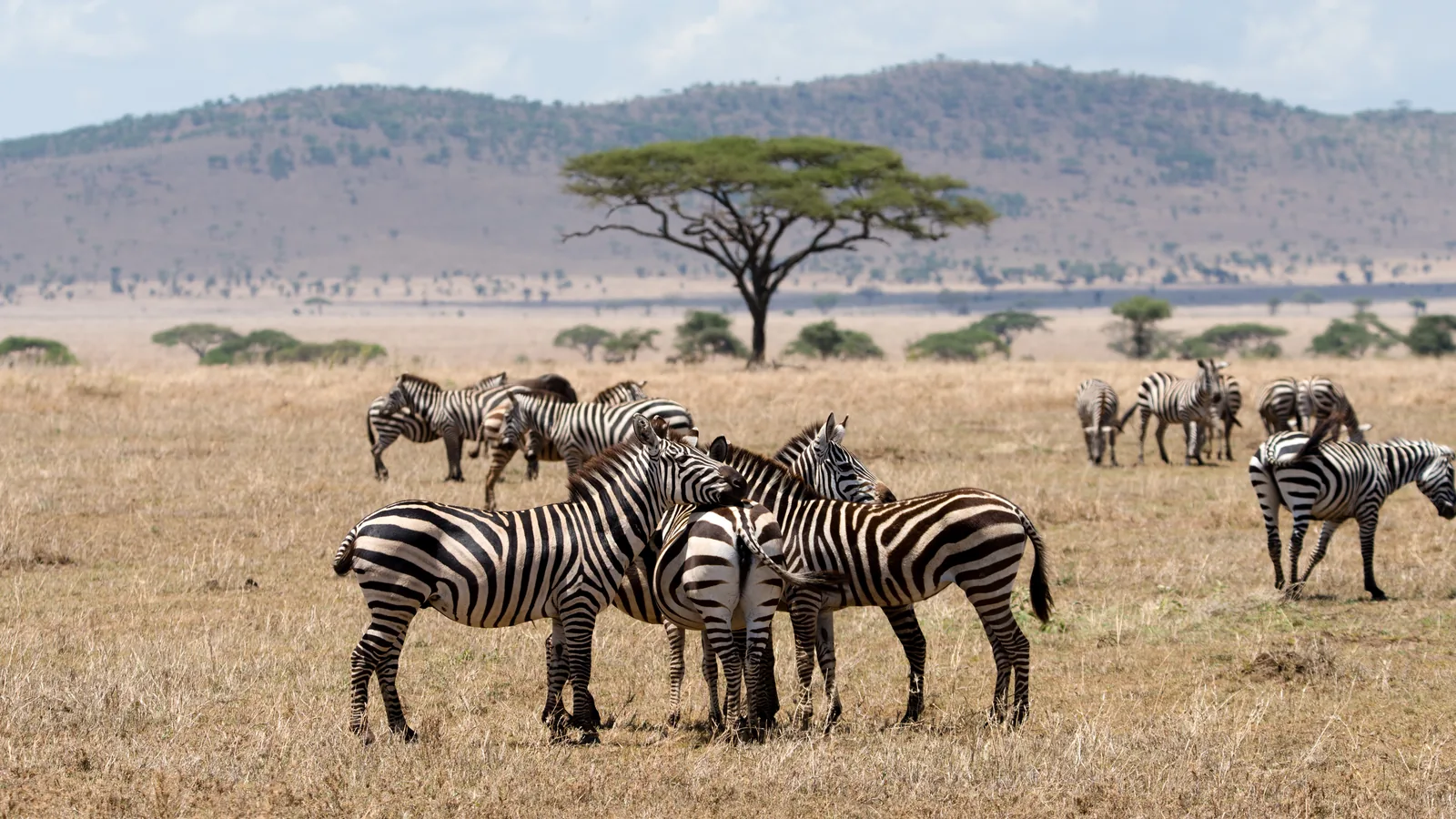
Over a million wildebeest, plus hundreds of thousands of zebras and gazelles: according to the park authority's calendar, they move through the Serengeti and Kenya's Maasai Mara every year, following the rain and fresh grass.
The herds gather in the southern Serengeti and the neighbouring Ngorongoro Conservation Area. Over 500,000 calves are born within two to three weeks, and predators are everywhere.
In the western Serengeti the herds cross the Grumeti River, in the authority's words one of the most dramatic river crossings: crocodiles wait in the water.
The best-known and most dangerous crossing: the herds cross the Mara River on their way into Kenya's Maasai Mara. The authority names the northern Serengeti from August to November as the area to watch.
In October and November the herds move back through the northern Serengeti, and fresh grass grows with the short rains. In December they reach the southern plains again, and the cycle starts over.
The authority describes the migration as year-round and unpredictable: the timing can shift. It advises you to stay flexible, book early and choose experienced guides who know where the herds are.
Over a million wildebeest, two million in the ecosystem according to UNESCO, plus 900,000 Thomson's gazelles and 300,000 zebras move in a circle through Tanzania and Kenya every year, around 1,000 km (620 mi) according to UNESCO. On its park page the park authority gives 1.5 million wildebeest, on its migration page over two million and around 1,800 km (1,120 mi). It is the largest remaining unaltered animal migration on earth.
Western Corridor: Grumeti crossing and access from Mwanza
A narrow arm of the park follows the Grumeti west to Ndabaka gate. In June and July the herds cross the river here, according to the park authority's calendar one of the most dramatic crossings: crocodiles wait in the water.
According to OpenStreetMap, the T4 highway runs from Mwanza via Lamadi past Ndabaka gate, the entrance to the Western Corridor. From Musoma, the T17 leads to Ikoma gate and on to Seronera.
Nature's Land Safaris & Rentals Ltd · Private day safari from Mwanza · 14 hours
From Mwanza: a full-day game drive in the Serengeti, private
Departure at 6:00 in Mwanza on Lake Victoria, according to the operator around two hours to the park gate, then a full day of game driving in an off-road vehicle with a pop-up roof, with a packed lunch. The group leaves the park by 18:00 and then returns to Mwanza.
14 hours
Private tour
Entry included according to the inclusions list
Guide also in German
Departure Meeting point Pamba Road in Mwanza, or pick-up from a hotel, the port or the airport in Mwanza; according to the pick-up note, also from any airstrip in the Serengeti.
Included according to the inclusions list: entrance fees, packed lunch, two bottles of water per person, vehicle with air conditioning, Wi-Fi and cool box, private transport. Not included: tips. Contradiction on the page: the inclusions list shows the entrance fees as included, while the Serengeti stop is marked “Free admission”; clarify before booking that park entry is included in the price. The page does not say which gate the trip uses. If you book less than nine days in advance, confirmation comes only within 48 hours; free cancellation up to 24 hours before. Not wheelchair accessible.
View tour ↗Ad · partner link · checked 27 Sep 2026
Northern Serengeti: Mara River crossing, Lobo and Kogatende
According to UNESCO, the Mara is the only river that flows through the park all year. In August and September the herds cross it on their way into Kenya's Maasai Mara, and in October and November they move back through the north, according to the park authority's calendar.
The Mara is the only river in the park that flows all year; in dry years water runs short. UNESCO names poaching, tourism pressure, bush fires and plans for a road across the park, which would split the ecosystem, as threats.
Serengeti wildlife: where to see lions, leopards and cheetahs
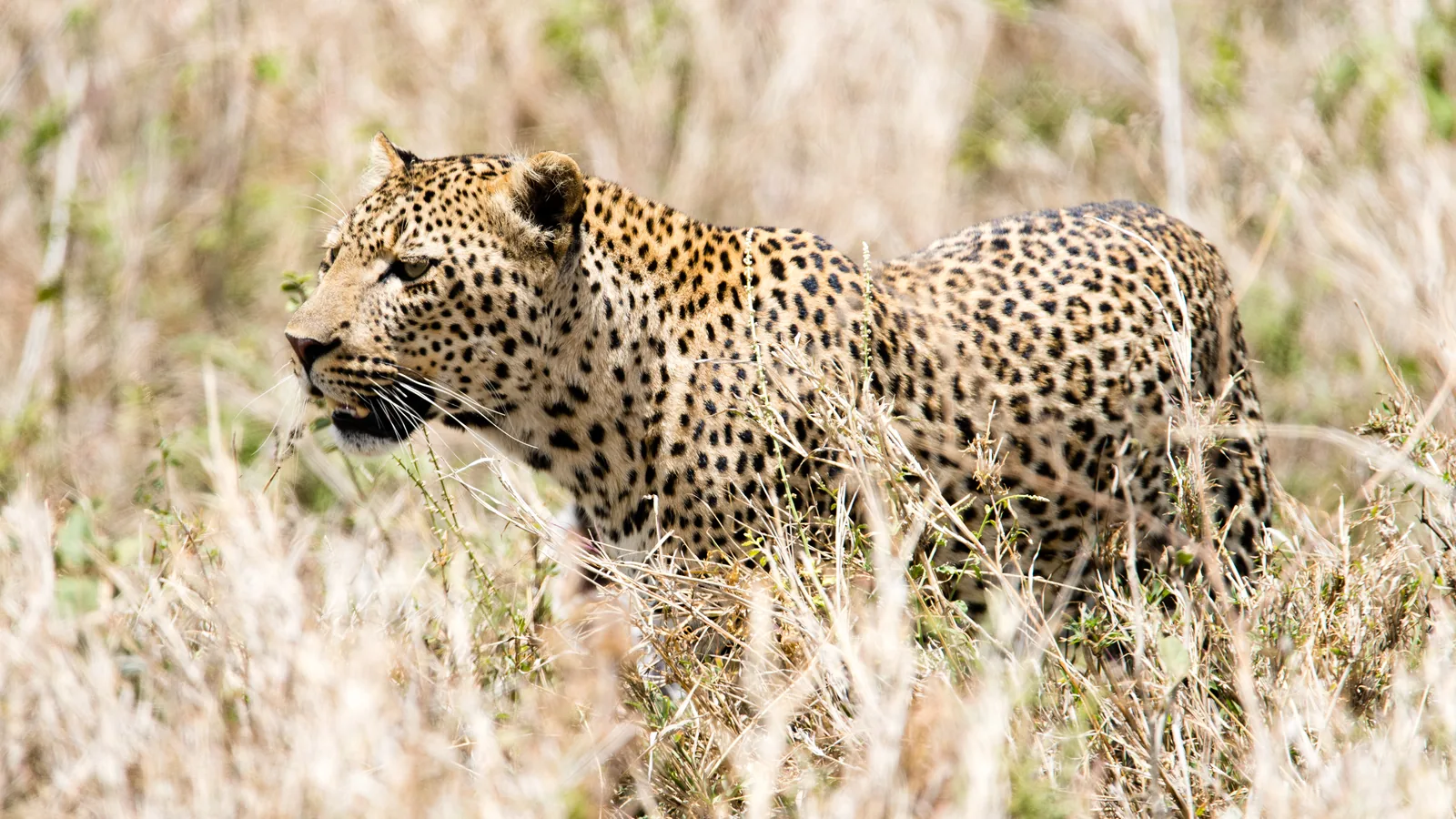
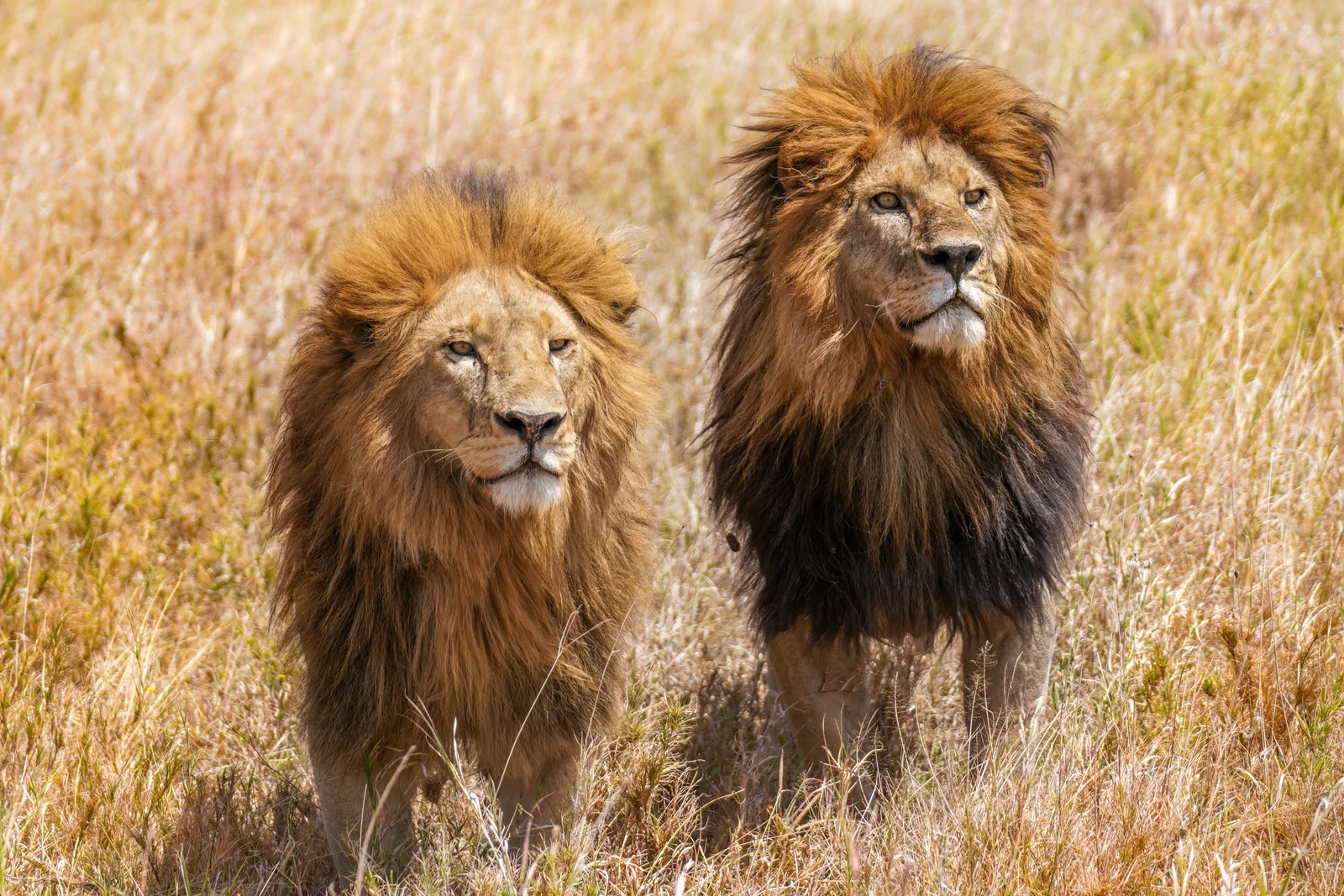
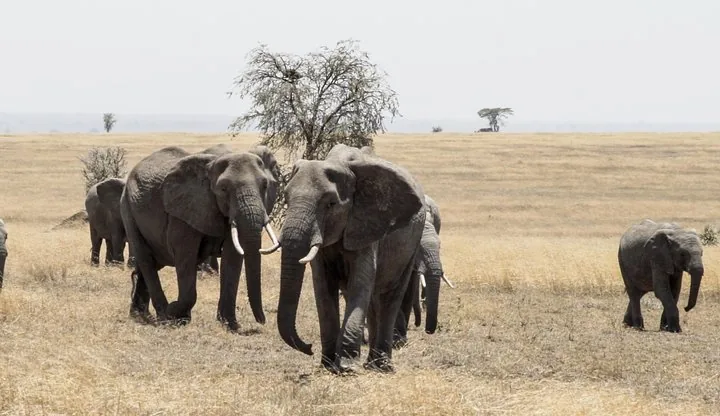
UNESCO counts around 4,000 lions, 1,000 leopards, 225 cheetahs and 3,500 spotted hyenas in the ecosystem, the highest concentration of large predators on earth. There are also around 200 black rhinos, for which the park authority explicitly names the Serengeti.
„Endless plains, 25,000 square kilometres of treeless short grass with kopjes, rivers and woodland: this is how UNESCO describes the setting of the migration.“
UNESCO counts around 4,000 lions, 1,000 leopards, 225 cheetahs, 3,500 spotted hyenas and 300 wild dogs in the ecosystem, the highest concentration of large predators on earth. Black rhino, leopard, elephant and cheetah are on the Red List.
Over 500 species according to UNESCO, more than 540 according to the authority, five of them found only in Tanzania; the country's largest ostrich population. The best time is the wet months, when migrant birds arrive from Europe.
The authority lists rhino viewing as a separate activity, explicitly for the Serengeti too. Its tariff list names “Special Rhino viewing” in the Moru area of the Serengeti, charged per trip.
Serengeti balloon safari: fees, rules and launch sites
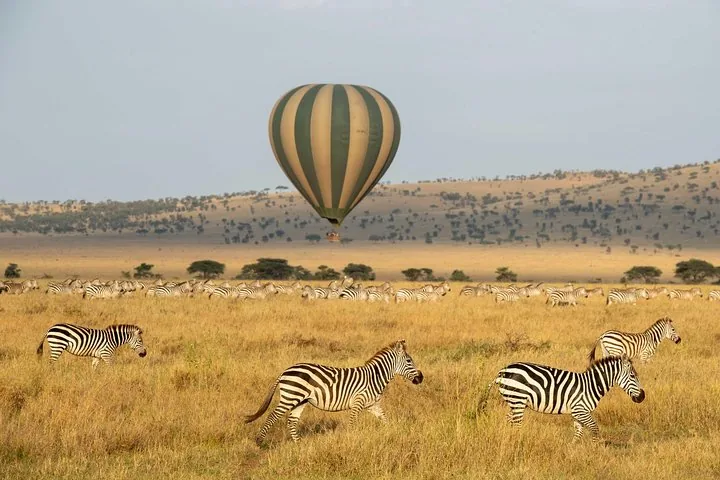
Balloons have flown over the Serengeti since 1989, according to the park authority's guideline. Every operator works under its own contract, the park management sets take-off and landing sites with it, and flights take place in the early morning.
According to the authority's guideline, balloon safaris began in the Serengeti in 1989. Flights take place only in zones approved by the park management, which sets take-off, landing and breakfast sites with the operator. Balloon operations are planned between 3:00 and 10:00 local time, and flying over accommodation is not allowed. The guideline gives the minimum height as “1,500 ft (45m)”, two figures that do not match.
The operator Serengeti Balloon Safaris requires passengers to bend their knees, hold on to the handles with both hands during take-off and landing, and climb into and out of the basket by themselves. Passengers over 120 kg may be charged for two seats. It recommends long trousers, long sleeves, sturdy shoes and a hat against the heat of the burners.
A balloon safari costs a park fee of US$50 per person per flight on top of the operator's price. Walks with a ranger cost US$20 for up to four hours and 25 for longer; a guide from the authority costs US$20 per group per day.
The operator Serengeti Balloon Safaris describes the flight: pick-up before dawn, take-off at sunrise, around an hour in the air, then champagne and breakfast in the bush, about five hours in total. According to the operator, the flight is not suitable for pregnant women or people with heart conditions; passengers over 120 kg may be charged for two seats.
The authority lists bush meals as a park activity; lodges and balloon operators organise them. Picnics are possible at designated sites such as the visitor centre.
Transfer before dawn to the launch site, around an hour in the balloon wherever the wind takes you, then sparkling wine and breakfast under an acacia and the drive back to your camp or lodge. Depending on the season, flights start from four sites: all year at Seronera, from June to October at Kirawira in the west, from June to November at Kogatende in the north and from mid-December to the end of March at Ndutu.
5 hours
Around one hour in the air
Breakfast and sparkling wine included
Park fee not included
Departure Pick-up from camps and lodges up to around two hours' drive or 40 km (25 mi) from the launch sites, start time 5:00; tickets are issued the day before at the operator's office at the Seronera visitor centre, in Kirawira, Ndutu or Kogatende.
Where the balloon launches depends on the season: Seronera, Kirawira and Kogatende are in the park, Ndutu is in the Ngorongoro Conservation Area outside the park. All four launch sites are marked “Admission ticket not included”; the park authority's tariff list charges a separate balloon park fee per person per flight. Contradictions on the page: the inclusions list and the overview say sparkling wine, the itinerary a “champagne toast”; the description mentions 30 years of experience, the itinerary “since the 1970s”, while the park authority's guideline dates the start of balloon safaris in the Serengeti to 1989; the pick-up radius of two hours or 40 km (25 mi) does not match the list of pick-up points, which also includes lodges in Kenya's Maasai Mara, at Tarangire and in Babati. Confirmation within 48 hours, booking closes at 17:00 the day before; free cancellation up to 24 hours before, cancellation possible in bad weather. Not for children under 7, not wheelchair accessible, not recommended during pregnancy or with back or heart problems. Guide in English, French, Spanish or Portuguese.
View tour ↗Ad · partner link · checked 27 Sep 2026
Getting there & where to stay: by road, by air, tent or lodge
If you come by road through the Ngorongoro Conservation Area, you must pass its gates between 6:00 and 18:00. If you fly, you land at one of the airstrips in the park; OpenStreetMap lists them at Seronera, Lobo, Kogatende, Lamai and Kirawira, among others.
OpenStreetMap lists airstrips in the park at Seronera, Lobo, Kogatende on the Mara and Kirawira in the west, plus Ndutu outside the park in the Ngorongoro Conservation Area. Landing fees per aircraft are set out in the authority's tariff list.
Nature's Land Safaris & Rentals Ltd · Private two-day safari from Mwanza
From Mwanza: two days in the Serengeti with one night in the park, private
Departure at 7:00 in Mwanza on Lake Victoria, according to the operator around two hours to the park gate, then into the park via Ndabaka gate, with a stop at the Hippo Pool on the way. One night in the Serengeti at a campsite or lodge with full board, and on day two a game drive on the way back to Mwanza. The tour stays in the Serengeti; no other park is included.
1 day and 12 hours
Private tour
Park and concession fees included according to the inclusions list
Guide also in German
Departure Meeting point Pamba Road in Mwanza, or pick-up from a hotel, the port or the airport in Mwanza; according to the pick-up note, also from any airstrip in the Serengeti.
Included according to the inclusions list: entry with conservation and concession fees, one night with full board, packed lunch, water during game drives, vehicle with air conditioning, Wi-Fi and cool box, private transport. Not included: a tip for the guide, for which the operator gives a guideline amount per day. Contradictions on the page: the inclusions list shows entry as included, while the Serengeti stop is marked “Free admission” and Ndabaka and Hippo Pool “Admission ticket included”; the description promises a “premium tented camp”, while the overview and itinerary say campsite or lodge; the itinerary speaks of two days in the park, the duration of a day and a half. Clarify before booking. If you book less than nine days in advance, confirmation comes only within 48 hours; free cancellation up to 24 hours before. Not wheelchair accessible.
View tour ↗Ad · partner link · checked 27 Sep 2026
Provider's product photo · Viator
Beach & Safari Holidays · Fly-in safari from Zanzibar · 2 days
From Zanzibar: two days in the Serengeti with a flight to Seronera
In the morning, a flight from Zanzibar to Seronera airstrip in the middle of the park, then a full-day game drive with a picnic. The night is at Africa Safari Serengeti Ikoma, which according to the operator is outside the park and five minutes by car from the gate. On the second morning, a short game drive back to the airstrip and the flight back to Zanzibar.
2 days
Park and landing fees included
Domestic flights included
Guide in German or English
Departure Pick-up from your hotel on Zanzibar, flight to Seronera airstrip; return by flight and transfer to your hotel.
Green on the inclusions list: park fees, landing fees, domestic flights Zanzibar–Seronera and back, private guide, lodge with full board, drinking water. Not included: international flights, visa, tourism levy and village tax at check-in, personal expenses, drinks and tips, the mandatory insurance for Zanzibar. The operator points out that the date may shift because seats on flights to the north are limited. Not suitable for people with back or heart problems, wheelchair users or people with insect allergies.
View tour ↗Ad · partner link · checked 27 Sep 2026
Provider's product photo · GetYourGuide
Where to stay
Lodges and permanent camps
On the kopje at Lobo, in the Seronera Valley, on the Grumeti, on the Mara at Kogatende and at Kusini in the south: lodges and permanent tented camps on concession land. Their prices include the authority's concession fee; book through the operators or as part of a tour.
Outside Ikoma gate, in the Loliondo area beyond Klein's Gate and at Ndutu in the Ngorongoro Conservation Area, there are camps outside the park boundary. If you sleep there, you pay no park fee for the night, but you pay again every time you enter.
The authority describes a game drive as a trip in an off-road vehicle on designated routes and tracks, from dawn to dusk. Its tariff list includes night game drives for other parks, not for the Serengeti.
For its parks, the authority describes a game drive as a trip in an off-road vehicle, usually four-wheel drive, on designated routes and tracks, from dawn to dusk. It names early morning and late afternoon as the best times. Its rules: do not feed or tease animals, leave nothing but footprints. Children under six are not allowed on every game drive.
Short walks of up to four hours cost US$20, long ones 25, children from twelve years pay half, always with an armed ranger and booked in advance. The authority describes walking safaris as a chance to read tracks and to see plants and insects that stay hidden from a vehicle.
ID is mandatory at the gate. If you want the resident or East African rate, show your residence permit or passport; everyone else pays the non-resident rate in US dollars.
The fine for speeding is 50,000 shillings, for accidents 200,000. Open vehicles pay a 50 per cent higher vehicle fee. The tariff list includes night game drives only for certain parks; the Serengeti is not one of them.
There is no public transport. The tracks are gravel and earth; in the rainy season parts become impassable. Four-wheel drive is standard, and open vehicles pay a surcharge. The tariff list includes night game drives for certain parks; the Serengeti is not one of them.
Nothing saved yet. Every place card has a pin, and so does every place on the Map. What you save collects here, with days, notes and a preview you can share.
Reality check
Share
The plan is stored in the link itself. Anyone who opens it sees the preview and can use the plan.
Image for your phone, with stops and map.
01Best time to visit: the migration sets the calendar
Where the herds are, according to the park authority's calendar. The months are a rule of thumb.
Temperatures
The authority gives 15 to 30 °C (59 to 86 °F) and an altitude of 920 m (3,018 ft) for the park. The low season in the tariff list, 15 March to 15 May, falls in the long rains; the balloon operators warn of cool early mornings.
Best months by the climate data: May to August. Average daytime highs of 25 to 28 °C, lows of 12 to 14 °C, 9 to 66 mm of precipitation a month. The wettest month is April (142 mm), the driest July (9 mm).
10°15°20°25°30°
Jan2615
Feb2815
Mar2716
Apr2615
May2514
Jun2613
Jul2712
Aug2813
Sep2914
Oct2915
Nov2716
Dec2615
High °CLow °C
Daily highDaily lowPrecipitation
All monthly values as a table
Monthly averages 2001–2020, NASA POWER model
Month
High °C
Low °C
Precipitation mm
January
26.5
15.0
119
February
27.6
15.3
79
March
27.1
15.6
141
April
25.8
15.3
142
May
25.4
14.1
66
June
25.9
13.0
17
July
26.8
12.4
9
August
27.9
13.3
20
September
29.0
14.4
26
October
29.2
15.4
60
November
27.1
15.7
140
December
26.3
15.4
134
Year
953
Modelled values, not a weather station: NASA POWER (MERRA-2) for a grid cell of about 55 × 70 km around the map point Seronera River (2.37° S, 34.81° E), with an average cell elevation of about 1,660 m. Averages for 2001–2020. Higher ground and valleys can differ markedly.
Perfect Wilderness Tours and Safari · Four-day safari from Arusha · 6 guests per vehicle
4 days Serengeti and Ngorongoro from Arusha, camping with a cook
Three nights in a tent: day one the drive to the Serengeti with a game drive on the way, day two a full day in the Serengeti with morning and afternoon game drives, day three towards Ngorongoro with Olduvai as an option, day four the crater floor with lunch at the Ngoitokitok springs and the drive back. At most six guests per vehicle, driver and cook on board, sleeping bags provided.
Departure Pick-up from your hotel in Arusha, return drop-off there.
Entrance fees, tents, sleeping bags, meals, water and guide are on the list of inclusions; drinks and tips are not, and the Olduvai museum costs extra. English only.
View tour ↗Ad · partner link · checked 27 Sep 2026
Nature's Land Safaris & Rentals Ltd · Private two-day safari from Mwanza
From Mwanza: two days in the Serengeti with one night in the park, private
Departure at 7:00 in Mwanza on Lake Victoria, according to the operator around two hours to the park gate, then into the park via Ndabaka gate, with a stop at the Hippo Pool on the way. One night in the Serengeti at a campsite or lodge with full board, and on day two a game drive on the way back to Mwanza. The tour stays in the Serengeti; no other park is included.
Departure Meeting point Pamba Road in Mwanza, or pick-up from a hotel, the port or the airport in Mwanza; according to the pick-up note, also from any airstrip in the Serengeti.
Included according to the inclusions list: entry with conservation and concession fees, one night with full board, packed lunch, water during game drives, vehicle with air conditioning, Wi-Fi and cool box, private transport. Not included: a tip for the guide, for which the operator gives a guideline amount per day. Contradictions on the page: the inclusions list shows entry as included, while the Serengeti stop is marked “Free admission” and Ndabaka and Hippo Pool “Admission ticket included”; the description promises a “premium tented camp”, while the overview and itinerary say campsite or lodge; the itinerary speaks of two days in the park, the duration of a day and a half. Clarify before booking. If you book less than nine days in advance, confirmation comes only within 48 hours; free cancellation up to 24 hours before. Not wheelchair accessible.
View tour ↗Ad · partner link · checked 27 Sep 2026
Beach & Safari Holidays · Fly-in safari from Zanzibar · 2 days
From Zanzibar: two days in the Serengeti with a flight to Seronera
In the morning, a flight from Zanzibar to Seronera airstrip in the middle of the park, then a full-day game drive with a picnic. The night is at Africa Safari Serengeti Ikoma, which according to the operator is outside the park and five minutes by car from the gate. On the second morning, a short game drive back to the airstrip and the flight back to Zanzibar.
Departure Pick-up from your hotel on Zanzibar, flight to Seronera airstrip; return by flight and transfer to your hotel.
Green on the inclusions list: park fees, landing fees, domestic flights Zanzibar–Seronera and back, private guide, lodge with full board, drinking water. Not included: international flights, visa, tourism levy and village tax at check-in, personal expenses, drinks and tips, the mandatory insurance for Zanzibar. The operator points out that the date may shift because seats on flights to the north are limited. Not suitable for people with back or heart problems, wheelchair users or people with insect allergies.
View tour ↗Ad · partner link · checked 27 Sep 2026
Ad · we may earn a commission if you book through this partner link. Offer details checked 27 Sep 2026. See official ticket information.
03Tickets & entrance fees: US$70 a day in high season, 60 in low season, plus tax
The 2023/2024 tariff list, which the authority shows on its website as the valid one.
The park in numbers
Area
14,763 km², Tanzania's third-largest park
Ecosystem
30,000 km², reaching into the Maasai Mara
Entrance fee
US$70 a day, low season 60, plus 18% tax
Vehicle
US$40 up to 2 t, commercial or foreign
Campsite
US$30 per person per night
Permit
12 daylight hours or 24 hours
National park since
1959
World Heritage since
1981, biosphere reserve 1982
Altitude
920 m (3,018 ft) according to the authority
Endless plains with a 2023 tariff
The Serengeti is Africa's best-known national park: 14,763 square kilometres of plains, kopjes and riverine forest, where over a million wildebeest and hundreds of thousands of zebras and gazelles move in a circle every year and where the highest density of large predators on earth lives. It is managed by Tanzania National Parks and has been a World Heritage Site since 1981.
The authority describes the park as the heart of the Serengeti-Mara ecosystem, which stretches over 30,000 square kilometres into Kenya. On its park page the authority gives over 1.5 million wildebeest, and over two million on its migration page, as does UNESCO; together with hundreds of thousands of zebras and gazelles they move in a circle through the year. According to the authority's calendar: calving in the south from January to March, crossing the Grumeti in June and July, crossing the Mara in August and September, the return through the north in October and November. Around 4,000 lions, 1,000 leopards, 3,500 hyenas and 225 cheetahs follow them.
What a visit costs is set out in the authority's tariff list: US$70 per person per day in the high season from 16 May to 14 March, 60 in the low season, children 20, plus 18 per cent VAT; the website gives 178,850 shillings including tax. Vehicles up to two tonnes US$40, public campsite 30, and a park fee of US$50 on top for a balloon safari. A day permit is valid for twelve daylight hours, an overnight permit for 24 hours, each from the time you enter.
There is a caveat: the list is titled “Financial Year 2023/2024” and gives June 2024 as the end of its validity. On the day we checked, the authority still showed it as the current tariff; no newer one had been published. The authority changes its fees on 1 July. Payment is electronic only: by card or mobile money at the gate, or in advance through the reservation system.
The usual route runs from Arusha via Karatu through the Ngorongoro Conservation Area to Naabi gate, with the conservation area's daily fee for the transit and gates open from 6:00 to 18:00. OpenStreetMap lists airstrips at Seronera, Lobo, Kogatende and Kirawira in the park and at Ndutu outside it. There is no public transport in the park, and the tariff list does not include night game drives for the Serengeti. Almost all visitors come with a tour operator, either on a camping group safari with tents on the public sites near Seronera or on a lodge tour on concession land.
UNESCO inscribed the park in 1981 for the natural spectacle of the migration against the backdrop of the endless plains and for the most productive grassland on earth. It also names the concerns: only one year-round river, the Mara; poaching; tourism pressure; and plans for a road across the park. The park borders the inhabited Ngorongoro Conservation Area; nobody lives in the park itself.
Visitors from outside East Africa pay US$70 from 16 May to 14 March and US$60 from 15 March to 15 May; children aged 5 to 15 pay US$20, under 5 free. The amounts in the PDF exclude VAT; the website gives 178,850 shillings for non-residents including tax.
Commercial or foreign-registered vehicles up to 2,000 kg unladen weight pay US$40 a day, 2,001 to 3,000 kg US$150; open vehicles pay a 50 per cent surcharge. Tanzanian private vehicles pay 20,000 shillings. The fine for speeding is 50,000 shillings, for accidents 200,000.
Public campsite US$30 per person per night, children 5. Special campsites in the Serengeti cost US$60 from July to September and 50 from October to June, booked in advance; premium special campsites US$300. Group hostel US$10, rest house 30.
If you sleep in a lodge or permanent camp inside the park, you pay a concession fee per person per night. The property pays it in advance and includes it in its price. The amount depends on the category of accommodation and is set out in the tariff list.
Nature's Land Safaris & Rentals Ltd · Private two-day safari from Mwanza
From Mwanza: two days in the Serengeti with one night in the park, private
Departure at 7:00 in Mwanza on Lake Victoria, according to the operator around two hours to the park gate, then into the park via Ndabaka gate, with a stop at the Hippo Pool on the way. One night in the Serengeti at a campsite or lodge with full board, and on day two a game drive on the way back to Mwanza. The tour stays in the Serengeti; no other park is included.
Departure Meeting point Pamba Road in Mwanza, or pick-up from a hotel, the port or the airport in Mwanza; according to the pick-up note, also from any airstrip in the Serengeti.
Included according to the inclusions list: entry with conservation and concession fees, one night with full board, packed lunch, water during game drives, vehicle with air conditioning, Wi-Fi and cool box, private transport. Not included: a tip for the guide, for which the operator gives a guideline amount per day. Contradictions on the page: the inclusions list shows entry as included, while the Serengeti stop is marked “Free admission” and Ndabaka and Hippo Pool “Admission ticket included”; the description promises a “premium tented camp”, while the overview and itinerary say campsite or lodge; the itinerary speaks of two days in the park, the duration of a day and a half. Clarify before booking. If you book less than nine days in advance, confirmation comes only within 48 hours; free cancellation up to 24 hours before. Not wheelchair accessible.
View tour ↗Ad · partner link · checked 27 Sep 2026
Nature's Land Safaris & Rentals Ltd · Private day safari from Mwanza · 14 hours
From Mwanza: a full-day game drive in the Serengeti, private
Departure at 6:00 in Mwanza on Lake Victoria, according to the operator around two hours to the park gate, then a full day of game driving in an off-road vehicle with a pop-up roof, with a packed lunch. The group leaves the park by 18:00 and then returns to Mwanza.
Departure Meeting point Pamba Road in Mwanza, or pick-up from a hotel, the port or the airport in Mwanza; according to the pick-up note, also from any airstrip in the Serengeti.
Included according to the inclusions list: entrance fees, packed lunch, two bottles of water per person, vehicle with air conditioning, Wi-Fi and cool box, private transport. Not included: tips. Contradiction on the page: the inclusions list shows the entrance fees as included, while the Serengeti stop is marked “Free admission”; clarify before booking that park entry is included in the price. The page does not say which gate the trip uses. If you book less than nine days in advance, confirmation comes only within 48 hours; free cancellation up to 24 hours before. Not wheelchair accessible.
View tour ↗Ad · partner link · checked 27 Sep 2026
Transfer before dawn to the launch site, around an hour in the balloon wherever the wind takes you, then sparkling wine and breakfast under an acacia and the drive back to your camp or lodge. Depending on the season, flights start from four sites: all year at Seronera, from June to October at Kirawira in the west, from June to November at Kogatende in the north and from mid-December to the end of March at Ndutu.
Departure Pick-up from camps and lodges up to around two hours' drive or 40 km (25 mi) from the launch sites, start time 5:00; tickets are issued the day before at the operator's office at the Seronera visitor centre, in Kirawira, Ndutu or Kogatende.
Where the balloon launches depends on the season: Seronera, Kirawira and Kogatende are in the park, Ndutu is in the Ngorongoro Conservation Area outside the park. All four launch sites are marked “Admission ticket not included”; the park authority's tariff list charges a separate balloon park fee per person per flight. Contradictions on the page: the inclusions list and the overview say sparkling wine, the itinerary a “champagne toast”; the description mentions 30 years of experience, the itinerary “since the 1970s”, while the park authority's guideline dates the start of balloon safaris in the Serengeti to 1989; the pick-up radius of two hours or 40 km (25 mi) does not match the list of pick-up points, which also includes lodges in Kenya's Maasai Mara, at Tarangire and in Babati. Confirmation within 48 hours, booking closes at 17:00 the day before; free cancellation up to 24 hours before, cancellation possible in bad weather. Not for children under 7, not wheelchair accessible, not recommended during pregnancy or with back or heart problems. Guide in English, French, Spanish or Portuguese.
View tour ↗Ad · partner link · checked 27 Sep 2026
Ad · we may earn a commission if you book through this partner link. Offer details checked 27 Sep 2026. See official ticket information.
04Where to stay: a tent for US$30 or a lodge with a concession fee
Public campsites, special campsites and lodges, all inside the park.
Special campsites
Remote sites without facilities for mobile camps, US$60 per person per night from July to September, otherwise 50, booked in advance. Premium sites US$300. Fly camps 50.
05Rules: ID at the gate, VAT in the price, no driving off the tracks
The conditions of the tariff list and the authority.
Filming
For video recording, the tariff list refers you to the park management. For film productions it sets separate filming fees per person per day, which include entry and camping.
Park management +255 754 067 490, hotline +255 689 062 243, serengeti@tanzaniaparks.go.tz; the authority's headquarters in Arusha +255 27 297 0404. The authority offers an app, TanapaGo, for information and booking.
For its parks, the authority says: do not drive off the tracks unless this is explicitly permitted; stay in the vehicle on game drives unless the guide allows you to get out; do not feed or disturb animals; keep quiet, observe speed limits and gate times. Drones are only allowed with restrictions and a special permit.
06Frequently asked questions: Serengeti National Park
How much does it cost to enter Serengeti National Park?
According to the authority's tariff list, US$70 per person per day from 16 May to 14 March and 60 from 15 March to 15 May; children aged 5 to 15 pay 20, under 5 free, each plus 18 per cent VAT. A vehicle up to two tonnes costs US$40, a campsite 30 per person per night. The list dates from the 2023/2024 financial year, and the authority shows it as valid.
A day permit is valid for twelve daylight hours from entry, with multiple entries and exits; an overnight permit for 24 hours. The transit through the Ngorongoro Conservation Area requires that area's own daily fee.
By road from Arusha via Karatu through the Ngorongoro Conservation Area to Naabi gate; the conservation area's gates are open from 6:00 to 18:00. OpenStreetMap lists airstrips at Seronera, Lobo, Kogatende and Kirawira in the park and at Ndutu outside it; from the west, according to OpenStreetMap, the T4 leads from Mwanza to Ndabaka gate and the T17 from Musoma to Ikoma gate. There is no public transport.
It depends on what you want to see. According to the park authority's calendar: calving in the south from January to March, the Grumeti crossing in the west in June and July, the Mara crossing in the north in August and September, the return through the north in October and November. The authority stresses that the timing can shift.
Yes, on the public campsites near Seronera, at Lobo and in the west, for US$30 per person per night, with toilet blocks and no fence; special campsites for mobile camps cost 50 to 60 US dollars and must be booked in advance. The group safaris from Arusha bring tents and a cook.
Where can you see lions, leopards and cheetahs in the Serengeti?
Lions on the plains and around the kopjes, leopards in the riverine forest of the Seronera Valley, cheetahs on the short-grass plains in the south. UNESCO counts around 4,000 lions, 1,000 leopards and 225 cheetahs in the ecosystem, the highest density of predators on earth.
Yes, with a four-wheel-drive rental car and the vehicle permit; however, private vehicles from East Africa may not run a tourism business, and open vehicles pay a 50 per cent surcharge. The tracks are gravel and clay, partly impassable in the rainy season. The tariff list includes night game drives for other parks, not for the Serengeti.
You pay the operator's price plus, according to the authority's tariff list, a park fee of US$50 per person per flight. The list dates from the 2023/2024 financial year.
Can you travel on from the Serengeti to the Maasai Mara?
Yes, but not through the park: operators route the trip to Kenya via Arusha and Nairobi. Our Maasai Mara profile gives the daily fee and gate times there.
Electronically through the government payment system: in advance through the authority's online reservation, at the gate by Visa or Mastercard, or by M-Pesa, Tigo Pesa and Airtel Money. Cash is not accepted. You must show ID or a passport.
Yes, since 1981, for the migration as a natural spectacle and for the variety of habitats with the largest herds of hoofed animals and the highest density of predators. It has also been a biosphere reserve since 1982. The park borders the Ngorongoro World Heritage Site.
What month is the Great Migration in the Serengeti?
The herds are in the Serengeti ecosystem all year; the month decides where. According to the park authority's calendar, they calve in the south from January to March, move through the centre in April and May, cross the Grumeti in June and July and the Mara in August and September, and are back in the south in December. The authority says the timing can shift.
Serengeti National Park is in Tanzania and is managed by Tanzania National Parks (TANAPA). Its ecosystem of 30,000 square kilometres reaches across the border into Kenya's Maasai Mara.
It protects the largest remaining unaltered animal migration on earth and the highest concentration of large predators. UNESCO counts two million wildebeest, 300,000 zebras, 900,000 Thomson's gazelles and around 4,000 lions in the ecosystem. The park has been a World Heritage Site since 1981.
What are the entry fees for Serengeti National Park in 2026?
No 2026 tariff has been published: on the day we checked, 25 September 2026, the authority still showed the 2023/2024 list as valid. It gives US$70 per person per day in the high season and 60 from 15 March to 15 May, plus 18 per cent VAT. The authority changes its fees on 1 July, so check before you travel.
Researched 25 Sep 2026. Not a live status. Dates apply only to the year stated. A successful automatic fetch is not an editorial confirmation; outdated automatic values are hidden and replaced by the source link.