

State
Photo: Coastfield ↗ · CC BY-SA 4.0 ↗Berchtesgaden National Park
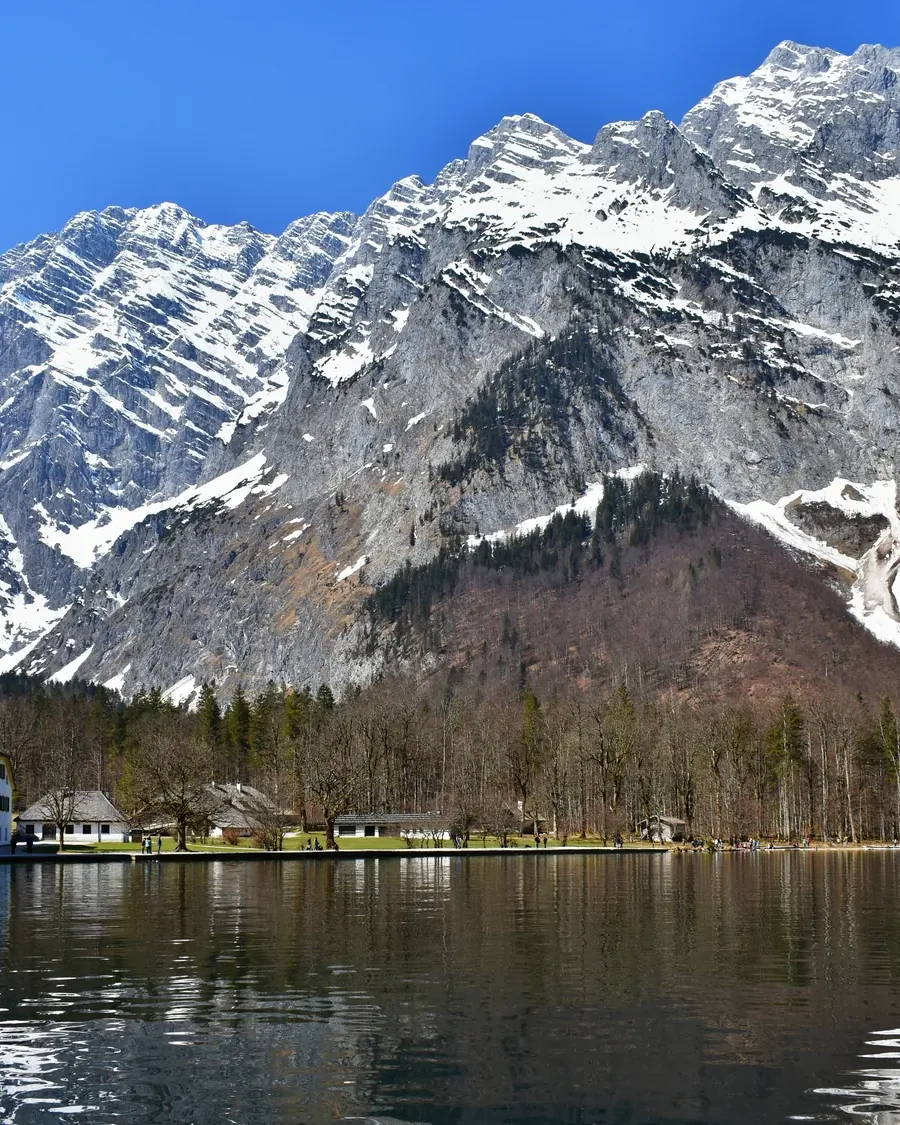
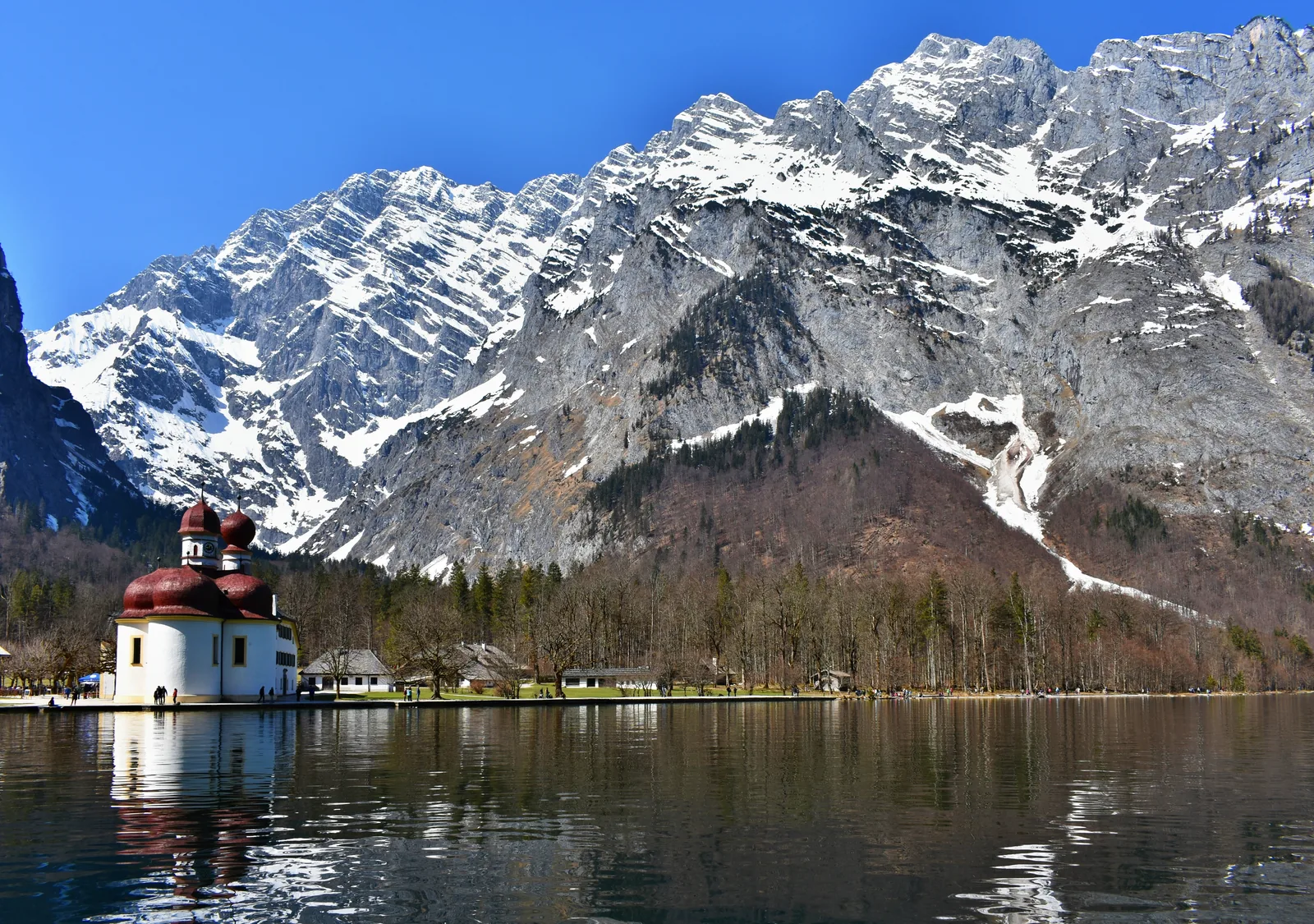
Germany's only Alpine national park: 2,300 metres (7,546 ft) of relief between the bed of Lake Königssee and the summit of the Watzmann.

National Parks Atlas · Country · checked 18 Sep 2026
Sixteen national parks, from the Wadden Sea on the North Sea coast to the Alps above Lake Königssee. None of them charges an entrance fee; what you pay for are boats, cable cars, car parks and a few visitor centres.
Berchtesgaden in full; all 16 parks compared below
park authorities, operators and transport providers
in all 16 national parks
Bavarian Forest, founded on 7 October 1970
Last checked: 18 Sep 2026
Germany has 16 national parks. The first, the Bavarian Forest, was founded on 7 October 1970; the youngest, Hunsrück-Hochwald, in 2015. Together they cover very different landscapes: the tidal flats of the Wadden Sea, beech forests that are part of a UNESCO World Heritage Site, sandstone towers on the Elbe, the Harz with the Brocken, and Berchtesgaden, the country's only Alpine national park.
This page compares all 16. Berchtesgaden National Park has a full English guide with Lake Königssee, the Watzmann, getting there by train and bus, and the park rules.
01 · Park guides
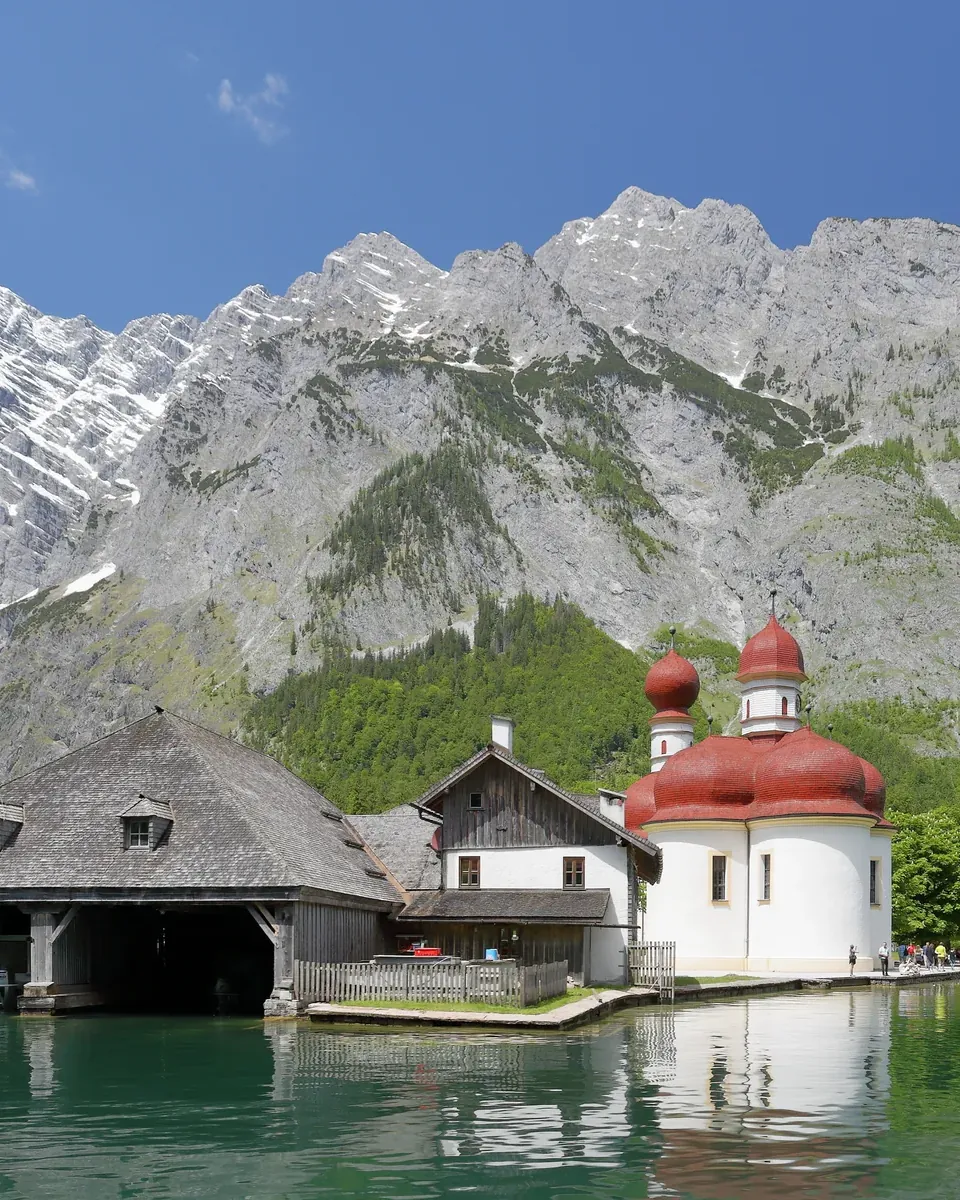
Germany's only Alpine national park, with Lake Königssee, St. Bartholomä and the Watzmann East Face.
02 · All 16 parks
State, founding year, size and what entry costs, from the park profiles of this atlas.
| National park | State | Founded | Area | Entry |
|---|---|---|---|---|
| Bavarian Forest | Bavaria | 1970 | 24,945 ha | Free, including the park's facilities |
| Berchtesgaden | Bavaria | 1978 | about 210 km² | Free; the Königssee boats are run by a separate company |
| Schleswig-Holstein Wadden Sea | Schleswig-Holstein | 1985 | 4,380 km² | Free |
| Lower Saxony Wadden Sea | Lower Saxony | 1986 | 3,450 km² | Free |
| Hamburg Wadden Sea | Hamburg | 1990 | 137.5 km² | Free |
| Jasmund | Mecklenburg-Western Pomerania, Rügen | 1990 | 3,070 ha | Free; the visitor centre charges 14 € |
| Müritz | Mecklenburg-Western Pomerania | 1990 | 322 km² | Free |
| Western Pomerania Lagoon Area | Mecklenburg-Western Pomerania | 1990 | 786 km² | Free |
| Saxon Switzerland | Saxony | 1990 | 9,350 ha in two parts | Free |
| Harz | Lower Saxony, Saxony-Anhalt | 1990 and 1994, merged 2006 | 24,732 ha | Free |
| Lower Oder Valley | Brandenburg | 1995 | over 10,000 ha | Free |
| Hainich | Thuringia | 1997 | 75 km² | Free; the treetop walk charges 13 € |
| Eifel | North Rhine-Westphalia | 2004 | about 110 km² | Free, no opening hours |
| Kellerwald-Edersee | Hesse | 2004 | 7,688 ha | Free; the visitor centre charges 7 € |
| Black Forest | Baden-Württemberg | 2014 | just over 11,000 ha | Free |
| Hunsrück-Hochwald | Rhineland-Palatinate, Saarland | 2015 | 10,193 ha | Free; the wildlife enclosure charges 5 € |
Prices are for adults. The largest parks by far are the two Wadden Sea parks on the North Sea; the smallest is Jasmund on the island of Rügen, about a fifth of whose area is water.
03 · Costs
Entry is free. The bill comes from transport and from the few attractions run as separate businesses.
None of the 16 national parks charges admission. In the Eifel there are not even opening hours. This is the big difference from Croatia or Canada, where every visit starts with a ticket.
Each park has its own rules. In Berchtesgaden, for example, the code of conduct says: no camping or sleeping outdoors, dogs on a lead, no drones, no fires and cycling only on permitted trails.
04 · Choosing
Mountains, coast or forest: start with the landscape.
Berchtesgaden is the only Alpine national park in Germany, about 1.6 million visitors a year, with 2,300 m (7,546 ft) of altitude between the bed of Lake Königssee and the summit of the Watzmann. You get there by train to Berchtesgaden Hauptbahnhof and bus to Schönau; from there the lake is car-free. The Eagle's Nest on the Obersalzberg is not part of the park.
Schleswig-Holstein, Lower Saxony and Hamburg each protect their own part of the Wadden Sea. The Schleswig-Holstein and Lower Saxony parks have been a UNESCO World Heritage Site since 2009, the Hamburg park since 2011. On the Baltic coast, Jasmund on Rügen and the Western Pomerania Lagoon Area on Fischland-Darss-Zingst are the two coastal parks.
Parts of these four parks have belonged to a UNESCO World Heritage Site since 2011, the Serrahn beech forests in the case of Müritz. The Hainich adds a treetop walk, Kellerwald-Edersee lies above the Edersee, and Müritz combines its beech forest with lakes, pine forests and moors.
The Harz rises to the Brocken at 1,141 m (3,743 ft) and has about 600 km (373 mi) of signposted trails. The Bavarian Forest, Germany's first national park, has about 350 km (217 mi) of marked trails and around 1.3 million visitors a year. Saxon Switzerland is reached by S-Bahn and ferry along the Elbe. The Eifel, Germany's first International Dark Sky Park, has about 240 km (149 mi) of trails and starting points with their own bus stops.
Opening hours are rarely what limits a visit: the Eifel, for instance, has none at all. In the mountains, altitude sets the season. In Berchtesgaden there is no single best time for the whole park: while the boats are already running on Lake Königssee, snow still lies higher up. The mountain huts open seasonally, and the Königssee boat service sets its own season, so check both before you plan an overnight tour or a trip to St. Bartholomä.
06 · Editorial
Every fee, date and rule on this page comes from the park guides below, each linked to the official source.
Fees, opening times and reservation rules change. Check the official page before you travel.