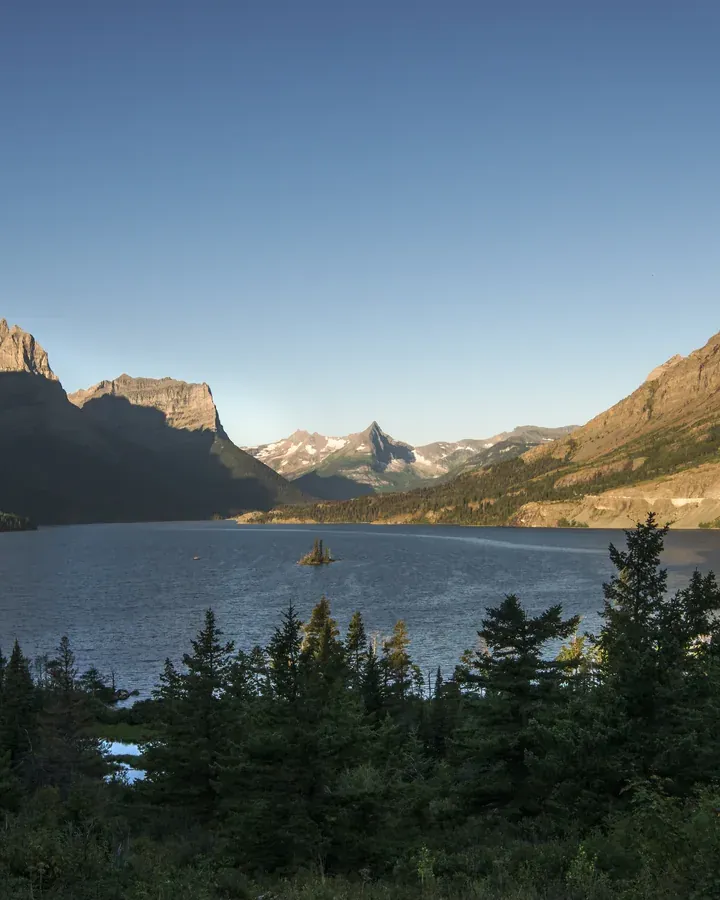
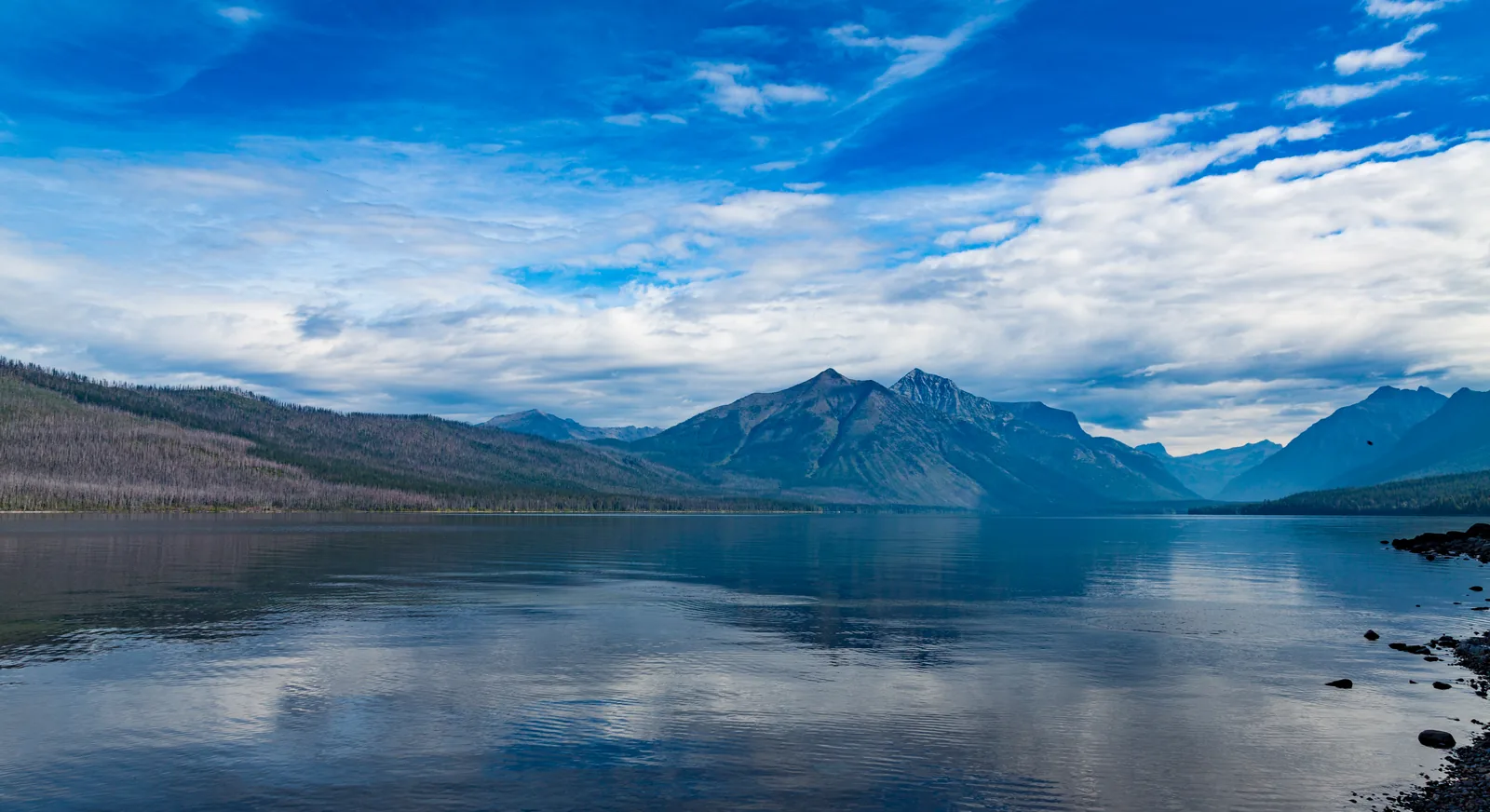
The park that is losing its name: it is warming twice as fast as the rest of the world, and its founder's glacier has shrunk by 46 hectares since 1966.
Glacier National Park (Montana): landscape and origins
Glacier is one of the eleven parks with the $100 surcharge. For visitors from abroad, the annual pass is therefore almost always the cheaper ticket, even for a single visit.
Since 2026, the National Park Service has charged a surcharge of $100 per person aged 16 or over without US residence at eleven particularly busy parks: Acadia, Bryce Canyon, Everglades, Glacier, Grand Canyon, Grand Teton, Rocky Mountain, Sequoia & Kings Canyon, Yellowstone, Yosemite and Zion. It is based on a presidential order calling for higher revenue from visitors from abroad.
For a couple from abroad in a rental car, the sum looks like this: $35 for the vehicle plus two times $100 makes $235 for seven days at this one park. The non-resident America the Beautiful Pass costs $250, is valid for twelve months, covers the whole vehicle and removes the surcharge at all eleven parks. Fifteen dollars' difference, and from the second park onwards the pass is clearly ahead.
For larger groups the balance tips at once: four adults pay $435 without a pass, $250 with one. If you travel alone, you pay $135 at a single park and only come out ahead with the pass from the second surcharge park. For people on foot or by bike, the pass covers the holder plus three more adults.
Two special cases matter. The park's own $70 annual pass is reserved for people with US residence and not available to visitors from abroad; but if you travel with someone who holds such a pass, it also covers the surcharge for everyone in the vehicle. And an America the Beautiful Pass bought before 1 January 2026 keeps its old conditions for a full twelve months from purchase.
From 2026, the National Park Service's fee-free days are only open to US residents. For visitors from abroad, both the entrance fee and the surcharge still apply on those days: a detail that many travel guides leave out.
Visiting Glacier: no reservation in 2026, a parking limit at Logan Pass
01
Not the Glacier in Canada
There are two national parks with this name. This one is in Montana on the border with Alberta, with the Going-to-the-Sun Road over Logan Pass. Canada's Glacier National Park is in British Columbia at Rogers Pass, about 500 km (310 mi) to the north-west. Most people searching for "Glacier National Park" mean this park in Montana.
The timed-entry ticket system for the Sun Road, the North Fork and Many Glacier, in place since 2021, was suspended for 2026: "Vehicle reservations will not be required anywhere in the park in 2026." Many travel sites still describe the old system, and so does the park authority's own basic information page, which dates from 31 March 2026.
From 1 July to 7 September 2026, parking at Logan Pass was limited to three hours and enforced around the clock. The permit is free, comes from a machine in the car park and has to go behind the windscreen. Three hours are enough for the Hidden Lake trail, not for the Highline Trail.
In 2026 the former free, first-come, first-served shuttle was replaced by an express shuttle with reserved seats. Tickets are only available on Recreation.gov, tied to a boarding point and time, with a $1 processing fee. You cannot get them in the park itself.
The parking limit and the Logan Pass shuttle ran as a pilot and ended on 7 September 2026. The park authority has published neither a continuation nor a return to reservations for 2027. Check the Logan Pass page before you travel: this page deliberately only states what is documented for 2026.
„The glacier that bears the name of the park's founder lost about 46 hectares between 1966 and 2015.“
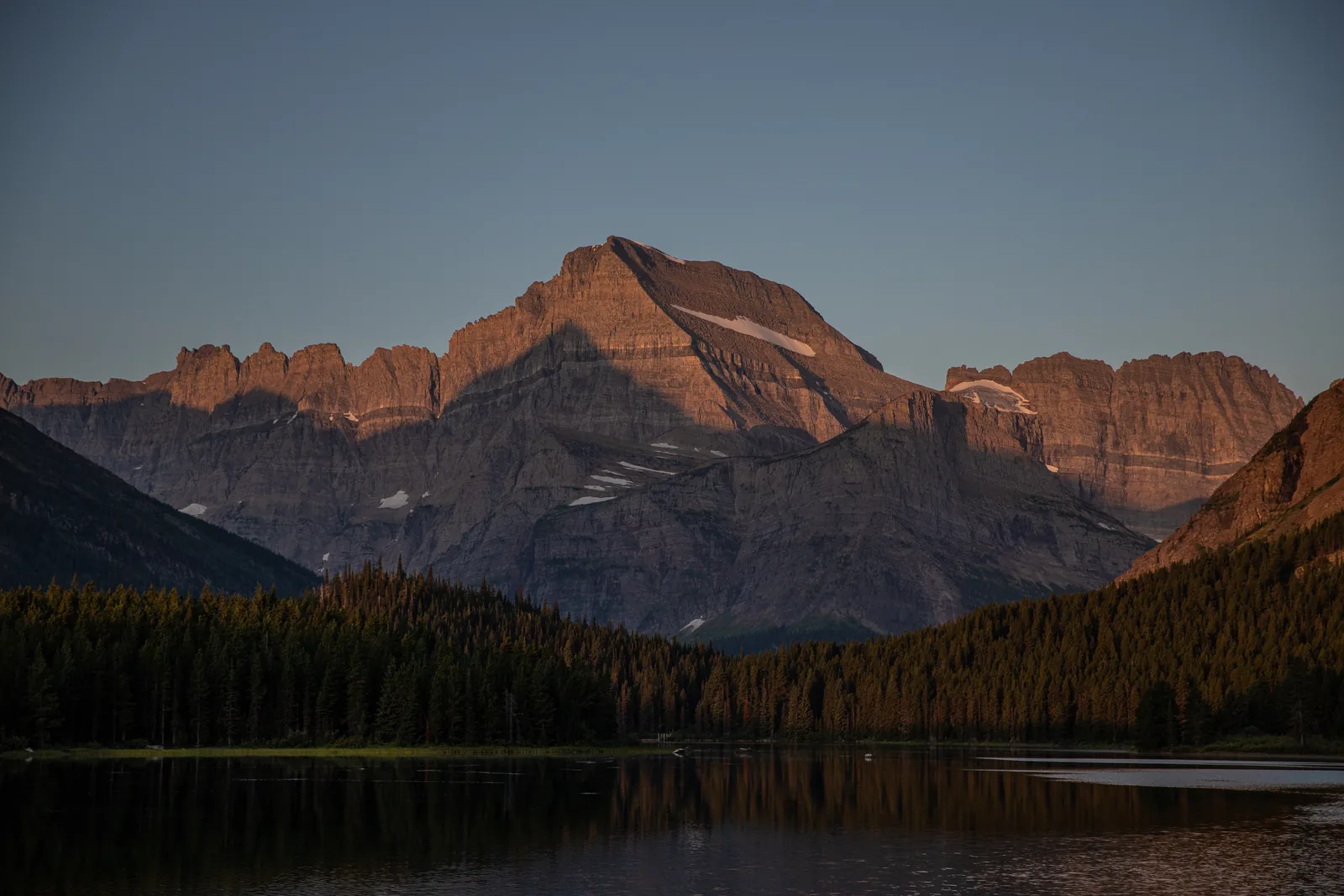
Glacier National Park, Montana · Grinnell Glacier
Hikes & routes: what fits into three hours and what doesn't
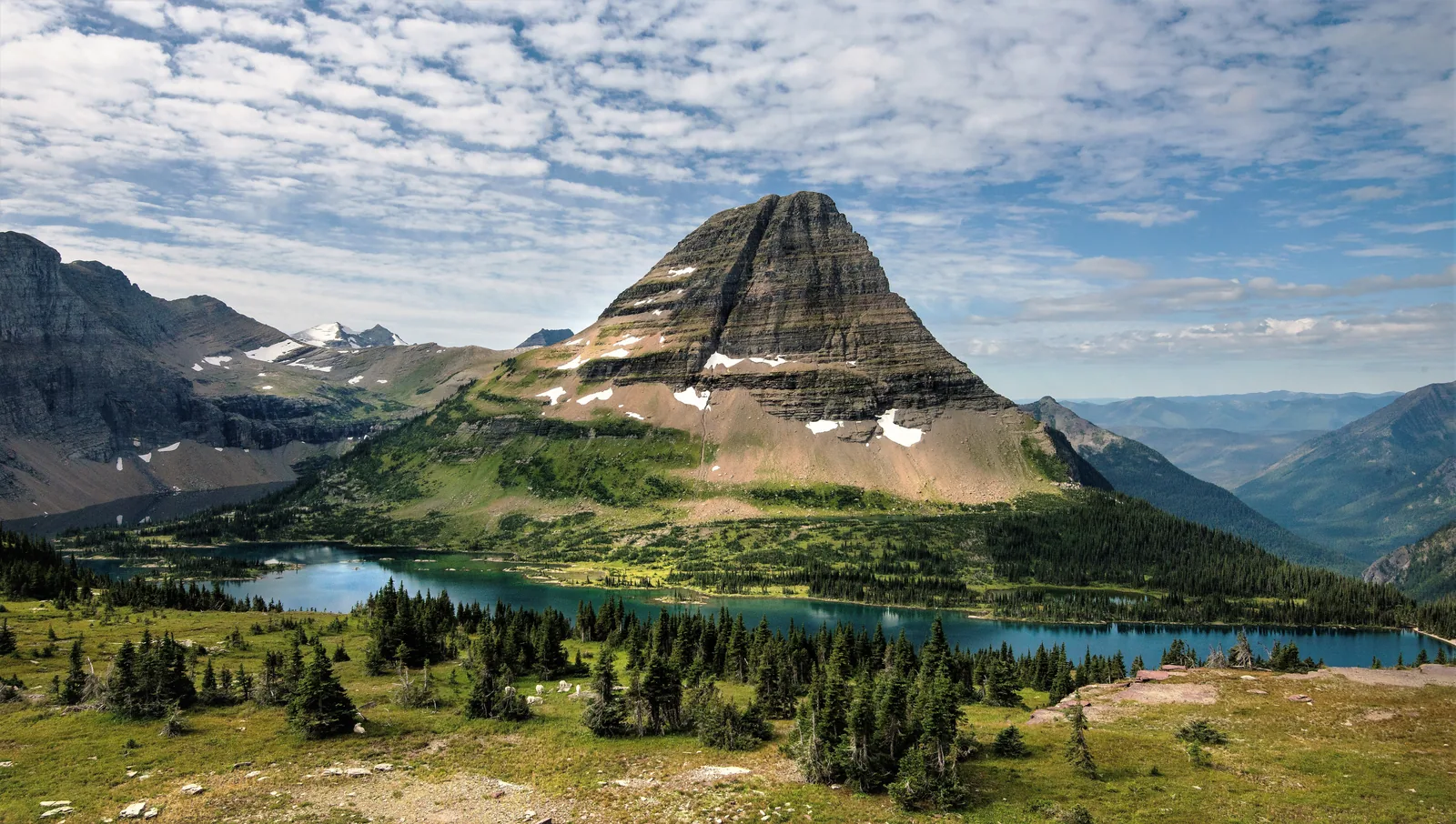
Hidden Lake Overlook
The short boardwalk behind the Logan Pass visitor centre, leading to a view of Hidden Lake and Bearhat Mountain. It fits into the three-hour window and is therefore the busy trail: in 2017 the park authority counted an average of 1,604 hikers a day. Snow often lies on the boardwalk into July.
The trail along the Garden Wall, blasted into the rock face, continuing to Granite Park Chalet with a descent to the Loop. It is a full-day outing and did not fit into the three-hour parking limit in 2026: if you wanted to hike it, you needed a shuttle ticket.
From Many Glacier, with the option of adding two boat rides across Swiftcurrent and Josephine Lake, saving almost five kilometres (three miles) of walking. One of the ten busiest trails in the park.
The Glacier Park Boat Company runs narrated trips at Many Glacier, Two Medicine, Rising Sun and Lake McDonald; some trips connect with guided hikes. Some of the boats date from the 1920s.
Three providers drive the route: Sun Tours with a Blackfeet perspective in 25-seat buses, the historic Red Bus Tours with roll-back roofs, and the Glacier Institute with minibuses and short hikes.
From 13 June to 28 September, the Apgar–Logan Pass section is closed to bikes at certain times: uphill between 12:00 and 18:00, downhill from Logan Pass between 15:00 and 18:00. The restriction only applies to sections open to cars at the time.
The park has over 700 miles (1,100 km) of trails. The ten most popular each see hundreds of people a day; the park authority itself points out that a lesser-known trail offers the same view with fewer people.
Glacier Guides and Montana Raft · White water · 3 hours
Glacier National Park: Half-Day Whitewater Rafting Trip
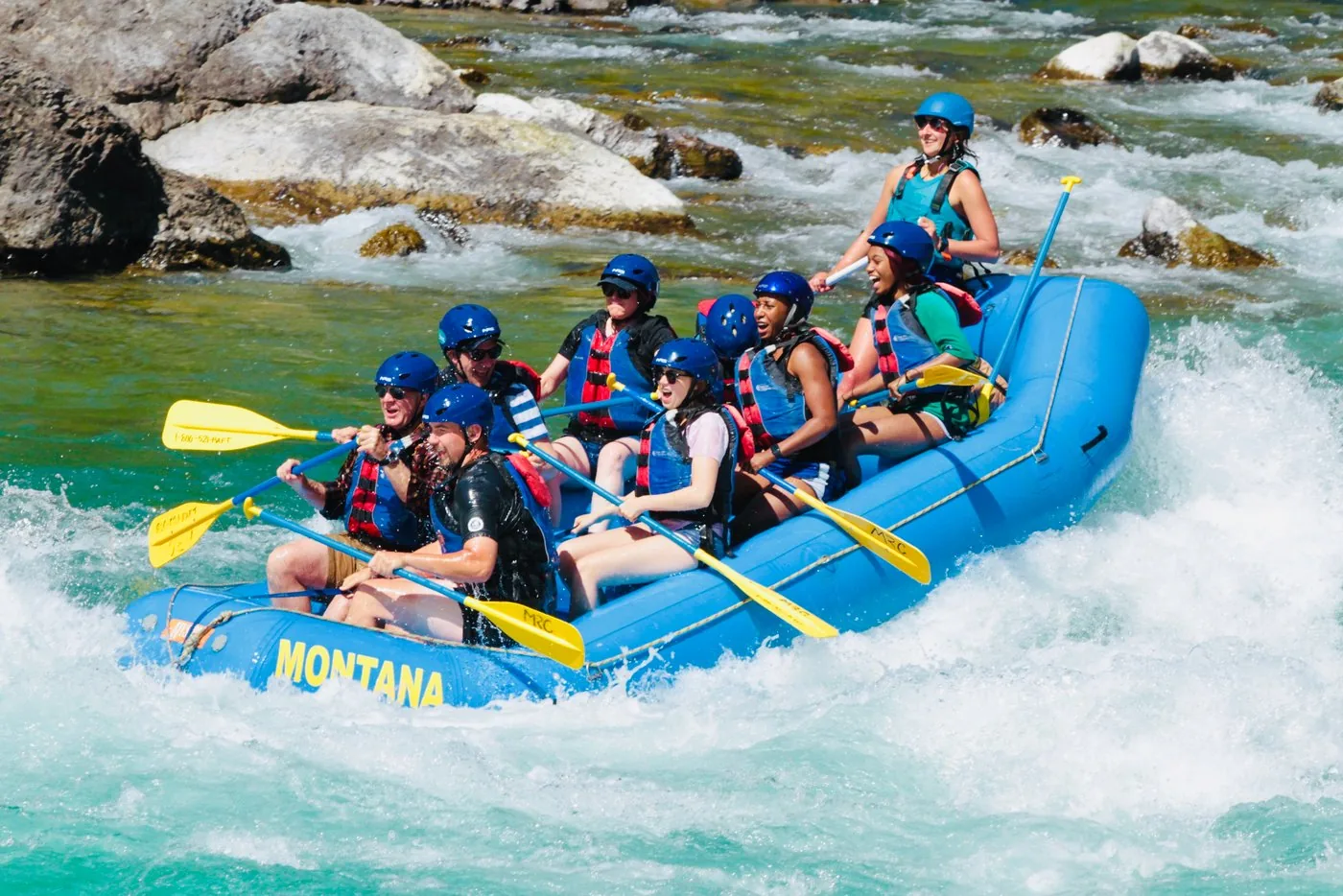
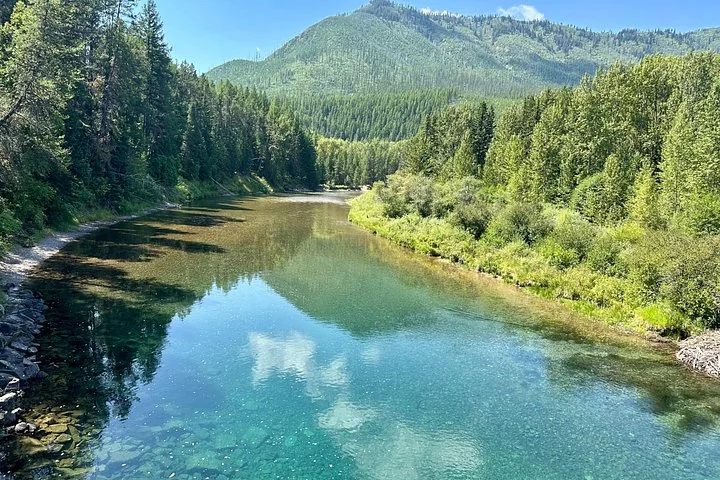
Rafting on the river that forms the park's boundary, about eight miles (13 km) through John F. Stevens Canyon with nine named rapids. The trip starts 1.5 miles (2.4 km) west of West Glacier and ends below the historic Belton Bridge.
3 hours
Up to 9 participants
Gear included
No park admission needed
Departure Meeting point 11970 US-2, West Glacier.
The trip runs on the Middle Fork Flathead, which forms the park's southern boundary: you travel along the park, not into it. That has a practical advantage: neither the entrance fee nor the $100 surcharge applies. Included are the guide, gear, transport to the river and the river use fee; tips, food and drinks are not. Guided in English. Between 20 August and 30 September the rapids drop to Class I–II. Cancellation up to two days in advance.
View tour ↗Ad · partner link · checked 22 Sep 2026
Glacier National Park: Morning Nature Walk (Lake McDonald valley and North Fork)
Two short, easy hikes of about one mile (1.6 km) each: one in the Lake McDonald valley, one on the Wild and Scenic section of the North Fork Flathead. In between, stops at McGee Meadows and McDonald Creek.
4 hours
Up to 10 participants
Bear spray and trekking poles provided
Pick-up in the West Glacier area
Departure Glacier Guides and Montana Raft office, West Glacier; hotel pick-up by arrangement.
Park admission is not included: in the itinerary, the provider explicitly asks you to bring your park pass. For people without US residence that means $35 for the vehicle plus $100 per person, unless they hold an annual pass. Included are a guide with a first-aid kit and bear spray, van transport, snacks and trekking poles. Guided in English. Cancellation up to two days in advance.
View tour ↗Ad · partner link · checked 22 Sep 2026
E-Bike Tour in Glacier National Park on the Camas Road, from Apgar
Half-day guided e-bike tour inside the park: start in Apgar Village on Lake McDonald, then about 40 kilometres (25 miles) out and back on the lightly travelled, paved Camas Road through wildflower meadows with views of the Lewis and Livingston Ranges. Stop at the North Fork of the Flathead, picnic lunch with sandwiches at Lake McDonald.
5 hours
Up to 14 participants
Ages 10 and up
Lunch included
Departure Glacier Hikes & Bikes store in Columbia Falls; the ride starts at the Apgar Visitor Center.
Park admission is not included; the provider explicitly asks you to bring your own park pass. For people without US residence this means a $100 surcharge per person on top of admission, unless you hold an annual pass. The list of inclusions only names lunch; the e-bike and the guide are mentioned in the description. The meeting point is the store in Columbia Falls, about 25 kilometres before West Glacier; the description does not say how you get from there to Apgar. Check with the provider before booking. Not recommended for people with back or cardiovascular problems. Bookings are confirmed individually by the provider; the tour may be cancelled if too few people sign up. Guided in English. Cancellation up to 24 hours in advance.
Glacier park authority (National Park Service) · Ranger programme · summer
Ranger evening and night-sky programmes
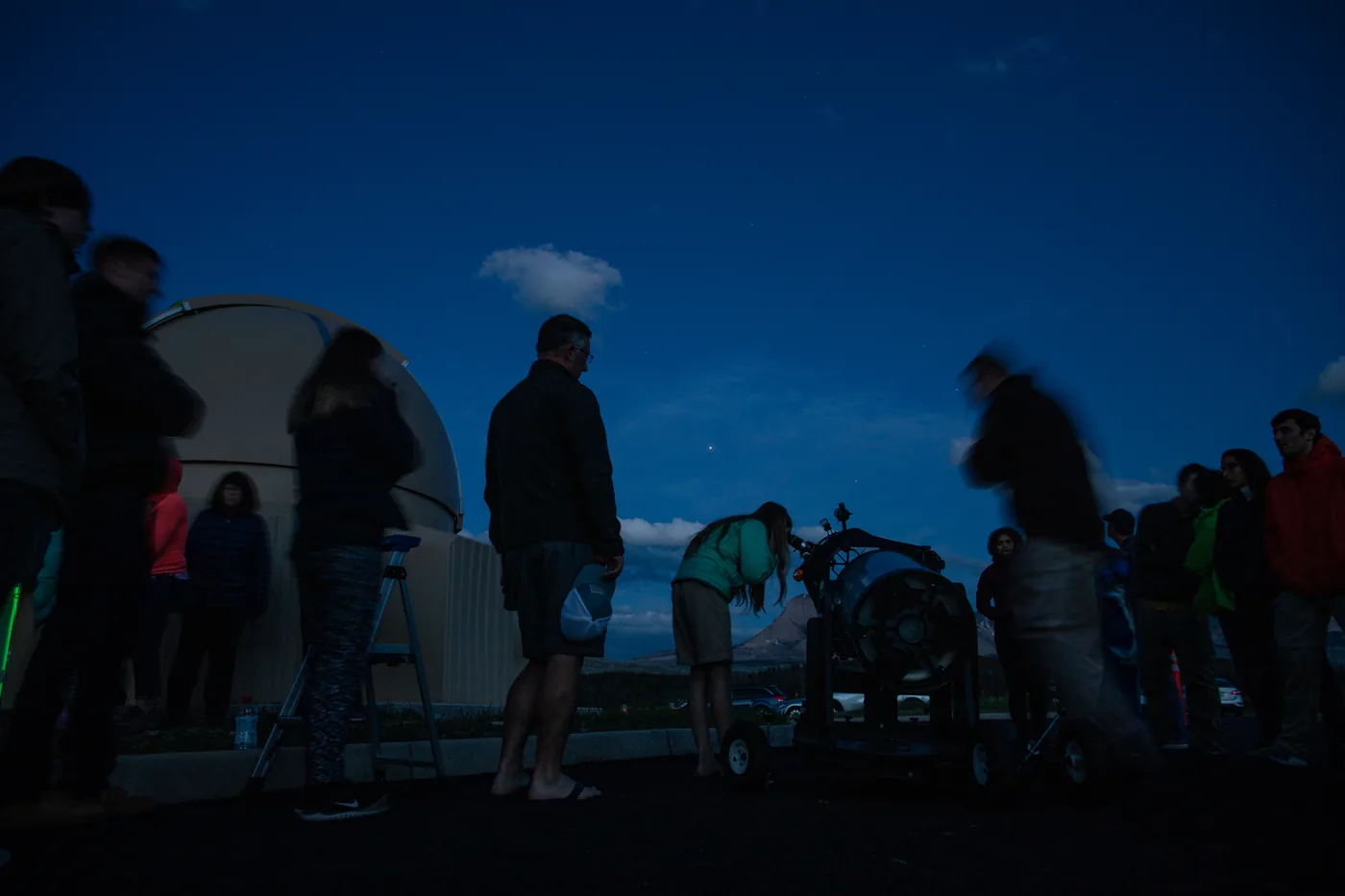
Together with Waterton Lakes in Canada, Glacier forms an International Dark Sky Park. In July and August the park's astronomers set up telescopes most nights from dusk at two places: the Apgar Visitor Center car park on the west side and the Dusty Star Observatory at the St. Mary Visitor Center on the east side. On top of that there are evening programmes of about 45 minutes in the campground amphitheatres at Apgar, Fish Creek, Rising Sun, St. Mary, Many Glacier and Two Medicine and in the Lucerne Room of the Many Glacier Hotel.
Night-sky programmes mostly July and August
From dusk until midnight
No ticket or reservation
Dates at the visitor centres
Meeting point Apgar Visitor Center (west side) or the Dusty Star Observatory at the St. Mary Visitor Center (east side); evening programmes in the campground amphitheatres.
The programmes run in summer only: according to the park, most ranger programmes take place from June to early September, the nightly astronomy programmes mostly in July and August, depending on weather and sky conditions. The park does not give fixed weekly times; the current schedule is in the park's calendar and at the visitor centres. The nightly programmes need neither a ticket nor a reservation; the park does not state a price, and park admission still applies. In some summers there are also individual star parties at the Logan Pass car park, by ticket only, handed out the day before at the Apgar and St. Mary visitor centres. Bring warm clothes and a headlamp or torch; St. Mary is often windy and there is no seating at the observatory. Programmes are held in English.
Park authority page ↗Park authority programme · no partner link · checked 2 Oct 2026
Ad · we may earn a commission if you book through this partner link. Offer details checked 2 Oct 2026. See official ticket information.
Nature: a park that is losing its name
Twice as fast
According to the park authority, Glacier is warming almost twice as fast as the global average. The consequences are not forecasts but measurable: less ice, more fire.
Grinnell Glacier lost about 113 acres, or roughly 46 hectares, between 1966 and 2015. It is named after George Bird Grinnell, who campaigned hard for the park's creation: the founder's glacier is shrinking faster than photos from the early years would suggest.
Today's glaciers reached their greatest extent at the end of the Little Ice Age around 1850. They have been retreating ever since; the park authority increasingly attributes the retreat of recent decades to human causes.
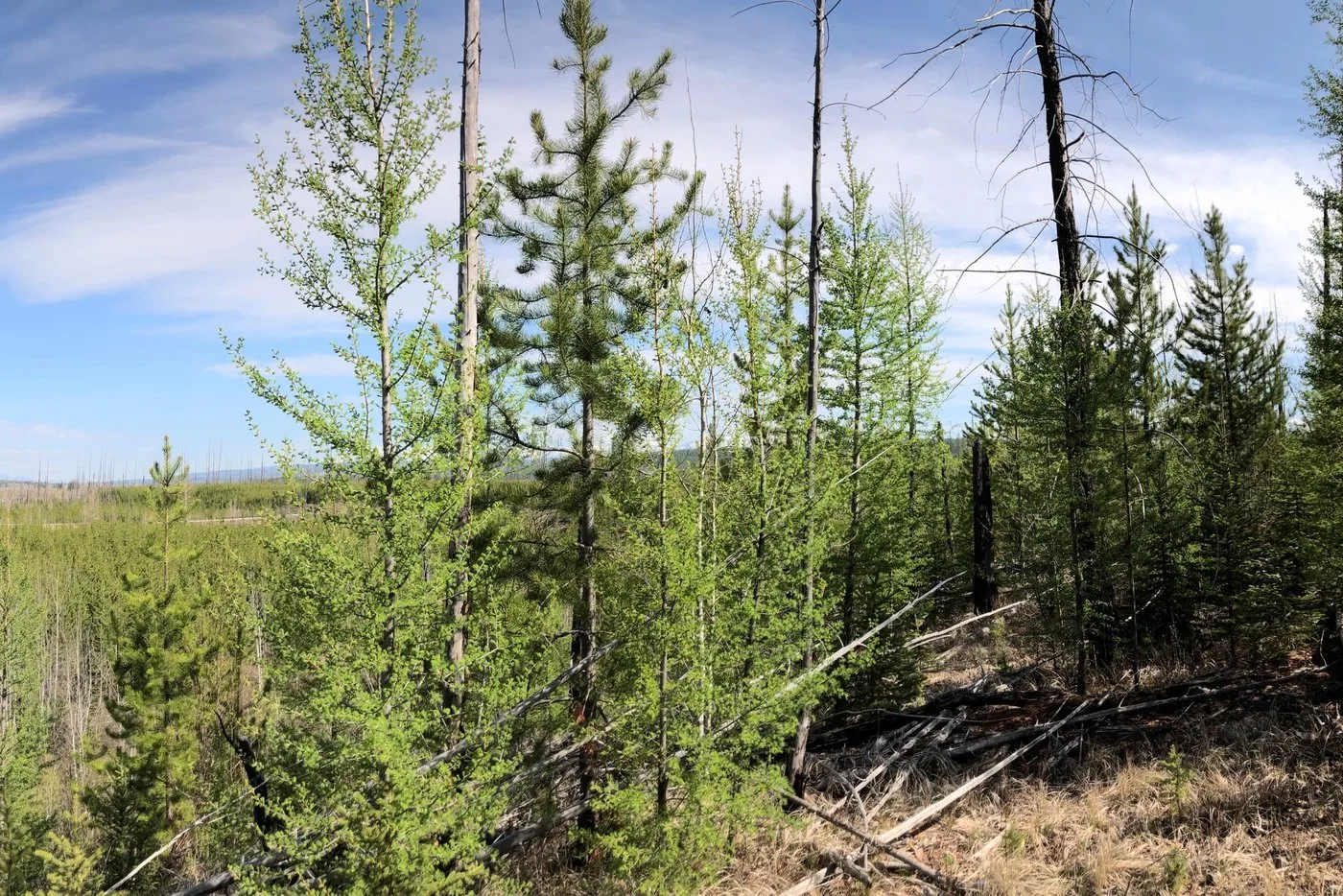
On 12 August 2018 the Howe Ridge Fire burned several thousand acres within a few hours. Wildfires are part of every summer here; the haze in many photos from the park is no coincidence.
Human use of this landscape goes back more than ten thousand years. When the first Europeans arrived, the Blackfeet controlled the prairies east of the mountains, while the Salish and Kootenai lived in the western valleys and crossed the passes to hunt.
How the Going-to-the-Sun Road Got Its Name, and More!
Almost eight minutes from the park authority's channel: where the name of the Going-to-the-Sun Road comes from, the stories surrounding it and what Blackfeet tradition says about it. In English.
The east entrances border the Blackfeet Indian Reservation; the approach from Great Falls runs through Browning. Sun Tours, one of the three providers of trips over the Sun Road, tells the park's story from this perspective.
Nothing saved yet. Every place card has a pin, and so does every place on the Map. What you save collects here, with days, notes and a preview you can share.
Reality check
Share
The plan is stored in the link itself. Anyone who opens it sees the preview and can use the plan.
Image for your phone, with stops and map.
01Best time to visit: the road sets the calendar
The park is open all year; the road over the pass is not.
When the Sun Road is fully open
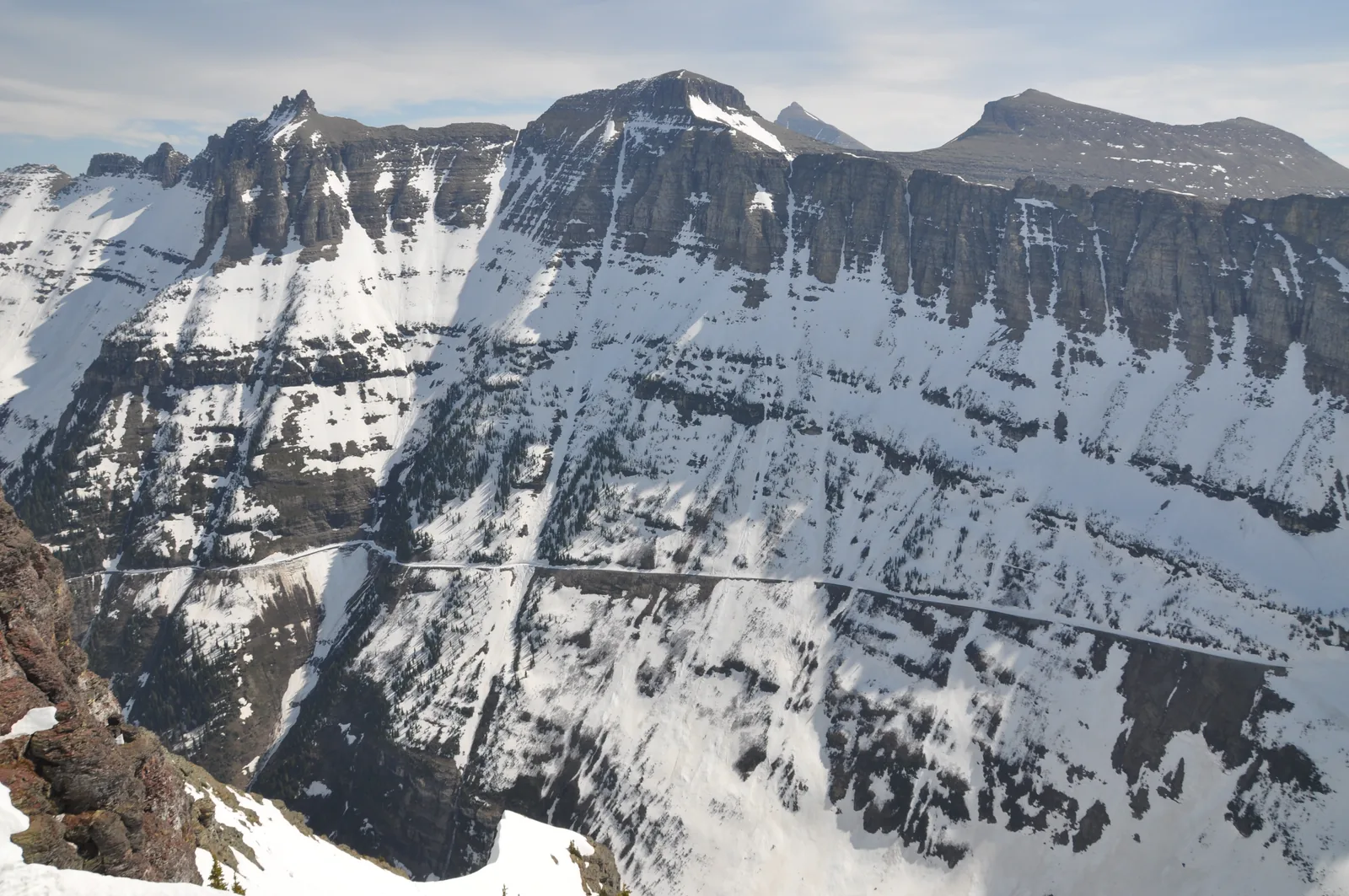
Clearing the road takes two and a half to three months. The full route over Logan Pass usually only opens in late June or early July. The alpine sections usually close around the third Monday in October, or earlier if winter comes early.
While snow is being cleared, sections of the Sun Road are open to hikers and cyclists, usually from early May to late June or early July. This is the only time you can experience the road without car traffic.
About three million people visit the park each summer season. The car parks at Logan Pass and Avalanche Creek fill up before sunrise and stay full all day. The park authority explicitly advises not to wait at a full car park but to drive on and try again later.
From mid-September the larches turn colour, the crowds thin out and wildlife is more active. At the same time most facilities close: summer operations run roughly from late May to early September, after which you have to be self-sufficient.
The park is open all year, and the western section of the Sun Road along Lake McDonald can be driven in winter too. Ski touring and snowshoeing are possible; rentals are only available outside the park. The winter rates at the entrance apply from 1 November to 30 April.
Weather and climate in Glacier National Park (Montana)
Best months by the climate data: July and August. Average daytime highs of 21 to 22 °C, lows of around 8 °C, 33 to 39 mm of precipitation a month. The wettest month is June (114 mm), the driest July (33 mm).
−15°−5°5°15°25°
Jan−6−13
Feb−6−14
Mar−2−10
Apr3−5
May110
Jun165
Jul218
Aug228
Sep164
Oct7−2
Nov−1−8
Dec−6−14
High °CLow °C
Daily highDaily lowPrecipitation
All monthly values as a table
Monthly averages 2001–2020, NASA POWER model
Month
High °C
Low °C
Precipitation mm
January
−5.8
−13.1
111
February
−5.6
−13.9
90
March
−2.0
−9.6
104
April
2.7
−5.4
85
May
10.7
0.5
92
June
15.5
4.6
114
July
21.1
8.5
33
August
21.6
8.0
39
September
16.3
3.6
57
October
6.9
−2.4
86
November
−1.4
−8.3
110
December
−6.5
−13.7
108
Year
1,029
Modelled values, not a weather station: NASA POWER (MERRA-2) for a grid cell of about 55 × 45 km around the map point Oberlin Bend (48.70° N, 113.73° W), with an average cell elevation of about 1,660 m. Averages for 2001–2020. Higher ground and valleys can differ markedly.
02How to get there: two sides, two approaches and a train that stops at the park
For once, you can reach this park without a car.
By car
The West Entrance is at the town of West Glacier on Highway 2, about 33 miles (53 km) from Kalispell. You reach the east entrances via Highway 89 from Great Falls through Browning, about 125 miles (201 km). Over the Sun Road it is 50 miles (80 km) and two hours from West Glacier to St. Mary; the way around via Highways 2 and 89 is 90 miles (145 km), also two hours.
Amtrak's Empire Builder stops all year at West Glacier (Belton) and at the Izaak Walton Inn in Essex, and seasonally at East Glacier Park. That is rare for a US national park: you practically step off at the park entrance. In summer a paid shuttle runs from West Glacier station to Apgar and Lake McDonald Lodge; reservation required.
Glacier Park International Airport near Kalispell is about 30 miles (48 km) west of the West Entrance. Missoula is about 150 miles (241 km) away, Great Falls between 130 and 165 miles (209 and 266 km) from the east entrances.
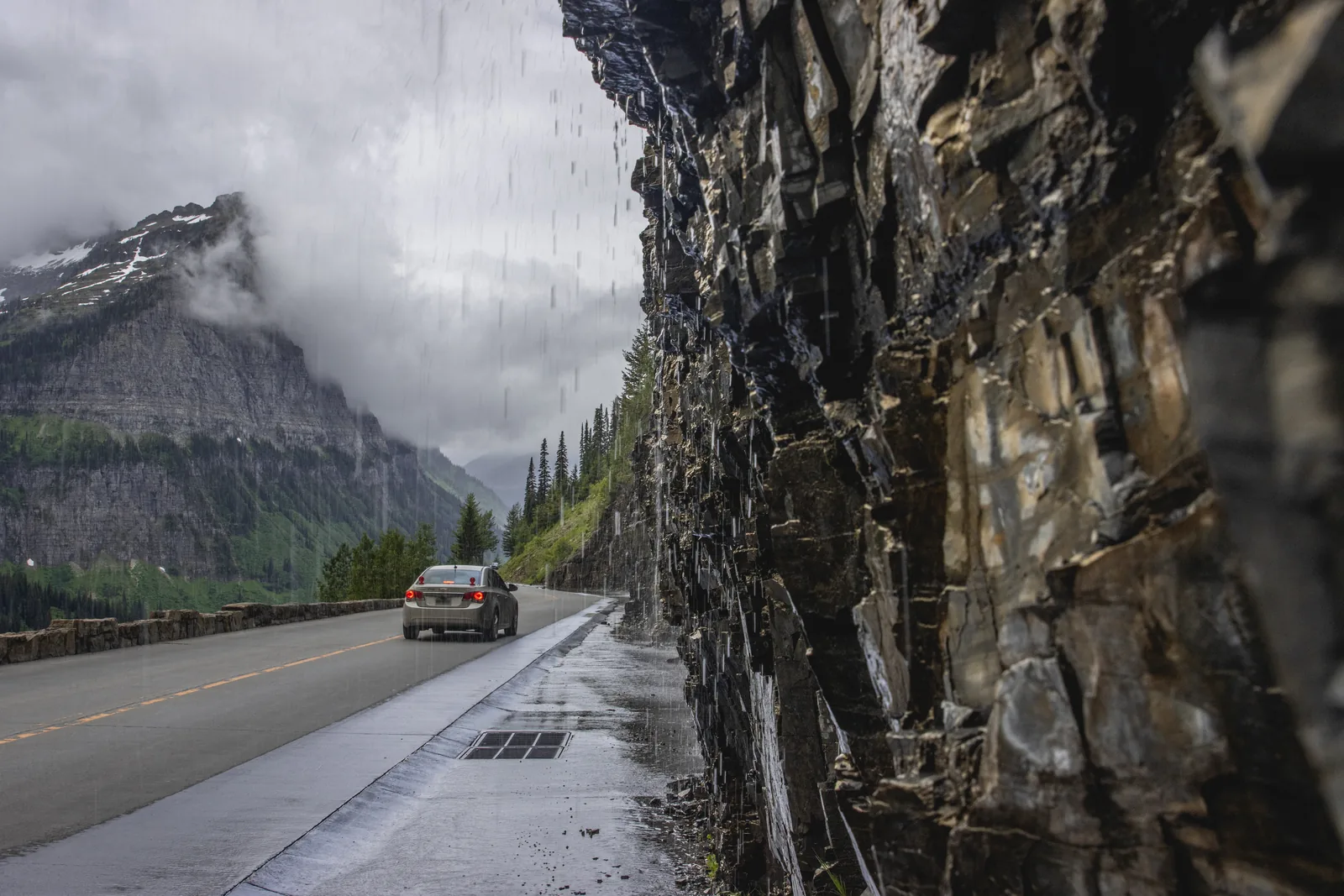
Between Avalanche Creek and Rising Sun, vehicles over 21 feet long (6.4 m, including bumpers) or over 8 feet wide (2.4 m, including mirrors) are prohibited. Above 10 feet (3 m) in height it gets tight under the rock overhangs west of Logan Pass. A typical rental RV in the USA almost always exceeds these limits, which leaves only the way around.
The Chief Mountain border crossing to Waterton Lakes National Park is only open from 15 May to 30 September, with changing hours. Piegan/Carway on Highway 89 and Roosville on Highway 93 are open all year. From St. Mary to Waterton it is 50 miles (80 km) and one hour, plus waiting time at the border.
Parking at Many Glacier, Bowman and Kintla Lake: access gets restricted
During extreme congestion, the park temporarily restricts access to whole areas until traffic clears. In the summer of 2018, access to Many Glacier was restricted 26 times, to Kintla Lake 52 times and to Bowman Lake 68 times. If there is no parking at your chosen trailhead, you need a backup plan; never park on vegetation.
Parking for the Logan Pass Shuttle: four boarding locations
In 2026 the ticketed shuttle departed from Apgar Visitor Center, Lake McDonald Lodge, St. Mary Visitor Center and Rising Sun Picnic Area. Riders should arrive at least 30 minutes before departure to find parking. If you miss the last shuttle from Logan Pass, there is no other public transportation back to your parked vehicle.
Glacier National Park: West Side Driving Tour (No Sun Road), with pick-up
Six hours with a driver and guide through West Glacier, Belton Bridge, Apgar Village and on to Lake McDonald Lodge. The Going-to-the-Sun Road over the pass is explicitly not part of the route.
Departure Pick-up in the West Glacier and Whitefish area.
The provider lists "national park admission (if required)" as included. The list of inclusions does not say whether this also covers the $100 surcharge for people without US residence; the park authority explicitly charges it to participants on commercial tours too. Check with the provider before booking. The tour avoids the pass road; if you want to see the Sun Road, this is not the right tour. Guided in English. Cancellation up to 24 hours in advance.
View tour ↗Ad · partner link · checked 22 Sep 2026
Ad · we may earn a commission if you book through this partner link. Offer details checked 22 Sep 2026. See official ticket information.
03Tickets & entrance fees: $35 per car, $100 per person without US residence
The point where the trip adds up differently for international visitors than for Americans.
A private vehicle with everyone in it costs $35 for seven days, a motorcycle $30, one person on foot or by bike $20. From 1 November to 30 April winter rates apply: $25, $20 and $15. Children under 16 pay nothing. The park does not accept cash.
Since 2026, every person aged 16 or over without US residence pays an extra $100 at eleven particularly busy parks, and Glacier is on the list. For a couple from abroad in a rental car that is $35 plus $200, a total of $235 for seven days at a single park.
The surcharge does not apply if you enter with an annual pass. Since 1 January 2026, the America the Beautiful Pass for people without US residence costs $250; it is valid for twelve months, covers the whole vehicle and removes the surcharge at all eleven parks. For two adults it costs $15 more than a single park visit.
The surcharge explicitly also applies to people without US residence who enter as part of a commercial tour group. Operators are expected to know the number of their non-resident guests before entry and declare it at the entrance station; since June 2026 they can prepay the entrance fee and surcharge with a Commercial Site Pass on Recreation.gov. Whether an operator does this is rarely in its list of inclusions, so ask before you book.
The non-resident America the Beautiful Pass removes the surcharge not only in your own vehicle: in a commercial tour group it covers the pass holder and three more people aged 16 or over. The same applies to the entrance fee, which is charged per person on commercial tours. As proof of US residence the park accepts a US passport, a state driving licence or ID card, and the Green Card; anyone aged 15 or under pays neither the entrance fee nor the surcharge.
Glacier sells its own annual pass for $70. The park authority explicitly lists it as "Available to: US citizens and residents", so visitors from abroad cannot buy it. If you travel with someone who holds such a pass, however, it also covers the surcharge for everyone in the vehicle.
An America the Beautiful Pass bought before 1 January 2026 is valid for twelve months from purchase and covers the entrance fee and surcharge for the holder and everyone in the vehicle. If you bought a pass in 2025, you do not have to pay anything extra.
Free entrance days no longer apply to everyone since 2026
From 2026, the National Park Service's fee-free days are limited to US residents. For visitors from abroad, both the entrance fee and the surcharge still apply on those days.
04Where to stay: sleeping in the park means booking early
Thirteen campgrounds, five historic lodges, two chalets.
Campgrounds
Thirteen campgrounds reachable by car, eight of them by reservation only, the rest first-come, first-served on the same day. Two Medicine Campground stayed completely closed in 2026 because of the utility work.
Xanterra runs the Village Inn Motel, Lake McDonald Lodge, Rising Sun Motor Inn, Swiftcurrent Motor Inn and the Many Glacier Hotel. Apgar Village Lodge and Motel Lake McDonald belong to the Glacier Park Collection. All are inside the park and book up early in summer.
Sperry Chalet and Granite Park Chalet can only be reached on foot and are run by Belton Chalets. Guests of Granite Park Chalet were among the few allowed to park overnight at Logan Pass in 2026, along with holders of a backcountry permit.
There are restaurants at Apgar, Lake McDonald Lodge, Many Glacier and Rising Sun; shops at five locations, including Two Medicine. Outside the summer months almost everything is closed.
A permit is required all year for overnight stays in the backcountry. In spring and autumn services are so sparse that the park authority explicitly expects you to be self-sufficient.
"Water is the number one cause of fatalities in Glacier National Park": that is what the current conditions page says. The streams are fed by meltwater, fast-flowing and cold; wet rocks on the bank are the most common accident site.
Researchers estimate the population in the park at close to a thousand black and grizzly bears. You must keep a distance of 100 yards (91 m) from bears and wolves and 25 yards (23 m) from all other wildlife. Bear spray belongs on every hike; the guided tours bring it along.
When crowds are extreme, the park authority temporarily closes entire areas so that traffic can clear and emergency vehicles can get through. In 2018 this affected Bowman Lake on 68 days, Kintla Lake on 52 and Many Glacier on 26.
06Frequently asked questions: Glacier National Park (Montana)
Is this the Glacier National Park in Canada?
No. This park is in Montana on the border with Alberta and is known for the Going-to-the-Sun Road over Logan Pass. Canada's Glacier National Park lies about 500 km (310 mi) to the north-west in British Columbia, at Rogers Pass. Most people searching for "Glacier National Park" mean this park in Montana.
Do I need a vehicle reservation for Glacier in 2026?
No. The park authority suspended the reservation system for 2026: no timed-entry ticket was needed in any area of the park. Instead, a pilot ran with a three-hour parking limit at Logan Pass and a shuttle with reserved seats. Note: other sites, including the park's own basic information page dated 31 March 2026, still describe the old system.
How much is the Glacier entrance fee for international visitors?
A vehicle costs $35 for seven days, plus $100 for each person aged 16 or over without US residence. A couple therefore pays $235. The non-resident America the Beautiful annual pass costs $250, is valid for twelve months, covers the whole vehicle and removes the surcharge at all eleven affected parks: for two people it is almost level on the very first visit.
Visitors from abroad cannot buy it at all. The park authority lists it as "Available to: US citizens and residents". If you travel with someone who holds such a pass, however, it also covers the $100 surcharge for everyone in the vehicle.
The full route over Logan Pass usually only opens in late June or early July: clearing the snow takes two and a half to three months. The alpine sections usually close around the third Monday in October. The lower section along Lake McDonald can be driven all year.
Between Avalanche Creek and Rising Sun, vehicles over 21 feet long (6.4 m, including bumpers) or over 8 feet wide (2.4 m, including mirrors) are prohibited. Above 10 feet (3 m) in height it gets tight under the rock overhangs west of the pass. Typical US rental RVs exceed these limits, which leaves the way around via Highways 2 and 89: 90 miles (145 km), also in two hours.
Can you get to Glacier National Park without a car?
Yes, which is unusual for a US national park. Amtrak's Empire Builder stops all year at West Glacier, right at the park entrance, and at the Izaak Walton Inn in Essex, and seasonally at East Glacier Park. In summer a paid shuttle runs from the station to Apgar and Lake McDonald Lodge.
The park is home to an estimated thousand black and grizzly bears, and bear spray belongs on every hike. The most common cause of death in the park, however, is not bears but water: "Water is the number one cause of fatalities in Glacier National Park", writes the park authority. Fast meltwater streams and wet rocks on the bank claim more lives than all the animals together.
Yes. Waterton Lakes National Park borders the park directly; from St. Mary it is 50 miles (80 km) and one hour plus waiting time at the border. The short route via Chief Mountain, however, is only open from 15 May to 30 September. Piegan/Carway and Roosville are open all year. A passport is required.
Which national parks charge the $100 non-resident fee?
Eleven parks: Acadia, Bryce Canyon, Everglades, Glacier, Grand Canyon, Grand Teton, Rocky Mountain, Sequoia & Kings Canyon, Yellowstone, Yosemite and Zion. Since 2026, every person aged 16 or over without US residence pays $100 there on top of the entrance fee, unless they hold the non-resident America the Beautiful Pass.
Yes. Since 1 January 2026, the America the Beautiful Pass for people without US residence costs $250. It is valid for twelve months, covers the whole vehicle and removes the $100 surcharge at all eleven surcharge parks.
No. From 2026, the National Park Service's fee-free days are limited to US residents. Visitors from abroad pay both the entrance fee and the surcharge on those days too.
Researched 22 Sep 2026. Not a live status. Dates apply only to the year stated. A successful automatic fetch is not an editorial confirmation; outdated automatic values are hidden and replaced by the source link.