National Parks Atlas
MapPDF

01 · United States · Wyoming

Grand Teton National Park

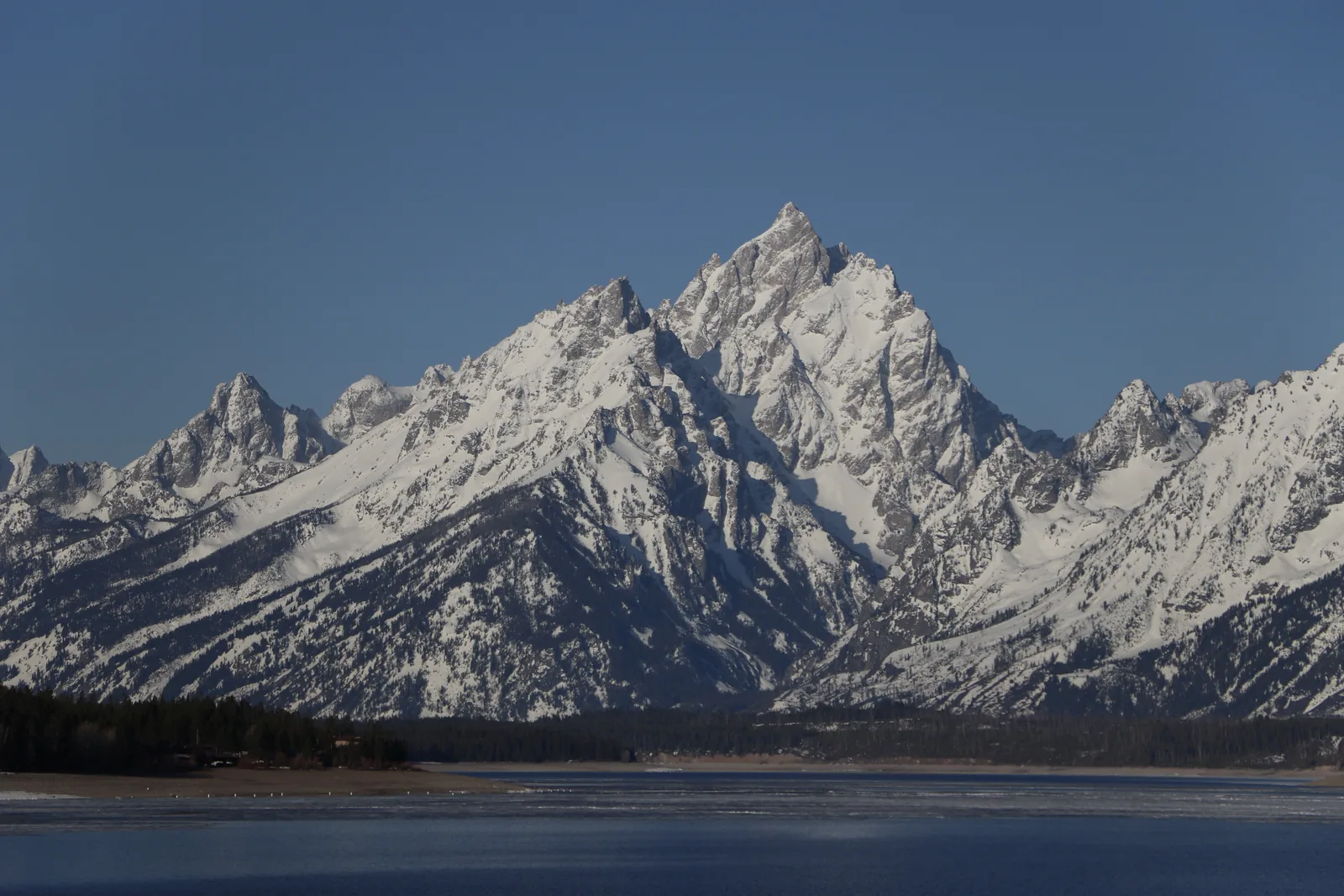
The youngest mountain range in North America, and the only one with no foothills: with each earthquake the mountain rises by almost a metre, while the valley sinks twice as far.

Photo: Eric Kilby ↗ · CC BY-SA 2.0 ↗

Grand Teton at a glance · PDF, 2 pages

Grand Teton National Park: landscape and origins

The Teton Range is the youngest mountain range in North America, and the only big one without foothills. Both have the same cause.

The Rocky Mountains are 50 to 80 million years old, the Appalachians over 300. The Teton Range has been rising for less than ten million years. On a geological scale that is youth, and the reason the peaks are so sharp: erosion simply has not had the time.

The range does not grow steadily but in sudden jerks, along the 40-mile (64 km) Teton Fault. The region is stretching from east to west; when the strain gives way, the mountain block rises by 60 to 90 centimetres (2 to 3 ft) while the valley floor drops by 1.2 to 1.8 metres (4 to 6 ft). That explains the second peculiarity: the Tetons have no foothills, because the valley falls faster than the mountain rises. The mountains stand in the valley without any transition.

How much this adds up to can be read from a single rock layer. The same Flathead Sandstone lies about 1,800 metres (5,900 ft) above the valley floor on Mount Moran and about 6,000 metres (19,700 ft) below it on the east side of the fault. The total offset since the movement began is probably more than 7,600 metres (24,900 ft).

The material itself is far older than the range. Much of it is gneiss 2.7 billion years old, one of the oldest rocks in North America, formed when seafloor was buried up to 29 kilometres (18 mi) deep in a plate collision. 2.5 billion years ago granite forced its way into the cracks; it is harder and forms the highest peaks today. About 775 million years ago came the black diabase dikes, one of which cuts through the face of Mount Moran over a width of 45 metres (148 ft).

The fault is still active and, according to the park, can produce an earthquake of magnitude 7.0 to 7.5. Since the ice left the valley about 20,000 years ago there have been up to a dozen; the three most recent were about 5,900, 8,000 and 10,000 years ago. At the Cathedral Group Turnout on the Jenny Lake Scenic Loop you can see the fault scarp in the landscape.

NPS: geology and the Teton Fault ↗

The park in numbers

Highest peak
Grand Teton, 4,199 m (13,776 ft)
Age of the uplift
less than 10 million years
Length of the fault
40 miles, about 64 km
Offset per earthquake
0.6–0.9 m up, 1.2–1.8 m down
Total offset
over 7,600 m (24,900 ft)
Oldest rock
gneiss, 2.7 billion years
Possible earthquake
magnitude 7.0 to 7.5
Park area
about 310,000 acres, 1,255 km²
Elevation of Jackson Hole
over 1,900 m (6,200 ft)

Today in the park

What the National Park Service is reporting right now

  • 1 Closure
  • 2 caution

Alerts and road conditions on nps.gov ↗

Fetched automatically: 03 Oct 2026 14:06 UTC.

Original National Park Service alerts. The date is the last update of the alert, not a validity period. Closures can change within hours.

Crowds through the year

July is the busiest month, November the quietest

About 15 times as many people visit in July as in November.

Tap a month for the number

Visits per month, median of 2023–2025. In 2025 the park recorded 3.80 million visits.

Source: National Park Service, Visitor Use Statistics ↗

Visiting Grand Teton: the park you drive through on the way to Yellowstone

01

Directly south of Yellowstone

The two parks are linked by the John D. Rockefeller, Jr. Memorial Parkway; it is 20 miles (32 km) from Yellowstone's South Entrance. If you are touring the Rockies, you will almost inevitably pass through, and often plan only half a day for it.

NPS: directions and traffic ↗

02

Open all year, 24 hours a day

The park never closes. The full season runs from May to September; from November to April some roads, all campgrounds and most facilities are closed or limited.

NPS: operating hours and season dates 2026 ↗

03

Four entrances, several of them seasonal

Grand Teton has four road entrances, several of which are closed or only partly open between November and May. Driving between two entrances can take hours, so the entrance belongs in your plan.

NPS: directions and traffic ↗

04

No cash, but bring ID

The entrances only accept cards. If you enter with an annual pass, you must also show photo ID: since the non-resident surcharge came in, eligibility is checked.

NPS: fees and passes ↗

05

You can buy fuel here, unlike in other parks

There are two fuel stations in the park, at Signal Mountain Lodge and in Colter Bay; the pumps work around the clock on self-service. That is the exception: Arches and Glacier have none at all.

NPS: operating hours and season dates 2026 ↗

02 · Places

Map: places in Grand Teton

Viewpoints, lakes, trailheads and peaks, each with a documented location.

Photo: G. Edward Johnson ↗ · CC BY 3.0 ↗

Place in the park

Jenny Lake

The lake where the mountains rise straight out of the water.

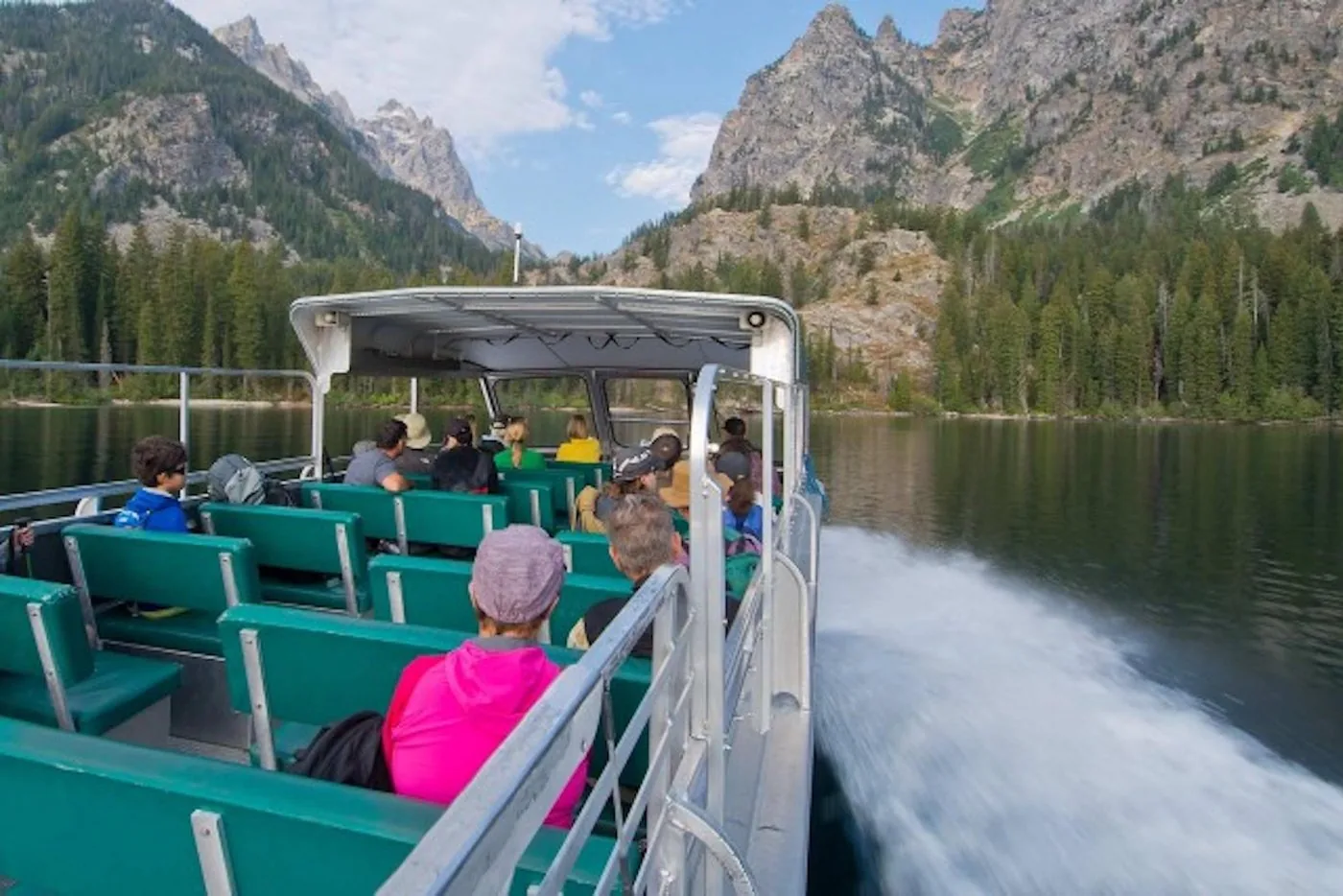
Boat shuttle
15 May to 30 September
Start
depends on the ice
Destinations
Hidden Falls, Inspiration Point
Beyond
Cascade Canyon

NPS: operating hours and season dates 2026 ↗

Map

18 places on the map

Viewpoints, lakes, trailheads and peaks, each with a documented location.

Open map3D terrain · details and photos for every place
  • Viewpoints5
  • Mountains & rock4
  • Water3
  • Trails3
  • Arrival1
  • History1
  • Surroundings1

03 · Out and about

Hikes & routes: what sets this park apart from Yellowstone

No geysers, but mountains right beside the trail.

Photo: National Park Service ↗ · Public domain ↗

„Here the animals stand in the open valley, not in the forest, and that is exactly why the traffic jams happen.“

Grand Teton National Park · bull moose in the sagebrush

Hikes & routes: what sets this park apart from Yellowstone

Jenny Lake and Cascade Canyon

The classic day: take the boat shuttle across the lake, climb to Hidden Falls and Inspiration Point and continue into Cascade Canyon, a classic U-shaped valley scoured out by glaciers.

NPS: geology and the Teton Fault ↗

Signal Mountain

A spur road leads almost to the 2,354-metre (7,723 ft) summit. From there you look out over the whole of Jackson Hole and see how flat the valley floor lies compared with the range.

NPS: geology and the Teton Fault ↗

Mormon Row and Menors Ferry

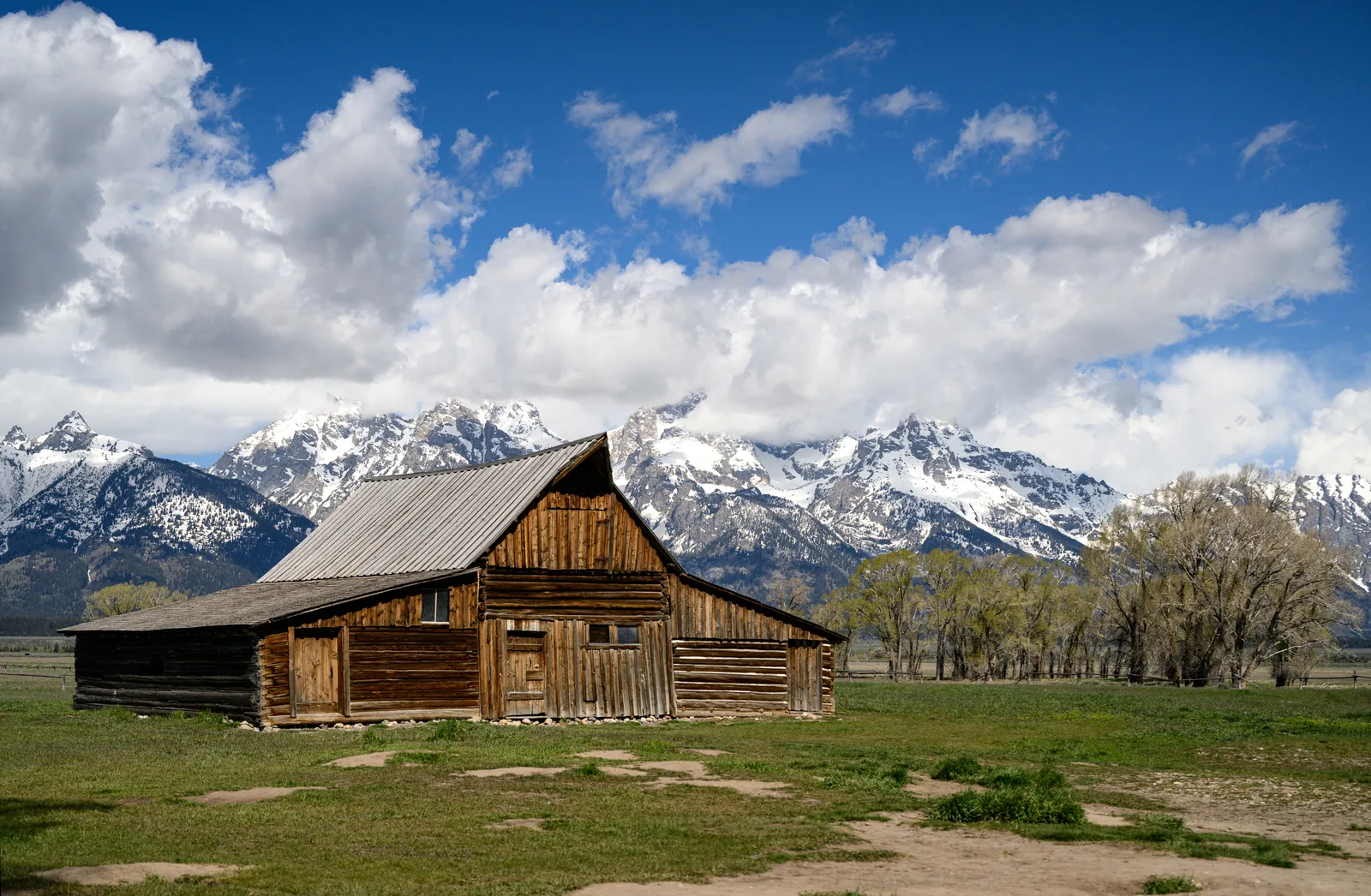
Two settlement sites that have survived: the barns of Mormon settlers in front of the range, and the ferry on the Snake River near Moose.

NPS: Grand Teton National Park ↗

On the water

The Snake River can be floated on calm raft trips; there are boat launches on Jackson Lake and Jenny Lake. Private boats must pass an aquatic invasive species inspection, open from 16 May to 30 September.

NPS: operating hours and season dates 2026 ↗

The summit is not a hike

At 4,199 metres (13,776 ft), the Grand Teton is an alpine climb that needs a permit, not a hike. If you want to see the mountains up close, go into one of the canyons, not up.

NPS: geology and the Teton Fault ↗

Offer photo: Grand Teton National Park: Full-Day Tour with Boat Ride

Yellowstone Day Tours · Full-day tour · 8.5 hours

Grand Teton National Park: Full-Day Tour with Boat Ride

Eight and a half hours with wildlife watching, a hike and a picnic, plus the boat ride across Jenny Lake. Pick-up at your accommodation in Jackson or Teton Village.

  • 8.5 hours
  • Pick-up included
  • Jenny Lake boat included
  • Breakfast and picnic

Departure Pick-up in Jackson or Teton Village.

Important if you live outside the US: the list of inclusions explicitly limits park entry to "Grand Teton National Park entrance fee **for US Residents**". The same list marks with a red cross, i.e. not included, the park fee of $100 per person for non-US residents aged 16 or over; as an alternative, the provider names the non-resident pass at $250. The surcharge is therefore added to the tour price. The boat ride depends on the operator's season (15 May to 21 September and 26 to 28 September). Guided in English. Cancellation up to 24 hours in advance.

View tour ↗Ad · partner link · checked 25 Sep 2026

Provider's product photo · GetYourGuide

Offer photo: Jackson Hole: Snake River Scenic Float Tour with Chairs

Teton Scenic Float Tours · Float trip · 3.5 hours

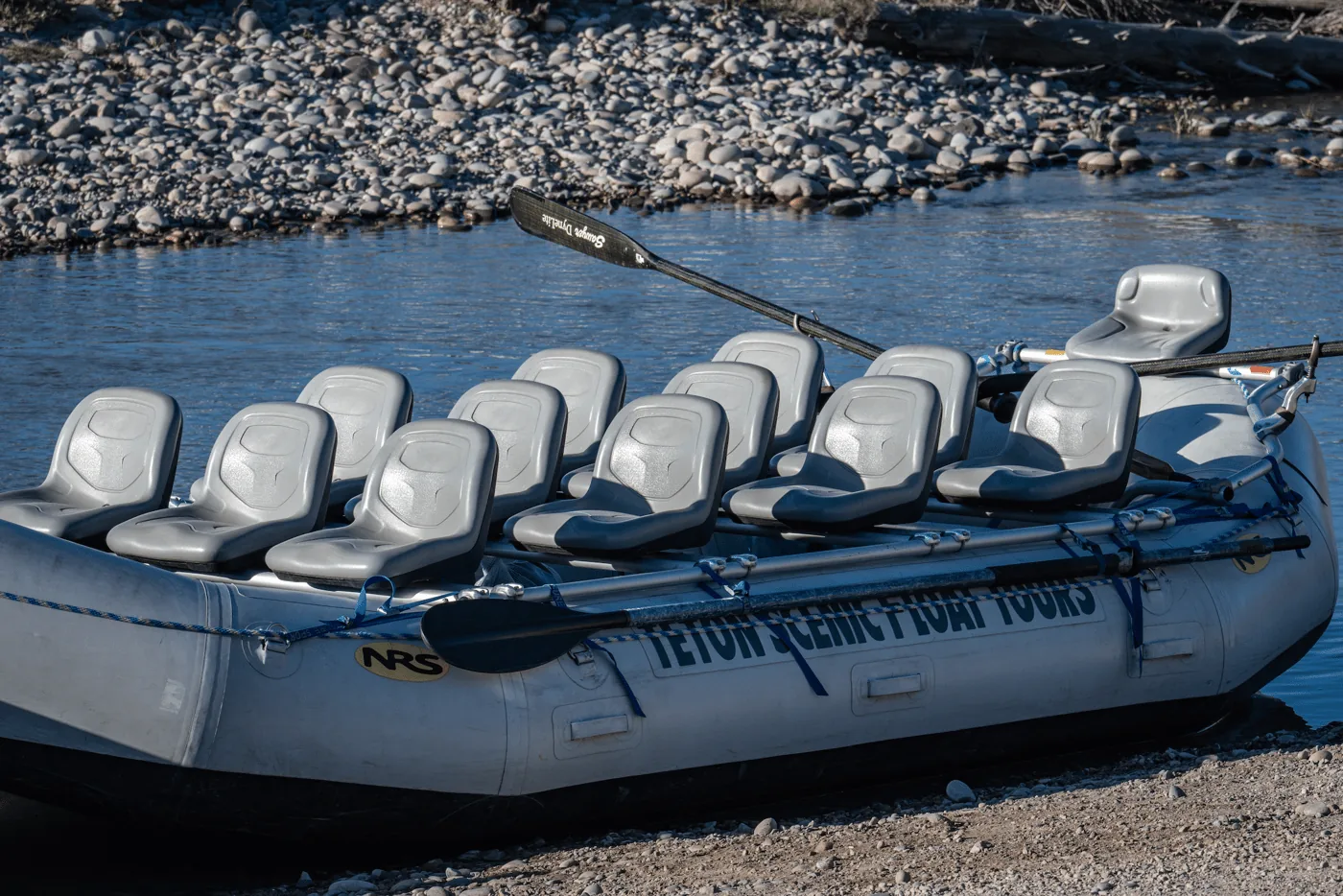
Jackson Hole: Snake River Scenic Float Tour with Chairs

Thirteen miles (21 km) on the Snake River in a purpose-built raft with seats and backrests. Two and a half hours on the water, plus the transfer there and back from Wilson.

  • 3.5 hours
  • 13 miles (21 km) on the river
  • Binoculars and blankets provided
  • No white water

Departure 1415 Beckley Park Way, Wilson, Wyoming.

In its route description, the provider places the guided section in Grand Teton National Park. It is not a white-water trip but a calm float with views of the Teton, Gros Ventre and Snake River ranges; that is exactly why it suits wildlife watching. Park admission is not in the list of inclusions, so for people without US residence $35 for the vehicle and $100 per person aged 16 or over are added, and the park authority also charges the surcharge to participants on commercial tours. Guided in English. Cancellation up to 24 hours in advance.

View tour ↗Ad · partner link · checked 25 Sep 2026

Provider's product photo · GetYourGuide

Offer photo: From Jackson: Grand Teton Sunset and Sightseeing Tour

Grizzly County Wildlife Adventures · Sunset · 4 hours

From Jackson: Grand Teton Sunset and Sightseeing Tour

Four hours in the evening, when the light turns golden and the animals are on the move. A naturalist guide drives to the park's best wildlife areas and explains the ecosystem, geology and history of the Tetons; you get out of the vehicle several times. Possible stops are Moose-Wilson Road, Mormon Row, Oxbow Bend, Jenny Lake and Jackson Lake.

  • 4 hours
  • Pick-up in Jackson or Teton Village
  • Maximum of 8 participants
  • Binoculars and spotting scope included

Departure Pick-up at your accommodation in Jackson or Teton Village, with return transfer.

According to the list of inclusions, park admission is not included; the pass is bought at the park entrance. For people without US residence aged 16 or over, the park authority charges an additional $100 per person unless they hold an annual pass or an America the Beautiful pass. Meals are not included; the provider recommends eating before or after the tour, and granola bars and water are provided on the way. Some stops are optional, depending on the route and sightings. Contradiction on the product page: the key details state a maximum of 8 participants, the highlights up to 9 people. Families with children under 8 are asked to book the private option. Guided in English. Cancellation up to 24 hours in advance.

View tour ↗Ad · partner link · checked 2 Oct 2026

Provider's product photo · GetYourGuide

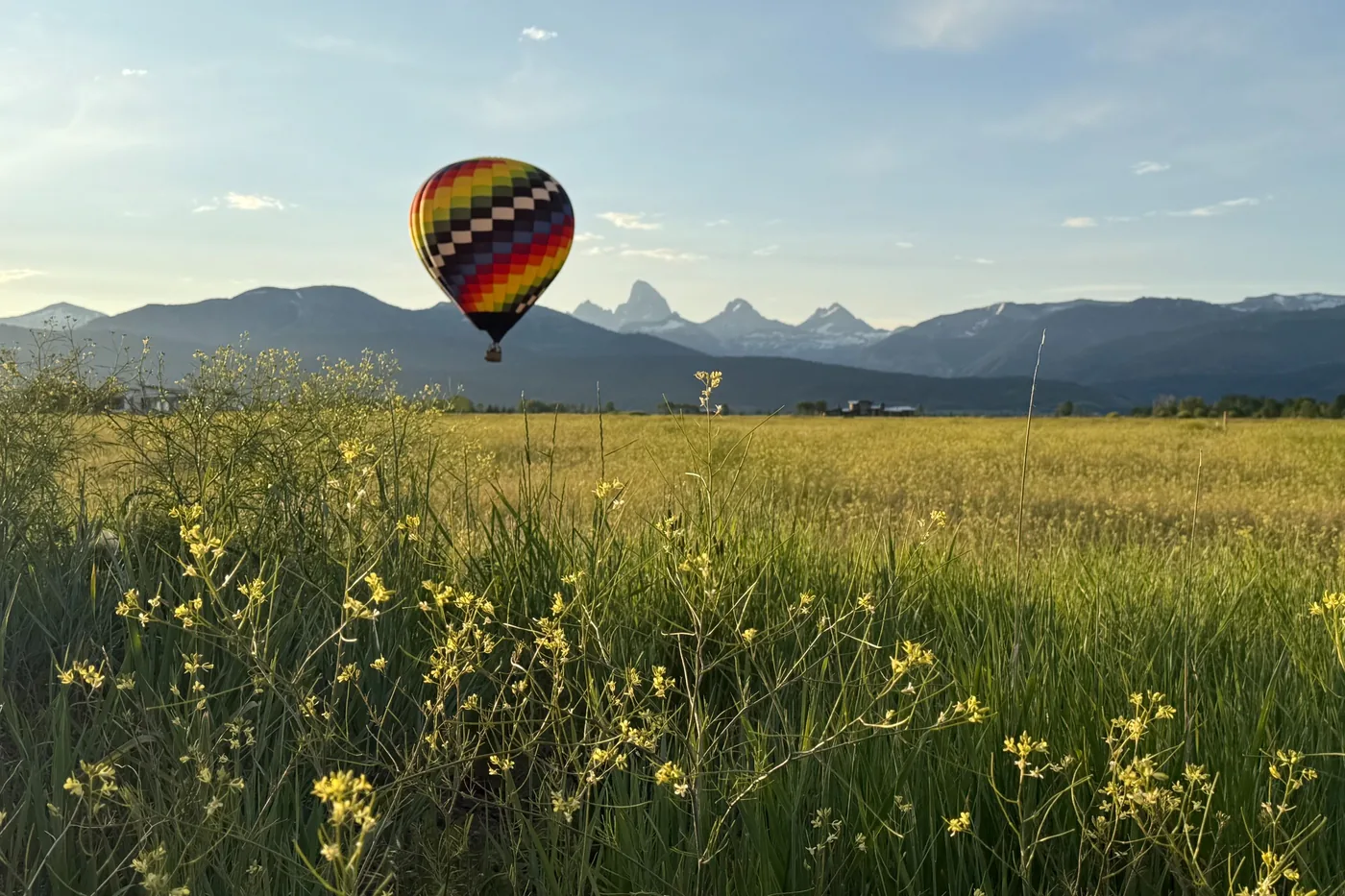
Offer photo: Balloon ride over Teton Valley, Idaho, with views of the Tetons

Destination Balloon Rides · Balloon ride · outside the park

Balloon ride over Teton Valley, Idaho, with views of the Tetons

The flight does not cross the national park; it drifts over Teton Valley near Driggs, Idaho, on the west side of the Teton Range. From there you see the Teton peaks, with the Grand Teton from behind, plus the Big Hole Mountains and the Teton River. The basket takes a maximum of five passengers.

  • 3 hours according to the key details
  • Maximum of 5 passengers
  • Starts in Driggs, Idaho
  • Over Teton Valley, not over the park

Departure Broulim's grocery store parking lot in Driggs, Idaho; ends at the same place. Arrive by car; no pick-up.

To be clear: the balloon flies west of the Teton Range over Teton Valley in Idaho; the national park begins at the crest and is not overflown. A scenic flight over the park itself is not available in any inventory. According to the list of inclusions, champagne, mimosas or cider are provided; there is no restroom on board. Not recommended for pregnant travellers; children aged 5 or over only travel with an adult. The provider cancels in bad weather. The product data give no season. Guided in English. Booking possible up to 12 hours before the start, cancellation up to 24 hours in advance. Contradiction: the title says 2.5 hours, the key details 3 hours. Check dates and prices with the provider.

View tour ↗Ad · partner link · checked 2 Oct 2026

Provider's product photo · Viator

Ad · we may earn a commission if you book through this partner link. Offer details checked 2 Oct 2026. See official ticket information.

Nature: the youngest mountains in North America

Less than ten million years

The Teton Range has been rising for less than ten million years; compared with the rest of the Rocky Mountains at 50 to 80 million and the Appalachians at over 300 million years, these are young mountains. Erosion has had little time, which is why the peaks are so sharp.

NPS: geology and the Teton Fault ↗

One earthquake after another

The range grows along the 40-mile (64 km) Teton Fault, in sudden jerks: in each earthquake the mountain block rises by 60 to 90 centimetres (2 to 3 ft) and the valley floor drops by 1.2 to 1.8 metres (4 to 6 ft). That is why there are no foothills: the valley falls faster than the mountain rises.

NPS: geology and the Teton Fault ↗

7,600 metres (24,900 ft) of offset

The same sandstone layer lies 1,800 metres (5,900 ft) above the valley on Mount Moran and about 6,000 metres (19,700 ft) deep below the valley floor. The total offset since the movement began is probably more than 7,600 metres.

NPS: geology and the Teton Fault ↗

Rock from the Earth's early days

Much of the range consists of 2.7-billion-year-old gneiss, one of the oldest rocks in North America, formed when seafloor was buried up to 29 kilometres (18 mi) deep. The granite of the highest peaks was added 2.5 billion years ago.

NPS: geology and the Teton Fault ↗

The black stripe on Mount Moran

About 775 million years ago, basalt magma forced its way into cracks and solidified into diabase dikes. The dike in the face of Mount Moran is 45 metres (148 ft) wide; the park calculates that its visible part, melted down, would fill Jenny Lake three times.

NPS: geology and the Teton Fault ↗

The lakes are the work of glaciers

Ice age glaciers widened V-shaped river valleys into U-shaped troughs, scoured out hollows and filled them with water as they retreated. Jenny, Taggart and Bradley Lake lie behind terminal moraines.

NPS: geology and the Teton Fault ↗

04 · Before you go

Park film and places nearby

Photo: Eric Kilby ↗ · CC BY-SA 2.0 ↗

Film by the park authority

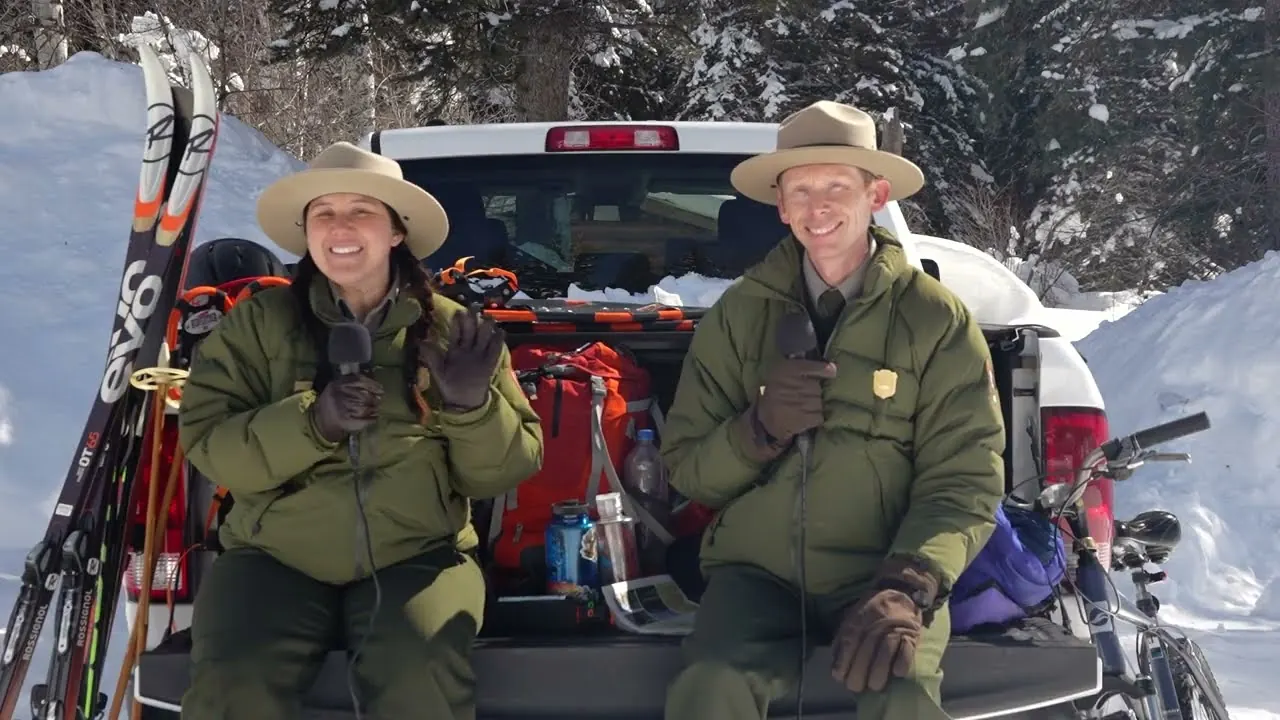
Visiting Grand Teton in Spring

Just under four minutes from the park authority's channel on the most difficult time of year: roads and facilities open one after another, wildlife is active and the trails are still under snow. In English.

Source: Grand Teton National Park · View channel ↗

Around the park

Jackson and the Elk Refuge

South of the park lies the town of Jackson, and next to it the National Elk Refuge, where thousands of elk spend the winter. Most guided tours start from there.

NPS: directions and traffic ↗

Field book · Grand Teton National Park

checked 25 Sep 2026

Grand Teton at a glance · PDF, 2 pages ↓

00My visit

Nothing saved yet. Every place card has a pin, and so does every place on the Map. What you save collects here, with days, notes and a preview you can share.

01Best time to visit: fixed season dates, shorter than you think

The dates for 2026, each published by the park authority.

Jenny Lake boat shuttle

Runs from 15 May to 30 September; the start depends on the ice. Without the boat, the walk to Hidden Falls and Inspiration Point is longer by the way around the lake.

NPS: operating hours and season dates 2026 ↗

Visitor centres

The Craig Thomas Discovery and Visitor Center in Moose is open daily from 10 April to 31 October, the Jenny Lake Visitor Center from 15 May to 12 October, Colter Bay from 8 May to 30 September. The park film is shown in Moose and in Colter Bay.

NPS: operating hours and season dates 2026 ↗

Lodges and shops

Jackson Lake Lodge 15 May to 4 October, Signal Mountain Lodge 8 May to 11 October, Jenny Lake Lodge 29 May to 4 October. Outside these dates, practically nothing in the park is open.

NPS: operating hours and season dates 2026 ↗

Campgrounds

Gros Ventre 27 April to 10 October, Jenny Lake 2 May to 27 September, Colter Bay 21 May to 27 September, Signal Mountain 8 May to 11 October. From November to April all are closed.

NPS: operating hours and season dates 2026 ↗

Winter rest for wildlife

At the Deadmans Bar and Pacific Creek boat launches, a winter wildlife closure applies from 15 December to 1 April. Similar closures affect other parts of the valley.

NPS: operating hours and season dates 2026 ↗

Autumn is the best season

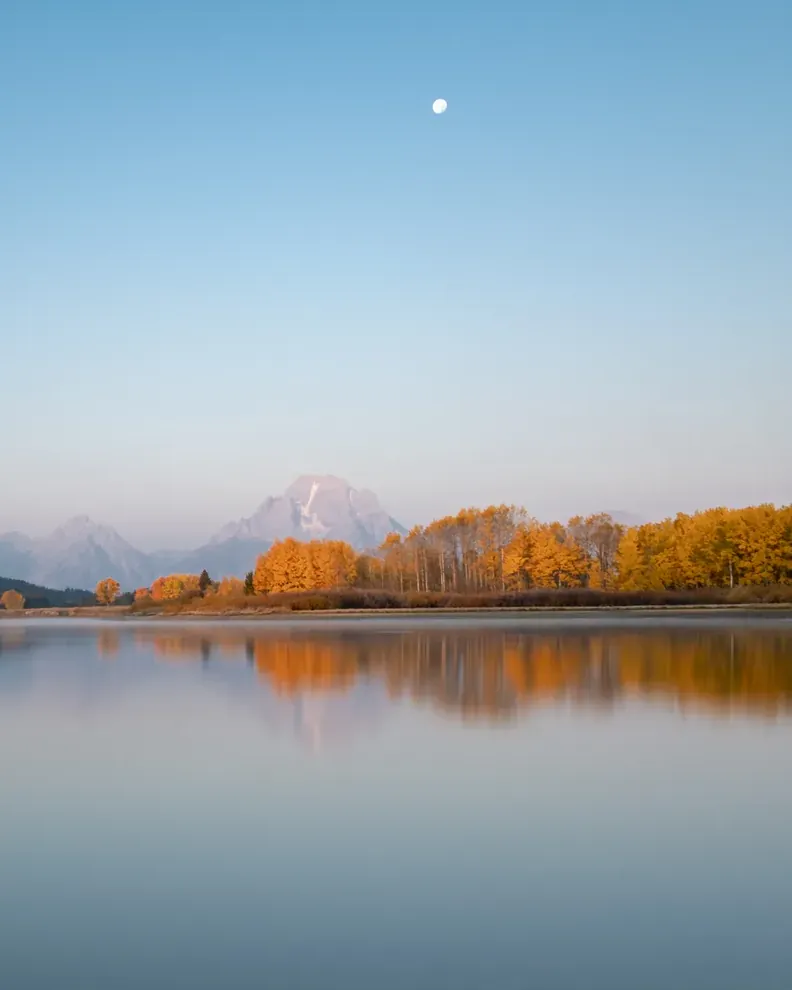
Golden aspens, red hawthorns and bugling elk: the park itself promotes autumn as the spectacle of the year. At the same time, most facilities close from the end of September.

NPS: operating hours and season dates 2026 ↗

Climate through the year

Weather and climate in Grand Teton National Park

Best months by the climate data: July to September. Average daytime highs of 17 to 22 °C, lows of 2 to 8 °C, 30 to 50 mm of precipitation a month. The wettest month is December (91 mm), the driest July (30 mm).

Climate chart in Grand Teton National ParkAverage daily highs from −7 °C to 22 °C, lows from −17 °C to 8 °C; monthly precipitation from 30 mm to 91 mm.
All monthly values as a table
Monthly averages 2001–2020, NASA POWER model
MonthHigh °CLow °CPrecipitation mm
January−6.3−16.983
February−5.8−16.873
March−2.4−12.373
April2.3−7.475
May9.9−1.572
June16.02.661
July22.57.730
August22.06.836
September16.72.350
October7.4−3.765
November−1.1−11.176
December−6.8−17.191
Year785

Modelled values, not a weather station: NASA POWER (MERRA-2) for a grid cell of about 55 × 50 km around the map point Jenny Lake (43.76° N, 110.73° W), with an average cell elevation of about 2,460 m. Averages for 2001–2020. Higher ground and valleys can differ markedly.

Source: NASA POWER, climatology 2001–2020 ↗ · retrieved 3 Oct 2026

02How to get there: Jackson Hole is the gateway

And one of the few US parks with an airport inside the park.

From Yellowstone

From Yellowstone's South Entrance it is 20 miles (32 km) on the John D. Rockefeller, Jr. Memorial Parkway to the park boundary. This is by far the most common approach.

NPS: directions and traffic ↗

From Idaho Falls

Via Victor onto ID-33, then, depending on the season, the size of your vehicle and your driving experience, either over Teton Pass or through the Snake River Canyon. The pass is steep and unsuitable for large RVs.

NPS: directions and traffic ↗

By air

Jackson Hole Airport lies inside the park boundary, the only commercial airport in a US national park. From there it is a few minutes to the first viewpoints.

NPS: Grand Teton National Park ↗

Roadworks in 2026

The park reports roadworks at several places in the park for 2026 and explicitly advises you to expect delays. The situation changes; check the roads page before you set off.

NPS: directions and traffic ↗

Without your own car

There is no park shuttle. If you arrive without a car, you depend on guided tours from Jackson or Teton Village; several operators pick you up at your accommodation.

NPS: directions and traffic ↗

Parking at Jenny Lake and the trailheads: arrive early

In most summer and fall months, trailhead parking areas fill early in the day, the park says, especially at Jenny Lake, String and Leigh Lakes, Lupine Meadows, the Laurance S. Rockefeller Preserve, Death Canyon and Granite Canyon. Rangers advise starting early and planning alternate hikes. Parking on vegetation can result in a fine and may start a fire.

NPS: hiking and trailhead parking ↗

03Tickets & entrance fees: $35 per car, plus $100 per person without US residence

Grand Teton is one of the eleven surcharge parks. So is Yellowstone.

The standard fee

A private vehicle with everyone in it costs $35 for seven days, a motorcycle $30, one person on foot, by bike or on skis $20. Children under 16 pay nothing.

NPS: fees and passes ↗

The surcharge

Every person aged 16 or over without US residence pays an extra $100, unless they enter with an annual pass. For a couple from abroad, that is $35 plus $200, a total of $235 for seven days.

NPS: fee for visitors without US residence ↗

Why the pass almost always wins here

Yellowstone is also on the surcharge list, and the two parks are next to each other. Without a pass, a couple pays $235 twice, $470 in total. The non-resident America the Beautiful Pass costs $250, is valid for twelve months and covers both: on this one combination alone you save $220.

NPS: fee for visitors without US residence ↗

Also due on a booked tour

The surcharge explicitly also applies to people without US residence who enter as part of a commercial tour group. Operators are expected to know the number of their non-resident guests before entry and declare it at the entrance station; since June 2026 they can prepay the entrance fee and surcharge with a Commercial Site Pass on Recreation.gov. Whether an operator does this is rarely in its list of inclusions, so ask before you book.

NPS: surcharge on commercial tours ↗

The $250 pass also works in a tour group

The non-resident America the Beautiful Pass removes the surcharge not only in your own vehicle: in a commercial tour group it covers the pass holder and three more people aged 16 or over. The same applies to the entrance fee, which is charged per person on commercial tours.

NPS: surcharge on commercial tours ↗

Don't forget your ID

When you enter with a pass, the park asks for a driving licence or other photo ID. Without proof you are treated as not eligible and pay the surcharge.

NPS: fees and passes ↗

Where the money goes

Under the Federal Lands Recreation Enhancement Act, the park keeps 80 percent of the fees it collects and spends about 9 million dollars a year of it on roads, trails, accessibility, habitat and historic buildings.

NPS: fees and passes ↗

04Where to stay: sleeping in the park is possible, if you plan ahead

Five campgrounds, several lodges, all seasonal.

Campgrounds

Gros Ventre, Jenny Lake, Signal Mountain, Colter Bay and the Colter Bay RV Park. Jenny Lake is the smallest and the most sought after. All are closed in winter.

NPS: campgrounds ↗

Lodges in the park

Jackson Lake Lodge, Jenny Lake Lodge, Signal Mountain Lodge, Colter Bay Village with cabins and a tent village, and the Triangle X Ranch. For all of them the season ends in early to mid-October.

NPS: lodging in the park ↗

Supplies

Shops and restaurants are in Colter Bay, at Signal Mountain Lodge, at Jackson Lake Lodge and at Jenny Lake. There are also the two fuel stations with pumps that work around the clock.

NPS: operating hours and season dates 2026 ↗

Jackson as a base

The town of Jackson lies directly to the south and has accommodation all year. Most guided tours start there, many with pick-up at your accommodation.

NPS: directions and traffic ↗

05Rules & safety: altitude, weather and animals by the road

What makes it different from a holiday in the Alps.

Both kinds of bear

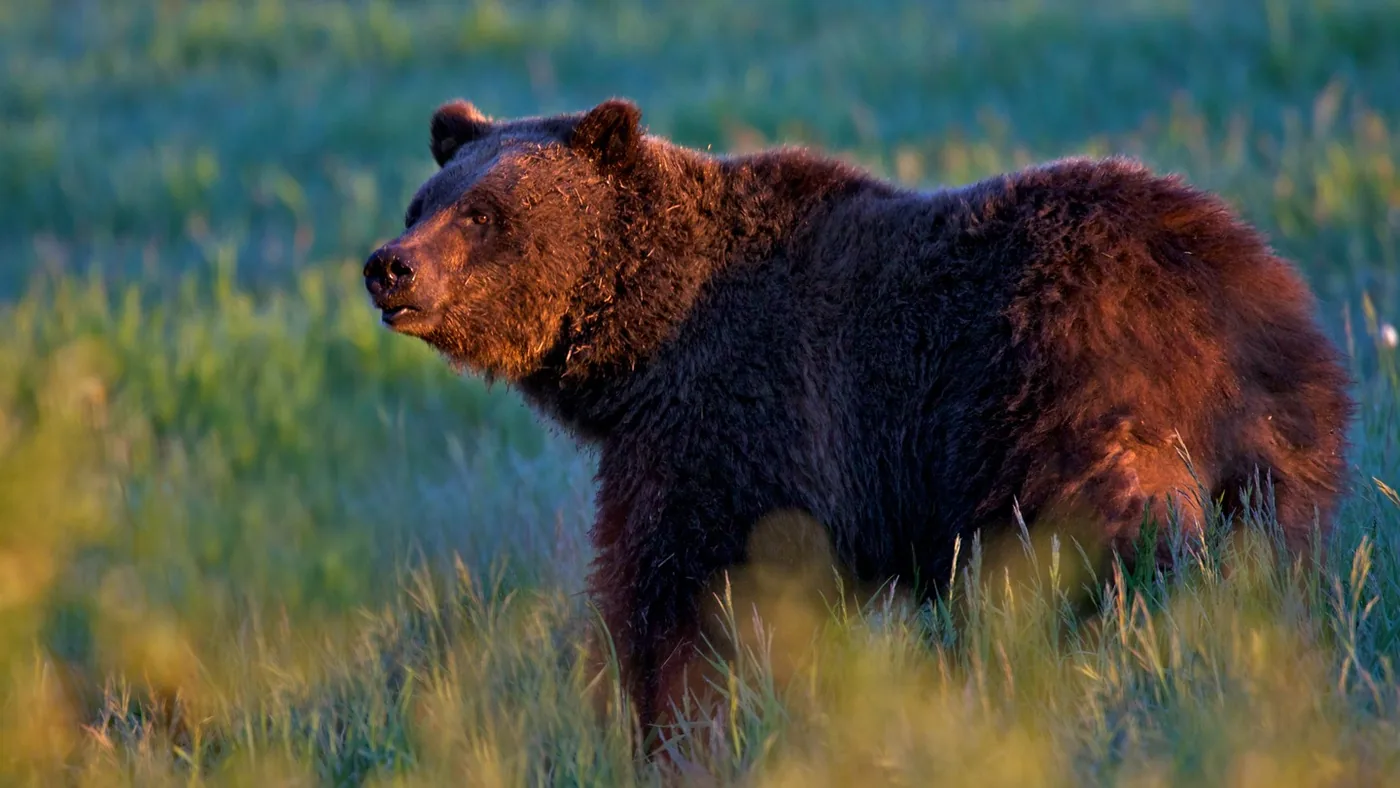
Black bears and grizzly bears live in the park. Bear spray belongs on every hike, and food goes in the containers provided. The park has its own rules for each area.

NPS: wildlife ↗

Moose and elk stand in the valley, not in the forest

Elk and moose often stay in the open sagebrush and along the river channels: easy to see, and therefore the cause of many traffic jams. Only stop in the areas provided.

NPS: wildlife ↗

The valley floor is high

Jackson Hole already lies over 1,900 metres (6,200 ft) up, and the trails quickly climb higher. Visitors arriving straight from abroad regularly underestimate this.

NPS: geology and the Teton Fault ↗

The fault is active

According to the park, the Teton Fault can produce an earthquake of magnitude 7.0 to 7.5. The three most recent were about 5,900, 8,000 and 10,000 years ago.

NPS: geology and the Teton Fault ↗

Mountain weather

The valley is dry, but the mountains make their own weather. Afternoon thunderstorms are the rule in summer, and snow on the trails in June is not unusual.

NPS: current conditions ↗

06Frequently asked questions: Grand Teton National Park

How much do foreigners pay to enter Grand Teton?

A vehicle with everyone in it costs $35 for seven days. On top of that, every person aged 16 or over without US residence pays $100, so a couple pays $235. The non-resident America the Beautiful Pass costs $250, is valid for twelve months and removes the surcharge at all eleven parks concerned.

NPS: fee for visitors without US residence ↗

Is the annual pass worth it if I also visit Yellowstone?

Almost always. Yellowstone is also on the surcharge list, and the two parks border each other. Without a pass, a couple pays $235 twice, $470 in total, against $250 for the pass. This one combination alone saves about $220.

NPS: fee for visitors without US residence ↗

Do I need to bring ID?

Yes, if you enter with an annual pass. The park then asks for a driving licence or other photo ID. Without proof, your eligibility counts as unproven and the surcharge is due.

NPS: fees and passes ↗

When does the Jenny Lake boat run?

From 15 May to 30 September, although the start depends on the ice. Without the boat, the walk to Hidden Falls and Inspiration Point is longer by the way around the lake.

NPS: operating hours and season dates 2026 ↗

Can I get fuel in Grand Teton National Park?

Yes, unlike in Arches or Glacier. There are two fuel stations, at Signal Mountain Lodge and in Colter Bay; the pumps work around the clock on self-service. The opening hours of the shops next to them are seasonal, though.

NPS: operating hours and season dates 2026 ↗

How long is the season in Grand Teton?

Shorter than many people expect. The visitor centre in Moose is open from 10 April to 31 October, the lodges from May to early October, the campgrounds until the end of September or mid-October. From November to April some roads, all campgrounds and most facilities are closed.

NPS: operating hours and season dates 2026 ↗

Can you hike to the top of the Grand Teton?

No. At 4,199 metres (13,776 ft) it is an alpine climb that needs a permit. If you want to see the mountains up close, walk into one of the glacial canyons, such as Cascade Canyon behind Jenny Lake.

NPS: geology and the Teton Fault ↗

Why do the Tetons have no foothills?

Because the valley sinks as well. The range grows in sudden jerks along the Teton Fault: in each earthquake the mountain block rises by 60 to 90 centimetres (2 to 3 ft) while the valley floor drops by 1.2 to 1.8 metres (4 to 6 ft). So the valley falls faster than the mountain rises, and the mountains stand in the flat land without any transition.

NPS: geology and the Teton Fault ↗

How dangerous is the wildlife in Grand Teton?

Black bears and grizzly bears live in the park; bear spray belongs on every hike and food in the containers provided. The more common danger is more mundane: elk, moose and bison stand in the open valley right by the road, and the traffic jams and sudden stops they cause are the real source of accidents.

NPS: wildlife ↗

Can foreigners get an America the Beautiful Pass?

Yes. Visitors without US residence can buy the non-resident America the Beautiful Pass for $250. It is valid for twelve months, covers the entrance fee and removes the $100 surcharge in Grand Teton and Yellowstone alike. In a commercial tour group it covers the pass holder and three more people aged 16 or over.

NPS: fee for visitors without US residence ↗

07Sources and updates

Every fact on this page comes from the park authority.

  1. NPS: Grand Teton National Park ↗
  2. NPS: fees and passes ↗
  3. NPS: fee for visitors without US residence ↗
  4. NPS: operating hours and season dates 2026 ↗
  5. NPS: directions and traffic ↗
  6. NPS: current conditions ↗
  7. NPS: campgrounds ↗
  8. NPS: lodging in the park ↗
  9. NPS: nature in the park ↗
  10. NPS: geology and the Teton Fault ↗
  11. NPS: wildlife ↗
  12. NPS: surcharge on commercial tours ↗
  13. NPS: hiking and trailhead parking ↗

How current is this information?

Researched 25 Sep 2026. Not a live status. Dates apply only to the year stated. A successful automatic fetch is not an editorial confirmation; outdated automatic values are hidden and replaced by the source link.

Current information from the park ↗

Image and map credits

Location sources: Viewpoints, lakes, trailheads and peaks are taken from OpenStreetMap and documented individually via the object address. The points are for orientation and do not replace a hiking map. Markers do not imply that access is permitted. Base map © OpenStreetMap contributors. Coastlines of the chapter map: Natural Earth.

End of the field book · Park authority ↗