The fee looks small, but it is charged anew every day, and that changes the sums for a longer stay.
The ministry’s fee table, valid since 1 April 2026, divides Namibia’s protected areas into two price groups, plus a separate rate for Sandwich Harbour. Etosha is in the more expensive one, together with Namib-Naukluft, Skeleton Coast, Dorob, Cape Cross, Waterberg, /Ai-/Ais and Tsau //Khaeb. Every fee has two parts: the actual park entry and a conservation levy. For foreign adults that is 140 plus 140, N$280 in total.
The point travel reports regularly miss is in the conditions of the 2025 fees brochure: the permit is valid for the day, and the fees are payable for each day, for visitors and vehicles alike. The minimum charge is 24 hours. A couple in a rental car therefore does not pay N$620 once, but N$620 for every day in the park. Over five days that is N$3,100.
There is no annual pass for foreign visitors to soften this, unlike in South Africa, where the Wild Card does exactly that. Instead, fees are tiered by origin: Namibians pay just over a fifth and citizens of SADC countries just under two thirds of the foreign rate. Children aged eight or younger pay nothing in any category.
You pay at the barrier, and the permit is issued there. There is no advance booking system for entry; the ministry FAQ states explicitly that all Namibian national parks issue the permit on arrival at the gate and that the state-owned hotel company NWR does not issue permits. If you stay overnight in the park, you therefore need both separately: accommodation from NWR and the day permit at the gate.
Both are stated in the 2025 fees brochure: permits are non-refundable and non-transferable. A permit that is paid for but not used because of a flat tyre is lost.
Visiting Etosha National Park: a park you drive yourself
01
22,935 square kilometres (8,855 sq mi)
That is larger than Slovenia and larger than the German state of Hesse. The park authority says the park has been reduced considerably since it was proclaimed in 1907 and is still larger than several European countries.
Etosha is one of the oldest protected areas in Africa and, according to the ministry, Namibia’s flagship park and the most visited destination in the country.
All Namibian national parks issue the permit on arrival at the gate. There is no advance booking system for entry, unlike in many US parks. The state-owned hotel company NWR explicitly does not issue permits.
Ombika (Andersson) in the south near Okaukuejo, Von Lindequist in the east near Namutoni, Galton in the west from Kamanjab and King Nehale in the north towards Ondangwa. Which gate you use decides half of your driving distance.
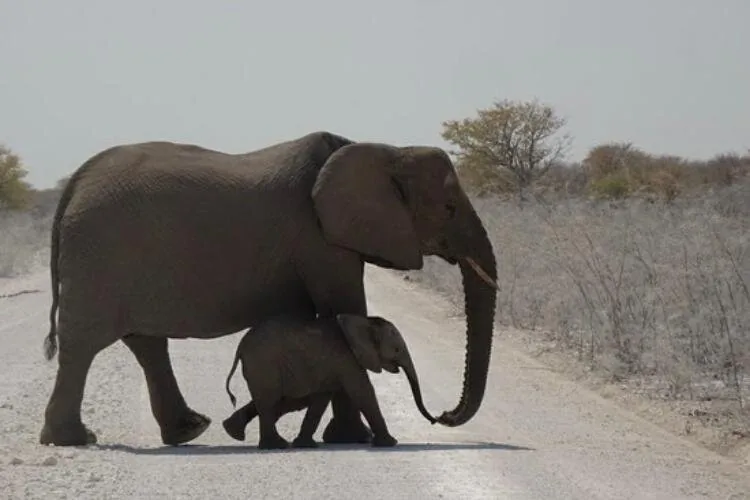
„You may not get out anywhere here, and that is exactly why the animals come so close to the road.“
Etosha National Park · Lion with cub
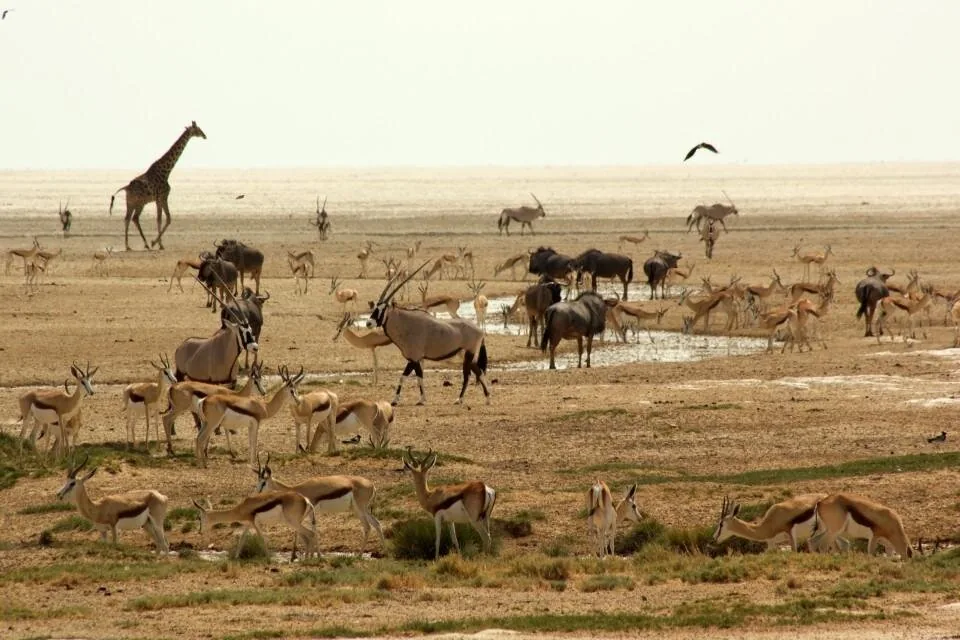
Game drives & waterholes: wait at the water instead of searching
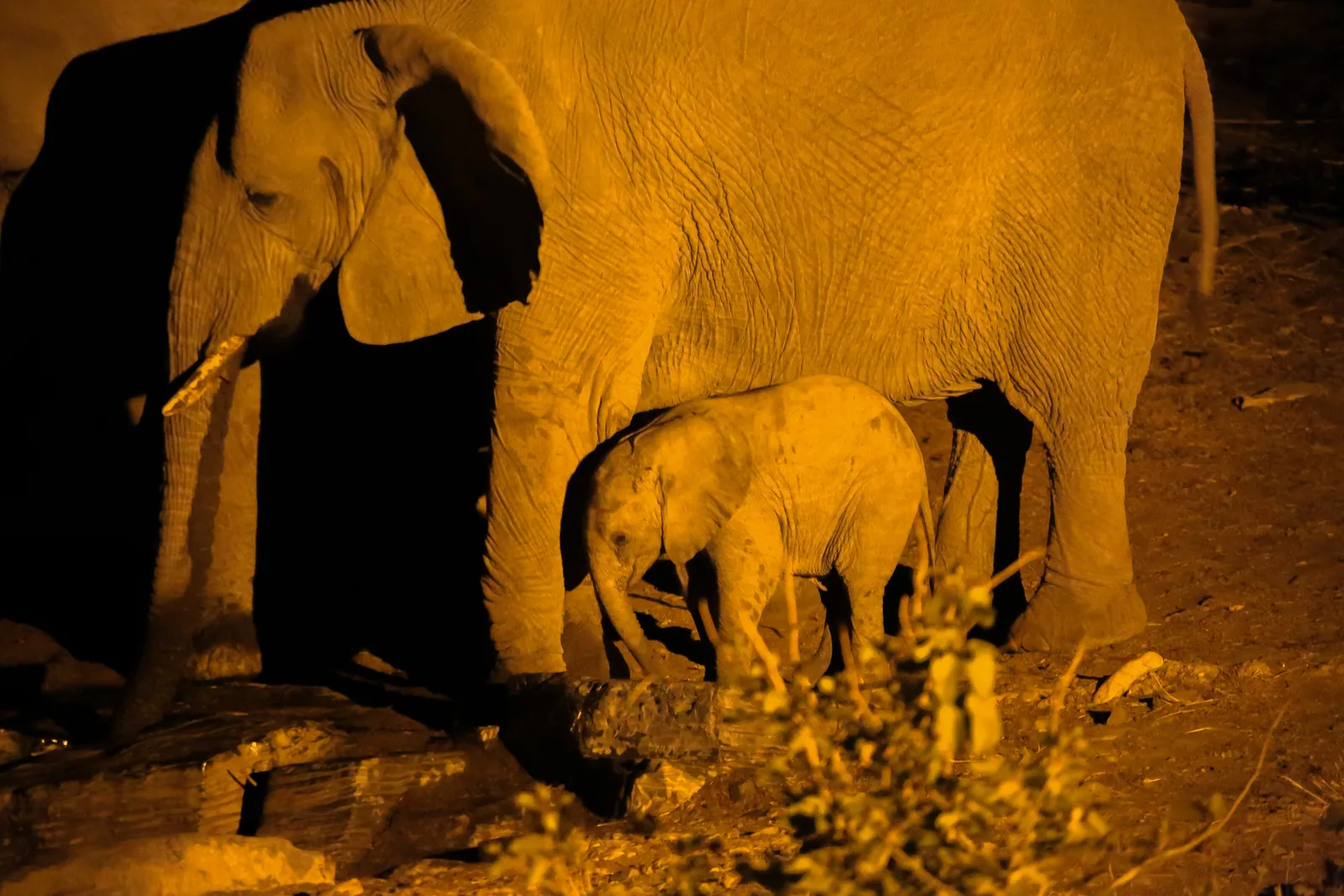
The floodlit waterholes
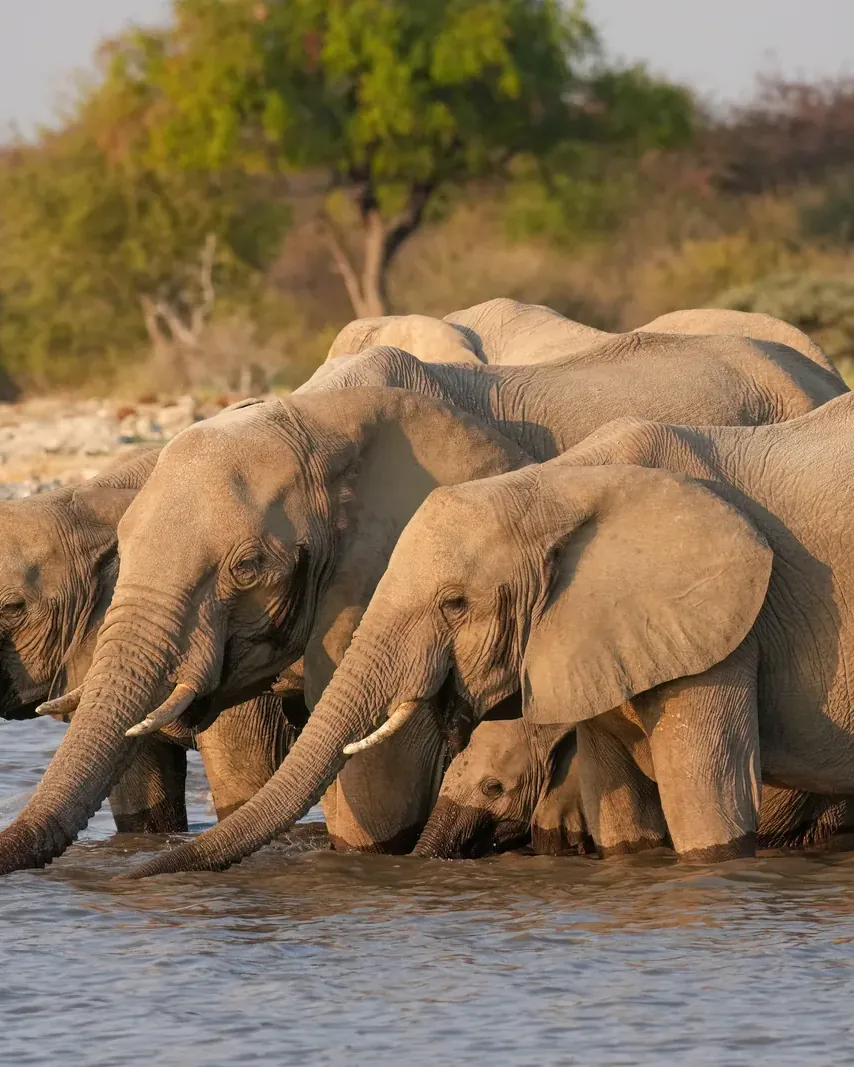
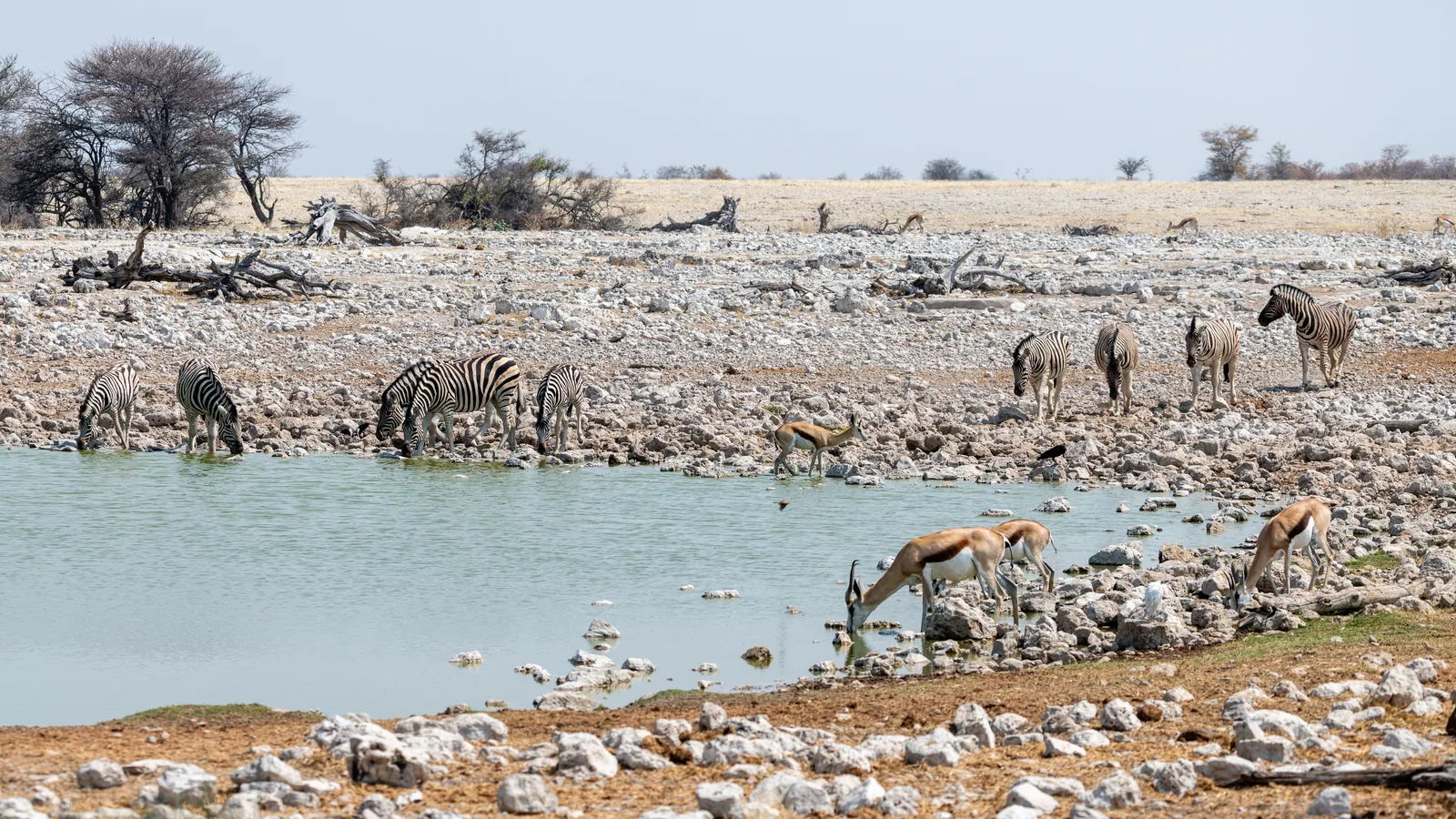
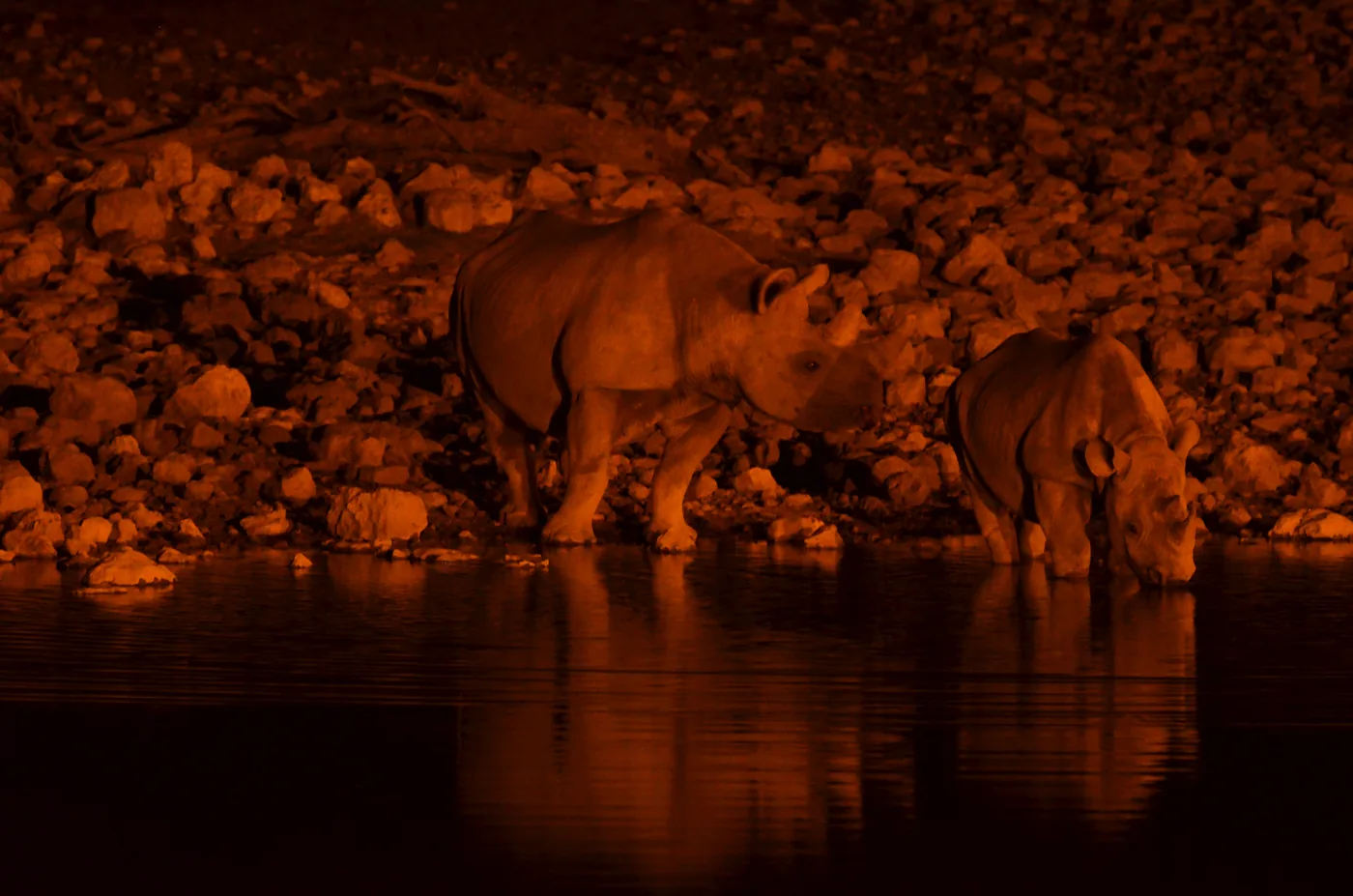
Okaukuejo, Halali and Namutoni each have a waterhole right by the camp that is floodlit at night. Okaukuejo’s is the best known: the park authority explicitly names black rhino, lion and elephant as night-time visitors.
Okaukuejo and Halali offer guided morning, afternoon and night drives; Namutoni and the smaller camps offer drives as posted on the notice board. The night drive is the only legal way to be out in the park after sunset.
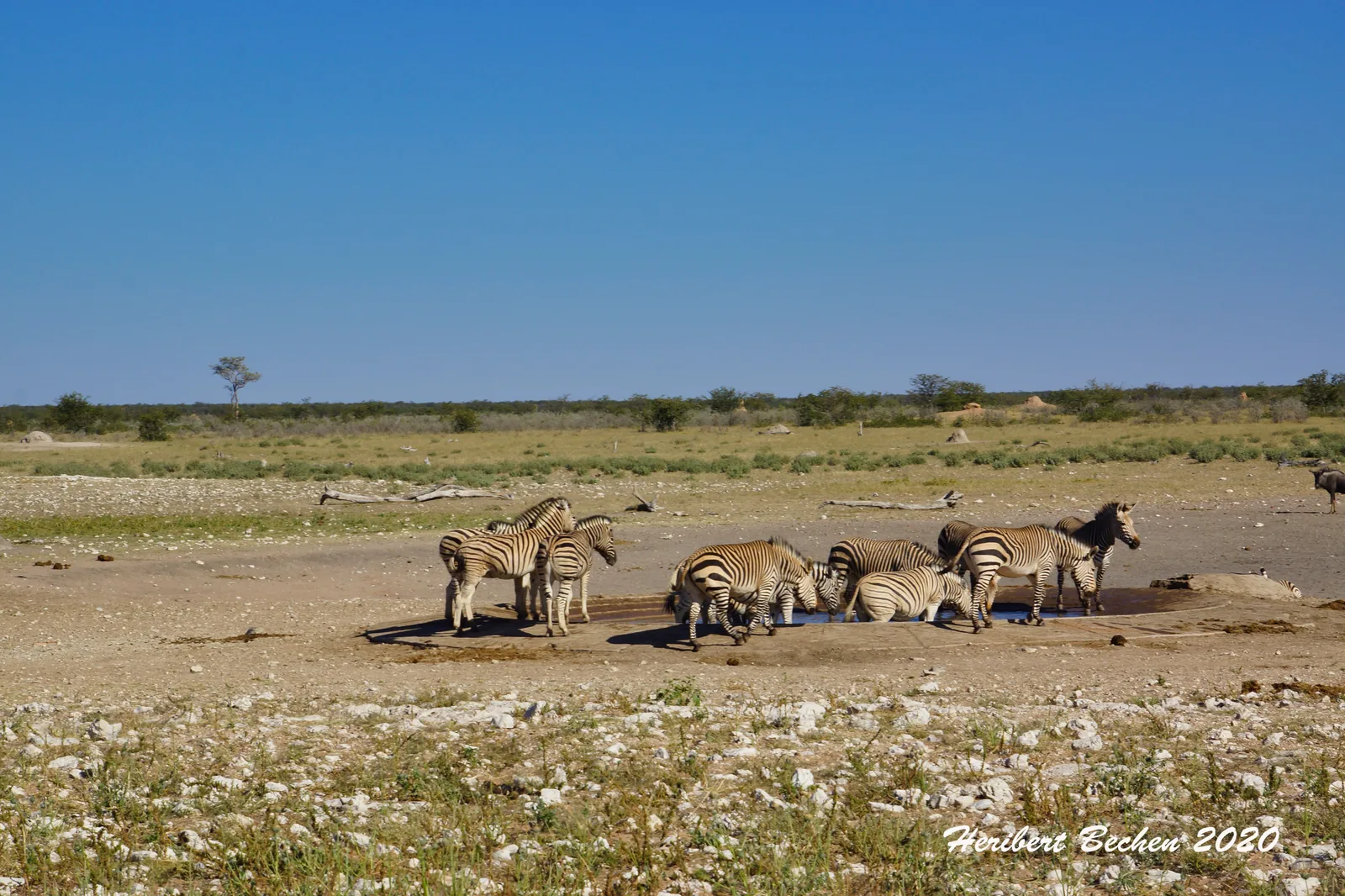
The main route runs from Okaukuejo via Salvadora and Homob to Halali and on via Goas and Chudob to Namutoni. If you take your time and wait at one spot, you see more than if you drive the whole loop.
A spur road leads out onto the pan itself. It is one of the few places where you may get out of your vehicle, and the only place where the size of the pan really sinks in.
West of Okaukuejo stands a dense stand of African moringa trees that the park authority calls the Fairytale Forest. Moringa ovalifolia normally grows on rocky slopes, not on the plain, which makes this stand a botanical oddity.
Namutoni lies near Fisher's Pan, which the operator explicitly names as a hotspot for birdwatchers. The 407 recorded species include the woolly-necked stork, lappet-faced vulture, Hartlaub's spurfowl and Rüppell's parrot.
Yavola tours and transfer · Game drive · 5 to 10 hours
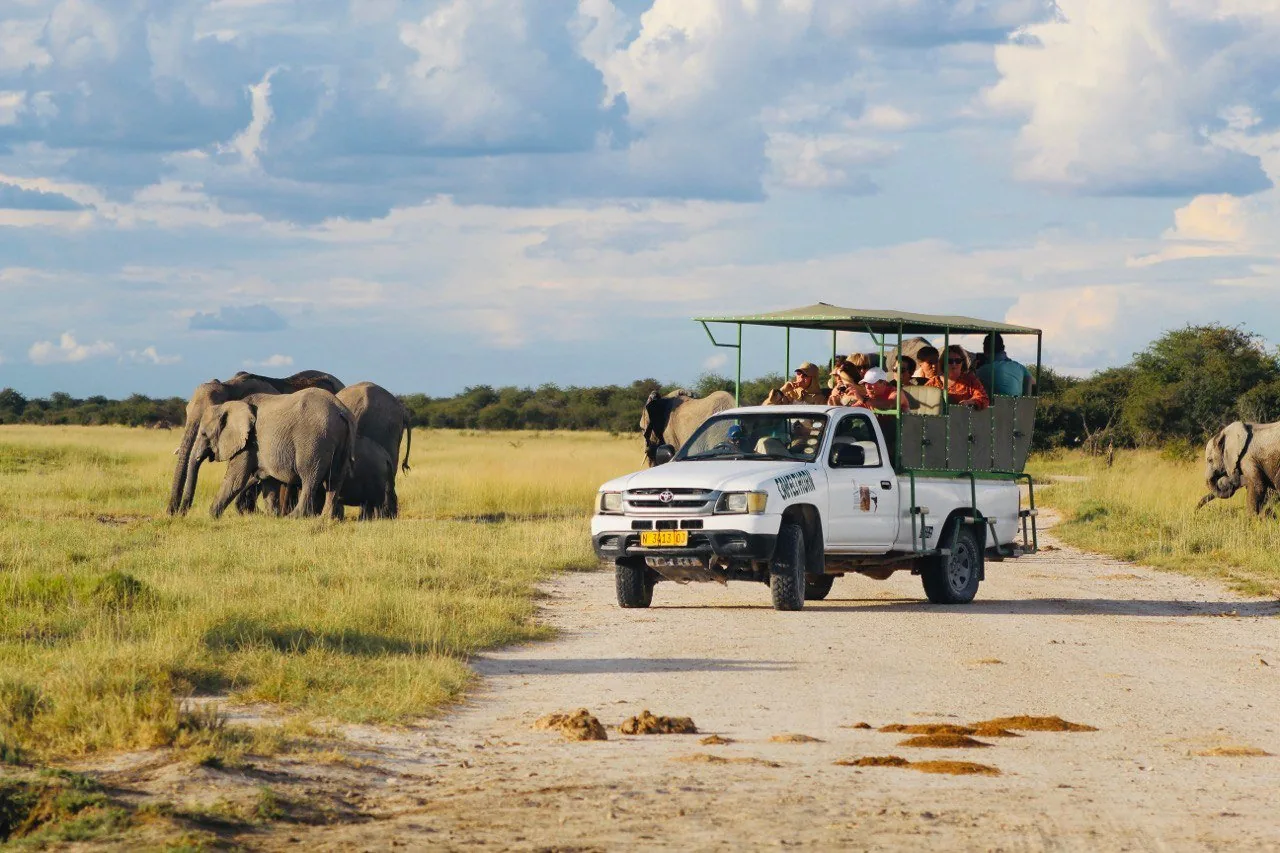
Half- or full-day game drive from Okaukuejo in a safari vehicle
Pickup from your accommodation in Okaukuejo or Ombika, then a half-day or full-day drive in a safari vehicle to the park’s waterholes. The driver chooses the spots where waiting pays off.
5 to 10 hours
Pickup in Okaukuejo, Ombika or at the gates
Water on board
Guide in English
Departure Pickup according to the description at your accommodation in Okaukuejo or Ombika; the route details also list Andersson Gate, King Nehale Gate, Namutoni Gate and lodges on the C38.
Two things to know before booking. First: park fees are explicitly not included; N$280 per foreign adult per day (as of 1 April 2026) is charged on top, and the operator provides the vehicle. Lunch and tips are also excluded. Second, a contradiction worth mentioning: the German description advertises an “open vehicle”, while the park regulations prohibit entry in open vehicles without a cage or other effective protection. Licensed operators meet this requirement with their vehicle bodies, but for your own rental car it applies without exception. The operator also speaks of Namibia’s “Big 4”, which fits the facts: the buffalo is missing in Etosha. The description promises wildlife viewing at sunset; however, the gates close at sunset, and nobody may be out in the park after sunset.
Full-day game drive in a nine-seater 4x4 with a local guide
Game drive through Etosha National Park with a driver-guide who, according to the operator, has lived in the region and knows the animals’ territories. Your own car stays at your accommodation; you book a full day.
full day, around 10 hours
9-seater 4x4
English
Park entry not included
Departure Pickup at selected lodges and campsites up to 30 minutes from Andersson Gate, otherwise meeting point at the gate.
Included are the 4x4, blankets and driver-guide; park entry, food, drinks and tips are not. According to the operator, some lodges do not allow it onto their grounds; in that case Andersson Gate is the meeting point. Free cancellation up to 24 hours in advance.
Namibia Wildlife Resorts (NWR), operator of the resorts inside the park · Programme of the resorts inside the park · Night drive
Night game drive from the resorts inside the park
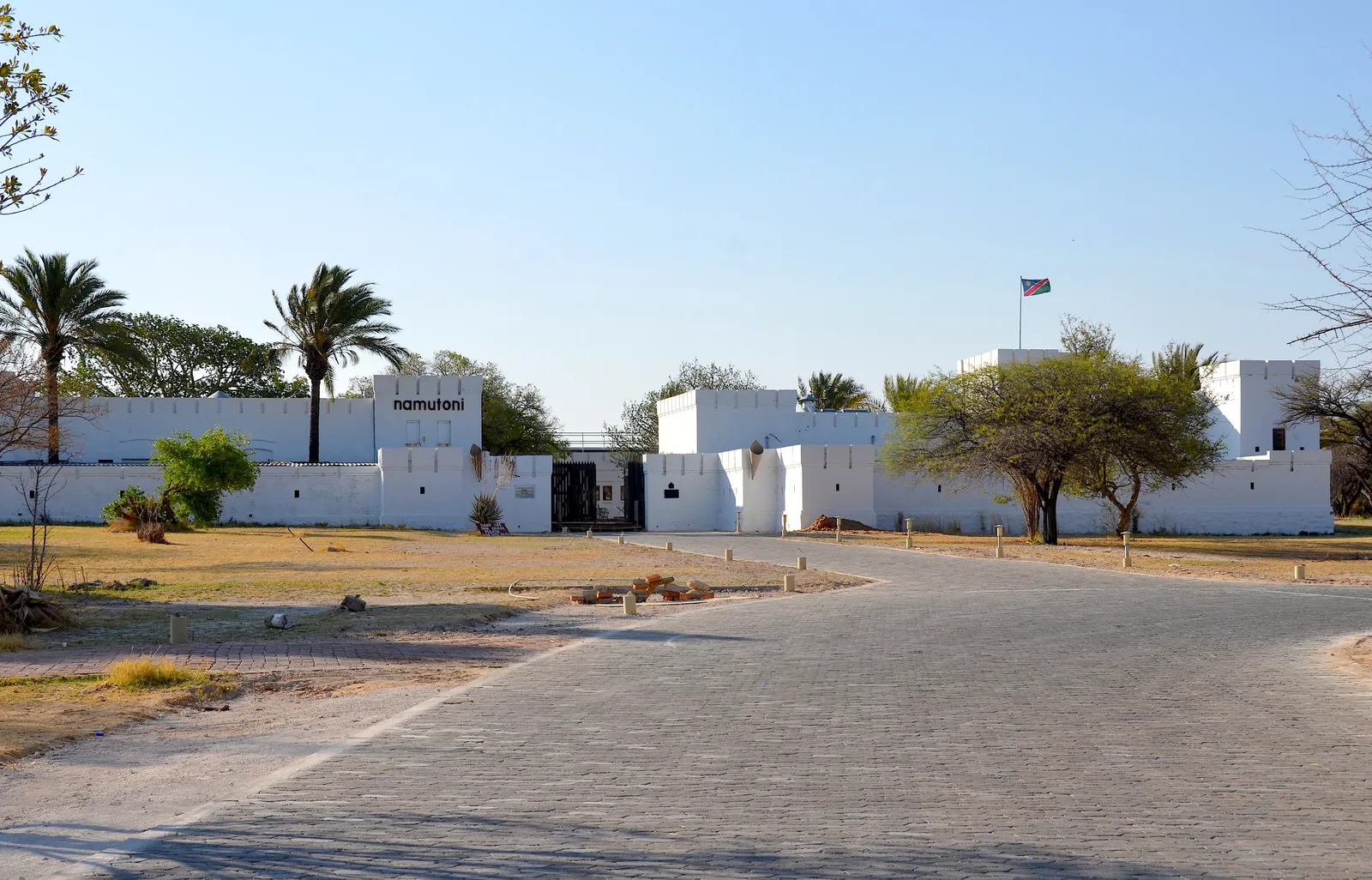
After sunset nobody may drive through Etosha on their own. A guided night game drive is the only way to see the park in the dark. Namibia Wildlife Resorts offers it at its resorts inside the park: at Okaukuejo, Halali and Namutoni as well as at Dolomite and Onkoshi. After that there is the floodlit waterhole at the camp, where you can sit without a vehicle: at Okaukuejo, at the Moringa waterhole near Halali and at the King Nehale waterhole in front of Fort Namutoni.
after sunset
Okaukuejo, Halali, Namutoni, Dolomite, Onkoshi
Departure at the resort
For overnight guests in the park
Meeting point Departure at the resorts inside the park: Okaukuejo (17 km beyond Andersson Gate), Halali, Namutoni, Dolomite and Onkoshi.
You may neither leave nor reach a camp after sunset, and the gates close at sunset. Anyone who wants to join a night drive therefore stays overnight at the resort in question; from the lodges outside the gates you cannot get back into the park in the evening. How long the drive lasts and how to book it is not stated on the NWR pages; it is best to ask when booking your accommodation. Park fees are not included in the accommodation rates.
NWR website ↗Offered by Namibia Wildlife Resorts (state-owned park operator) · no partner link · checked 2 Oct 2026
Ad · we may earn a commission if you book through this partner link. Offer details checked 2 Oct 2026. See official ticket information.
Etosha wildlife: four of the Big Five, and a persistent mistake
The buffalo is missing
The ministry’s own page lists lion, rhino, elephant and giraffe as “four of the Big Five”. The giraffe is not one of the Big Five; the fifth animal in the classic list is the Cape buffalo, and that is exactly the one missing in Etosha. Correct is: lion, leopard, elephant and rhino are present, the buffalo is not.
The park authority points to a long record in protecting the black rhino; white rhinos were only reintroduced later. Black rhinos are regularly seen at night at the Okaukuejo waterhole.
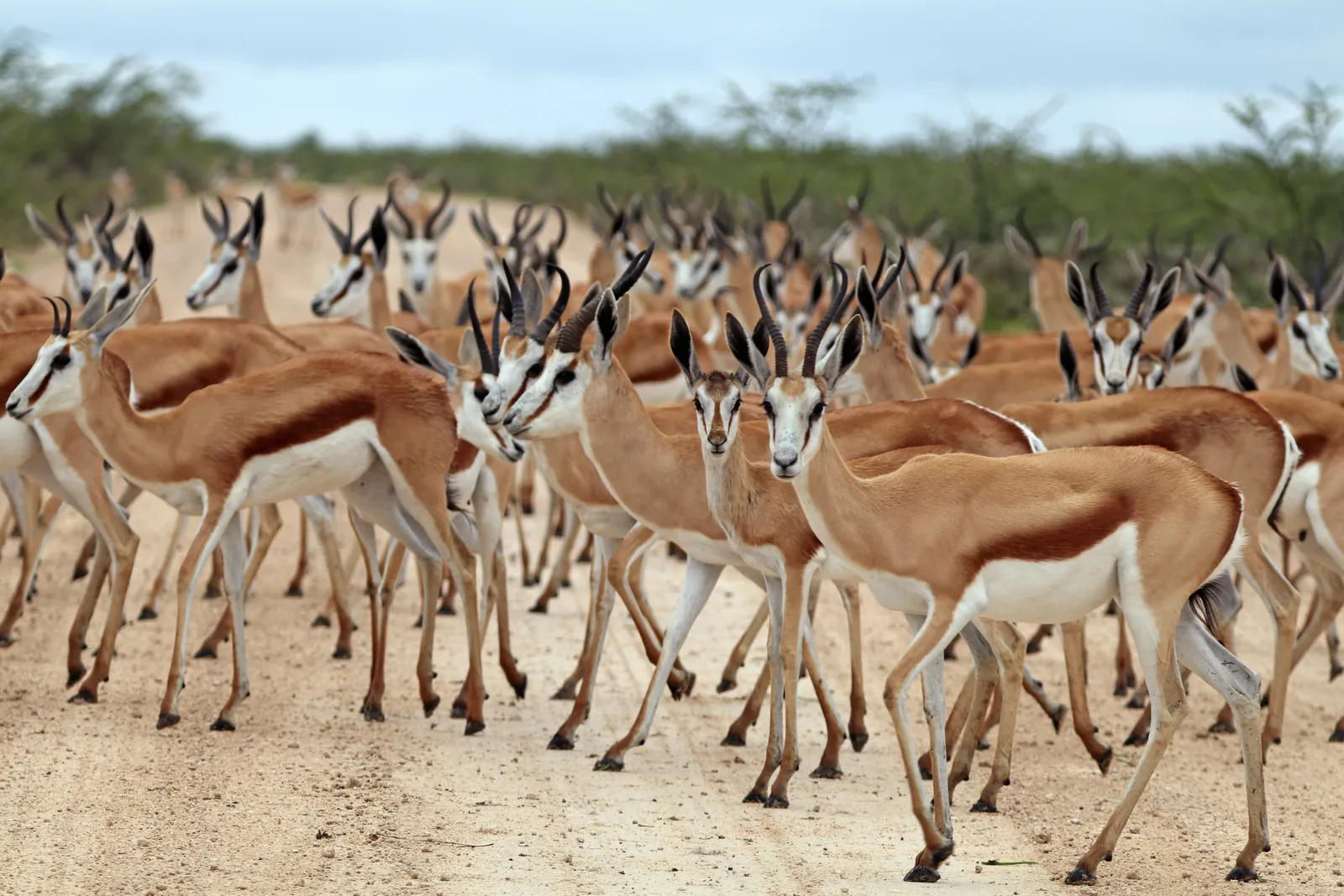
Etosha has contributed significantly to the recovery of the endemic black-faced impala, a subspecies found only in north-western Namibia and southern Angola.
The pan was once part of a large lake fed by the Kunene River. Newly excavated fossils of wetland antelopes such as sitatunga, red lechwe and tsessebe, and a 90-centimetre (35 in) catfish, show that it was once much wetter.
The terrain is flat and open; the only high ground lies around Halali Camp and in the far west. That is why wildlife can be seen from a long way off here.
The Etosha Ecological Research Institute near Okaukuejo attracts scientists from all over the world, which makes the park not only a destination but also a source of data.
Almost every trip to Namibia starts and ends at Hosea Kutako International Airport. From there it is around 500 kilometres (311 mi) to the southern gate: a full day’s drive, not an excursion.
Nothing saved yet. Every place card has a pin, and so does every place on the Map. What you save collects here, with days, notes and a preview you can share.
Reality check
Share
The plan is stored in the link itself. Anyone who opens it sees the preview and can use the plan.
Image for your phone, with stops and map.
01Best time to visit & gate times: the dry season
Not because it is prettier then, but because the animals have to come to the water.
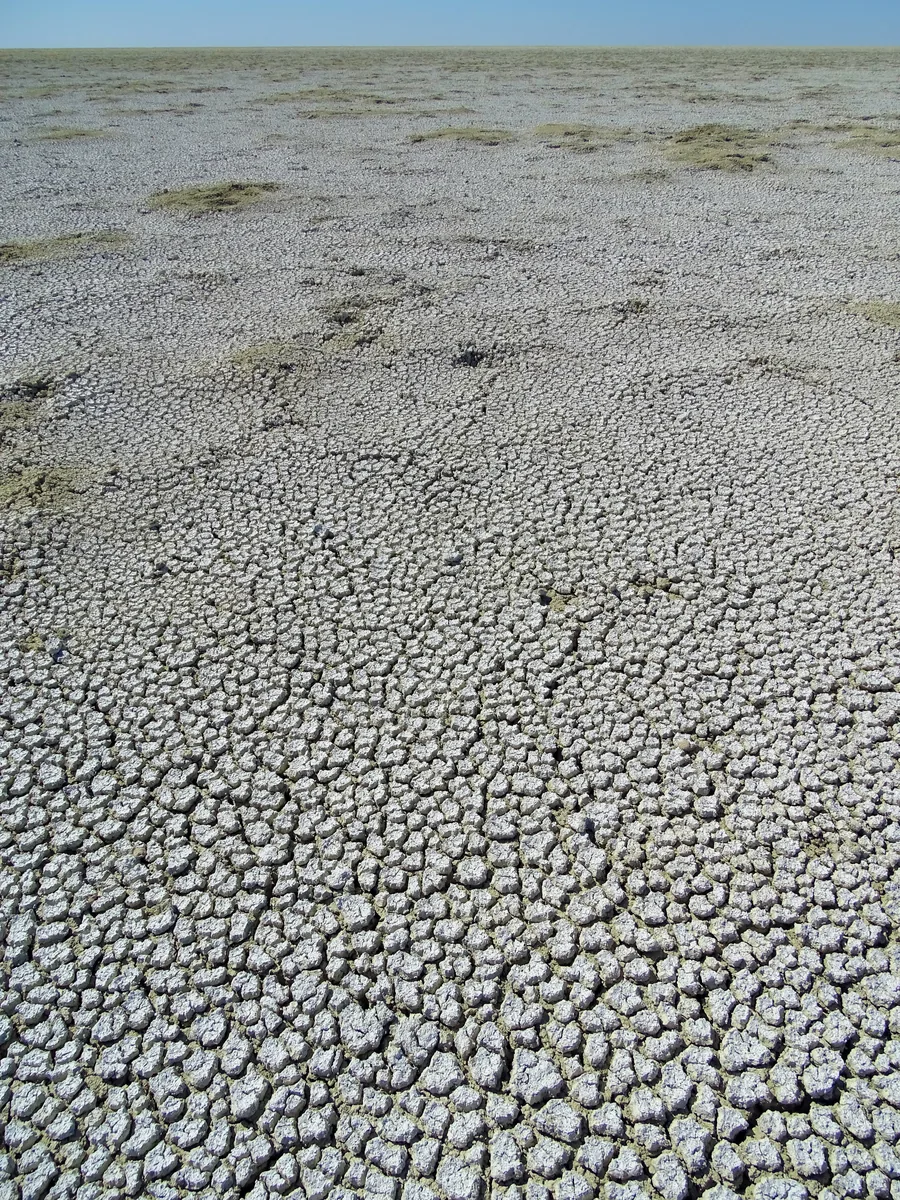
The pan is usually dry
The Etosha Pan is what remains of a lake once fed by the Kunene River. In most months it lies there as a white surface without vegetation; the name Etotha means “the place where nothing grows” in Oshindonga.
The drier it gets, the more the wildlife concentrates at the remaining springs and waterholes. The park is laid out for exactly this: the roads mainly connect watering places.
The smaller pan east of Namutoni holds water after rainfall. Then flamingos and waders arrive, and the park shows the side that matches its 407 recorded bird species.
The camps open at sunrise and close at sunset; the whole permitted driving day lies in between. In December it is much longer than in June, and the length of the day decides how far you get.
The area around Dolomite was closed for a long time, and according to the operator that is precisely why it is so rich in species; the absence of mass tourism is named explicitly as the reason.
Best months by the climate data: June and July. Average daytime highs of around 27 °C, lows of around 9 °C, hardly any precipitation a month. The wettest month is February (99 mm), the driest June (0 mm). The hottest month is October, with average highs of 36 °C.
5°15°25°35°
Jan3420
Feb3320
Mar3219
Apr3117
May3013
Jun279
Jul279
Aug3012
Sep3415
Oct3619
Nov3620
Dec3521
High °CLow °C
Daily highDaily lowPrecipitation
All monthly values as a table
Monthly averages 2001–2020, NASA POWER model
Month
High °C
Low °C
Precipitation mm
January
33.9
20.3
95
February
32.9
19.7
99
March
32.3
19.4
70
April
31.4
17.2
21
May
29.6
12.9
1
June
27.0
9.3
0
July
26.9
8.9
0
August
30.5
11.5
0
September
34.4
15.2
2
October
36.5
19.0
14
November
35.7
20.5
38
December
34.7
20.6
60
Year
400
Modelled values, not a weather station: NASA POWER (MERRA-2) for a grid cell of about 55 × 65 km around the map point Salvadora (19.03° S, 16.27° E), with an average cell elevation of about 1,110 m. Averages for 2001–2020. Higher ground and valleys can differ markedly.
02How to get there: around 500 kilometres (311 mi) from Windhoek
Etosha is almost always the first or last stop of a round trip through Namibia.
Via Outjo to the southern gate
From Hosea Kutako Airport near Windhoek, the usual route runs via Otjiwarongo and Outjo on the C38 to Ombika Gate near Okaukuejo. Outjo is the last small town with a supermarket and filling station before the park.
Coming from the north-east, you drive via Tsumeb to Von Lindequist Gate near Namutoni. This direction makes sense if the Caprivi or the eastern side of Etosha is on your itinerary.
Galton Gate opens up the long-closed western part, reached via Kamanjab. If you combine Damaraland and Etosha, it saves you the detour through the south.
Motorcycles are explicitly banned in all Namibian national parks, as are pets, hitchhikers and people riding on open load beds. A motorcycle tour of Namibia ends at the Etosha gate.
The park rules prohibit entry in an open vehicle or on the back of a truck without a cage or other effective protection. Licensed safari operators therefore use vehicles with a roof and side frames; for your own rental car, the rule is simply: keep it closed.
From Windhoek: three days in Etosha with lodge and game drives
Three days with a driver-guide from Windhoek: on day one to Okaukuejo with a first game drive, on day two a full safari day on the Etosha Pan and at the Okaukuejo waterhole, on day three a last game drive and the drive back to Windhoek.
Departure Pickup anywhere in Windhoek.
According to the inclusions list: park entry, accommodation subject to availability, breakfast and dinner, driver-guide and fuel; not included are drinks, flights, balloon or scenic flights and tips. The same list mentions a “rental vehicle with all risk insurance (according to rental conditions)”; clarify before booking how that fits a guided tour. French-speaking guide on request, minimum age 9 years, passport details required when booking. Free cancellation up to 24 hours in advance.
View tour ↗Ad · partner link · checked 26 Sep 2026
Ad · we may earn a commission if you book through this partner link. Offer details checked 26 Sep 2026. See official ticket information.
03Tickets & entrance fees: N$280 per person per day, N$60 per car
Charged for every day or part of a day, not per stay.
The ministry’s fee table, valid since 1 April 2026, lists Etosha in one group with Namib-Naukluft, Skeleton Coast and Waterberg. Foreign adults aged 16 and over pay N$140 park entry plus a N$140 conservation fee, N$280 in total. Children aged 9 to 15 pay N$180; entry is free up to the age of 8.
Until 31 March 2026: N$150; since 1 April 2026: N$280 per foreign adult per day, an increase of about 87%. According to the 2025 fees brochure, the old rate was made up of N$100 park entry and a N$50 conservation fee; a vehicle with up to ten seats cost N$50 instead of today’s N$60.
A vehicle with up to ten seats costs N$60, with 11 to 25 seats N$150, with 26 to 50 seats N$600 and above that N$1,000. A couple from abroad in a rental car therefore pays N$620 a day.
The conditions in the 2025 fees brochure are clear: the permit is valid for the day, fees are payable for each day, for visitors and vehicles alike, and the minimum charge is 24 hours. If you stay four days, you pay four times.
Citizens of SADC countries pay N$180, Namibians N$60. Tiered fees by origin have long been common in Namibia; it works like the surcharge for international visitors in US national parks, only structured the other way round.
You pay at the barrier. If you arrive in a rental car with only a credit card, bring Namibian dollars; exchange rates fluctuate, and NWR shows the daily rate on its website.
All accommodation in the park belongs to the state-owned Namibia Wildlife Resorts.
Three large, three small
Okaukuejo, Halali and Namutoni are the classic camps with chalets, rooms, campsite, restaurant, shop and pool. Dolomite and Onkoshi are small and upmarket; Olifantsrus is a campsite only, with ten pitches.
Fifteen units on a spit of land on the edge of the pan, far from the public self-drive routes. The operator points out that electricity runs around the clock, but interruptions are to be expected when the camp is full.
The camp lies in a previously closed area in the west and makes this part of the park accessible to a limited number of guests. You stay in permanent luxury tents with a raised view over the plain.
On 25 September 2026, the NWR website stated that the booking system was currently unavailable and that enquiries should be sent to reservations by email. If you want to sleep in the park, ask early and in writing.
Private lodges lie just outside the gates. Inside the park, however, there is only NWR: if you want to experience the camp waterholes at night, there is no way around this one operator.
They are set out as Part F of the park regulations on a single sheet.
Stay in your vehicle
You may only leave a camp in a vehicle, and outside a camp or a designated stopping place you may neither get out nor lean out of the window. This is the most important rule in the park.
Leaving a camp before sunrise or arriving after sunset is prohibited, as is crossing the park boundaries between sunset and sunrise. If you misjudge the time, you face a closed gate.
Killing, injuring or needlessly disturbing wild animals is prohibited, as is picking or digging up plants. Noise that disturbs others is also banned, including at the waterholes by the camps.
The regulations require you to report your arrival in the park without delay at the nearest park office. In practice this happens when the permit is issued at the gate.
06Frequently asked questions: Etosha National Park
How much is the Etosha National Park entrance fee for international visitors?
N$280 per foreign adult per day: N$140 park entry plus a N$140 conservation fee, valid since 1 April 2026; until 31 March 2026 it was N$150. Children aged 9 to 15 pay N$180; entry is free for children up to 8. On top of that comes N$60 for a vehicle with up to ten seats. A couple in a rental car therefore pays N$620, for every day in the park, not once.
No. All Namibian national parks issue the permit on arrival at the gate; there is no advance booking system for entry. Important: the state-owned hotel company Namibia Wildlife Resorts does not issue permits, so accommodation and the day permit are two separate things.
Yes, Etosha is a self-drive park. But fixed rules apply: drive only on signposted roads, do not leave the vehicle outside camps and designated stopping places, and do not lean out of the window. Leaving a camp before sunrise or arriving after sunset is prohibited. Motorcycles are banned in all Namibian national parks.
Not on your own. The park regulations prohibit leaving a camp before sunrise or arriving after sunset, and crossing the park boundaries between sunset and sunrise. You can see the park at night in two ways: on a camp’s guided night drive, or at the floodlit waterhole of Okaukuejo, Halali or Namutoni, where you sit inside the fence.
Four of them. Lion, leopard, elephant and rhino live here, the Cape buffalo does not. The environment ministry’s page, however, lists lion, rhino, elephant and giraffe as “four of the Big Five”; the giraffe is not part of that list. The missing animal is the buffalo.
In the dry season. The less surface water there is, the more the wildlife concentrates at the springs and waterholes along the park roads. After rainfall, Fisher's Pan near Namutoni fills up; then flamingos and waders arrive, and the park shows its birding side.
In one of the six camps of the state-owned Namibia Wildlife Resorts: Okaukuejo, Halali and Namutoni with chalets, rooms and a campsite; Dolomite and Onkoshi, small and upmarket; and Olifantsrus, a campsite only with ten pitches. There is no second operator in the park. On 25 September 2026, NWR noted that the online booking system was currently unavailable and that enquiries were handled by email.
Around 500 kilometres (311 mi) to Ombika Gate in the south, via Otjiwarongo and Outjo. That is a full day’s drive, not a day trip. Outjo is the last small town with a supermarket and filling station before the park. Coming from the north-east, you take Tsumeb and Von Lindequist Gate; for the western part there is Galton Gate from Kamanjab.
22,935 square kilometres (8,855 sq mi): larger than Slovenia and larger than the German state of Hesse. The park authority notes that the park has been reduced considerably since it was proclaimed in 1907 and is still larger than several European countries.
In cash at the gate. You pay at the barrier when the day permit is issued; there is no advance payment. If you arrive with only a credit card, bring Namibian dollars. NWR shows the daily exchange rate on its website.
Researched 25 Sep 2026. Not a live status. Dates apply only to the year stated. A successful automatic fetch is not an editorial confirmation; outdated automatic values are hidden and replaced by the source link.