
Kornati National Park: landscape and geology
What makes the park special, based on information from the park authority.
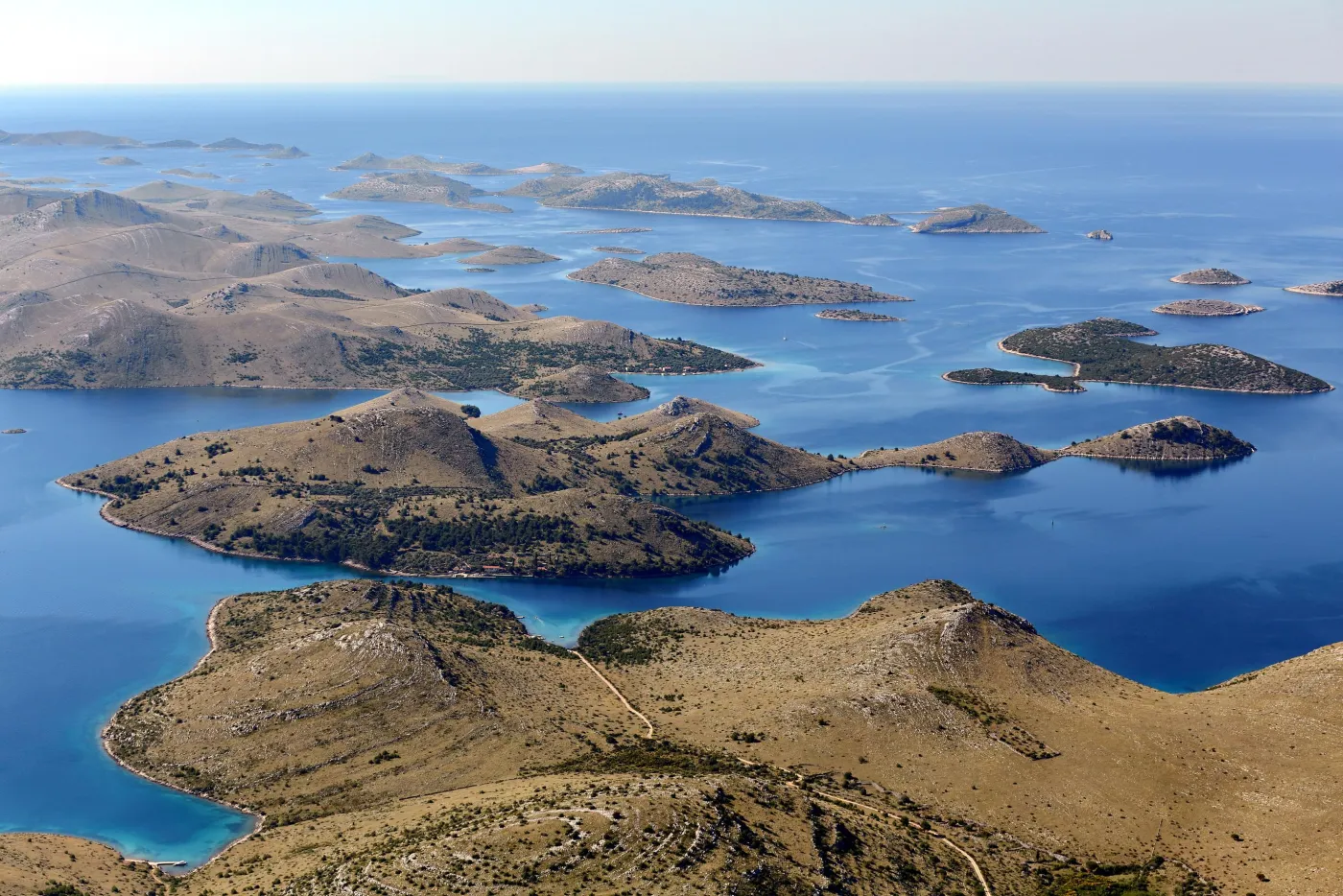
Kornati is mostly sea. Of the park's 217 square kilometres, 167 lie under water; above them rise 89 islands, islets and reefs.
Because of their landscape, their landforms, the heavily indented coast and the rich underwater life, the islands were declared a national park in 1980. The park's coastline measures 238 kilometres. The highest point is Metlina on Kornat, at 237 metres (778 ft).
The oldest rocks of the Kornati are dolomites and limestones laid down on the floor of the Tethys Sea about a hundred million years ago; the limestones are full of fossil shells. Because the African plate has been moving north and diving under Eurasia ever since, the southern edge of Eurasia has kept folding and faulting. Towards the end of the Cretaceous, the Kornati area rose from the sea and turned to karst.
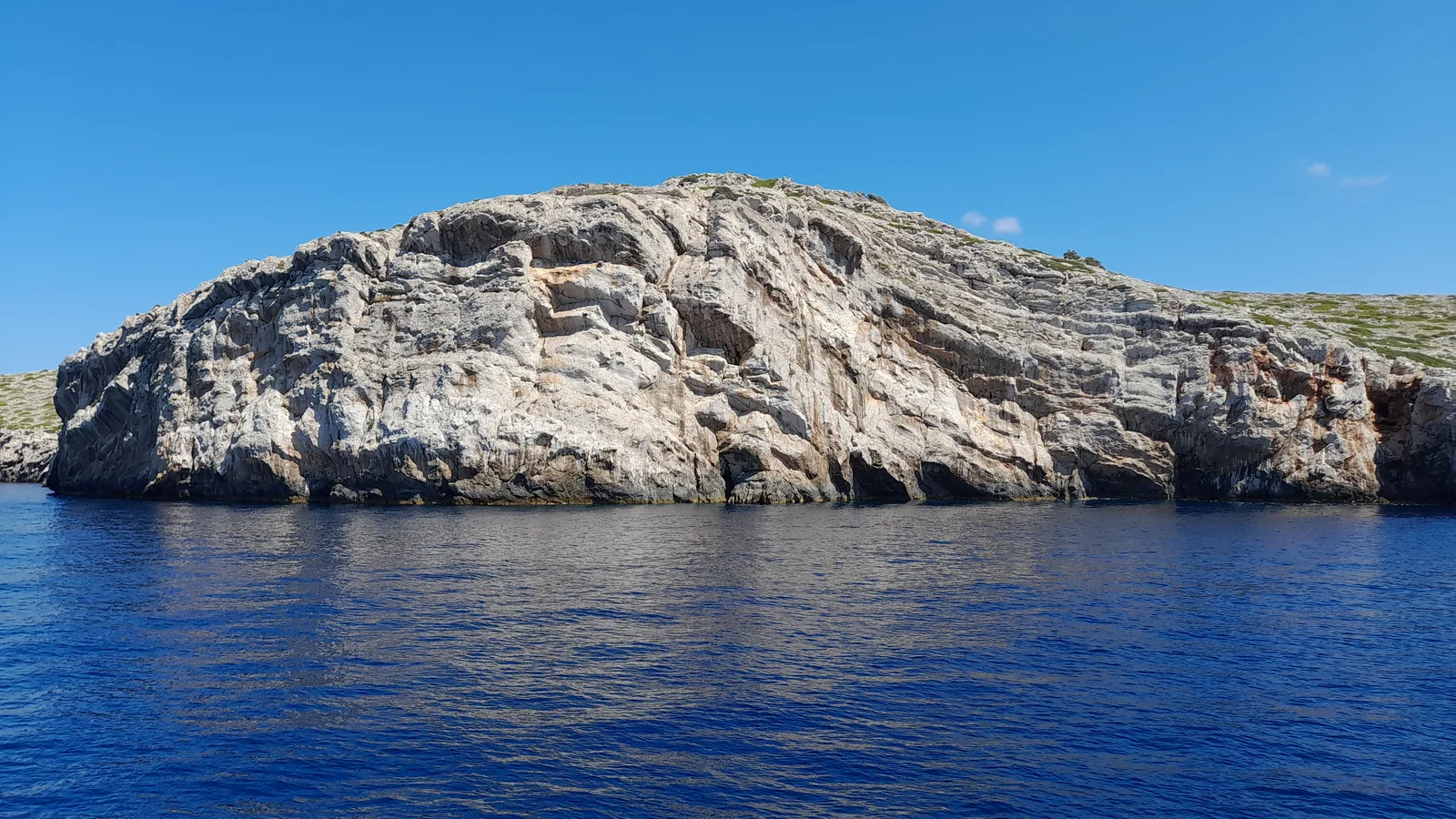
The most visible result are the famous "crowns", the cliffs on the open-sea side of the outer chain of islands. They are parts of a single large fault plane: at Piškera it drops more than 90 metres below the sea, at Kolobučar it rises more than 80 metres above it. The longest crown on a single island, 1,530 metres, is on Mana; together the crowns stretch for more than twelve kilometres.
Under water the park authority counts 353 species of algae, three flowering plants and about 850 animal species, including 185 species of fish. The seagrass meadows of Posidonia oceanica are a priority Natura 2000 habitat. On land about 650 species of vascular plants are known; over centuries the former holm oak forests were turned into karst pasture, whose 330 kilometres of dry-stone walls still run across the islands.
Park authority: list of islands and key figures ↗
The park in numbers
- National park since
- 1980
- Park area
- 217 km² (84 sq mi)
- of which sea
- 167 km² (64 sq mi)
- Land area
- 50 km² (19 sq mi)
- Islands, islets and reefs
- 89
- Length of coastline
- 238 km (148 mi)
- Highest point
- Metlina on Kornat, 237 m (778 ft)
- Highest crown
- 82 m (269 ft) above the sea (Kolobučar)
- Deepest crown
- 92 m (302 ft) below the sea (Piškera)
- Dry-stone walls
- 330 km (205 mi)
- Marine animals
- about 850 species, including 185 species of fish