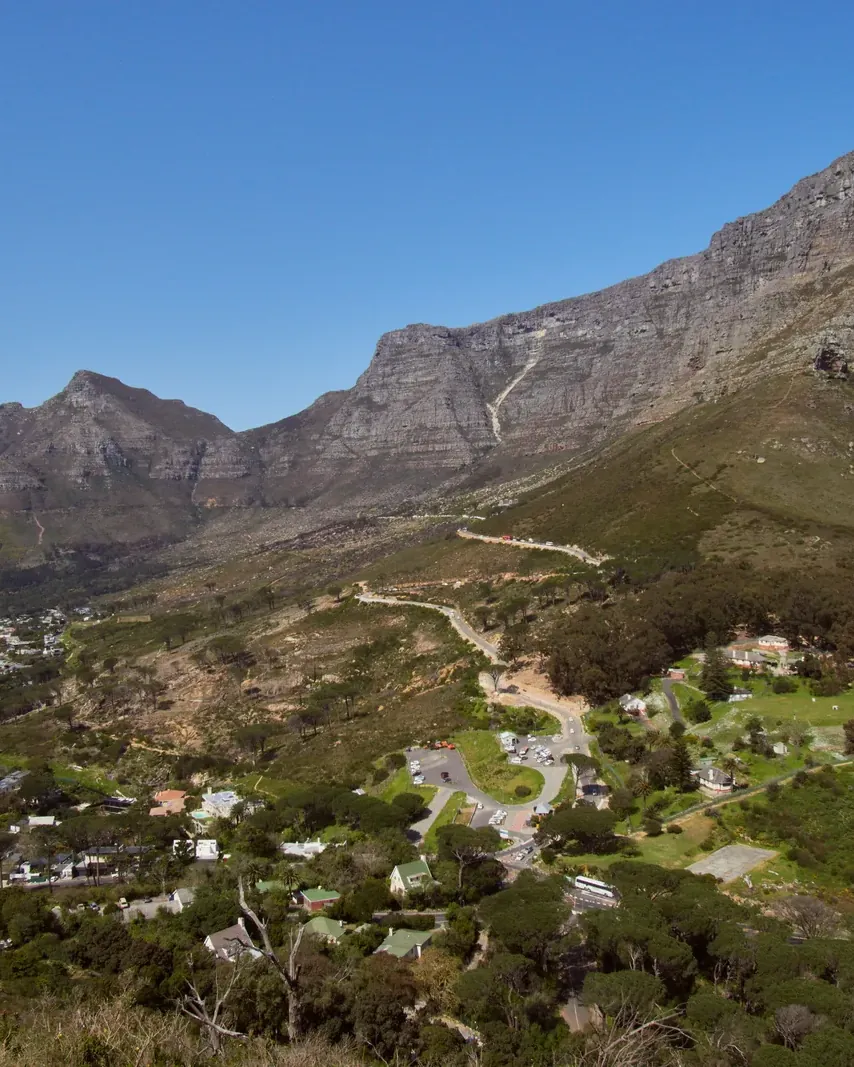

Table Mountain National Park: landscape and origins
The Table Mountain cable car turns once around itself on the way up — and carries the summit’s water in its floor.
The Table Mountain Aerial Cableway Company opened its cableway on 4 October 1929, after two years of construction. Before that, a rack railway and a funicular through Platteklip Gorge had been planned, stopped by the Anglo-Boer War of 1880 and the First World War. The cars of 1958 held 23 people and took eight minutes; those of 1974 carried 28.
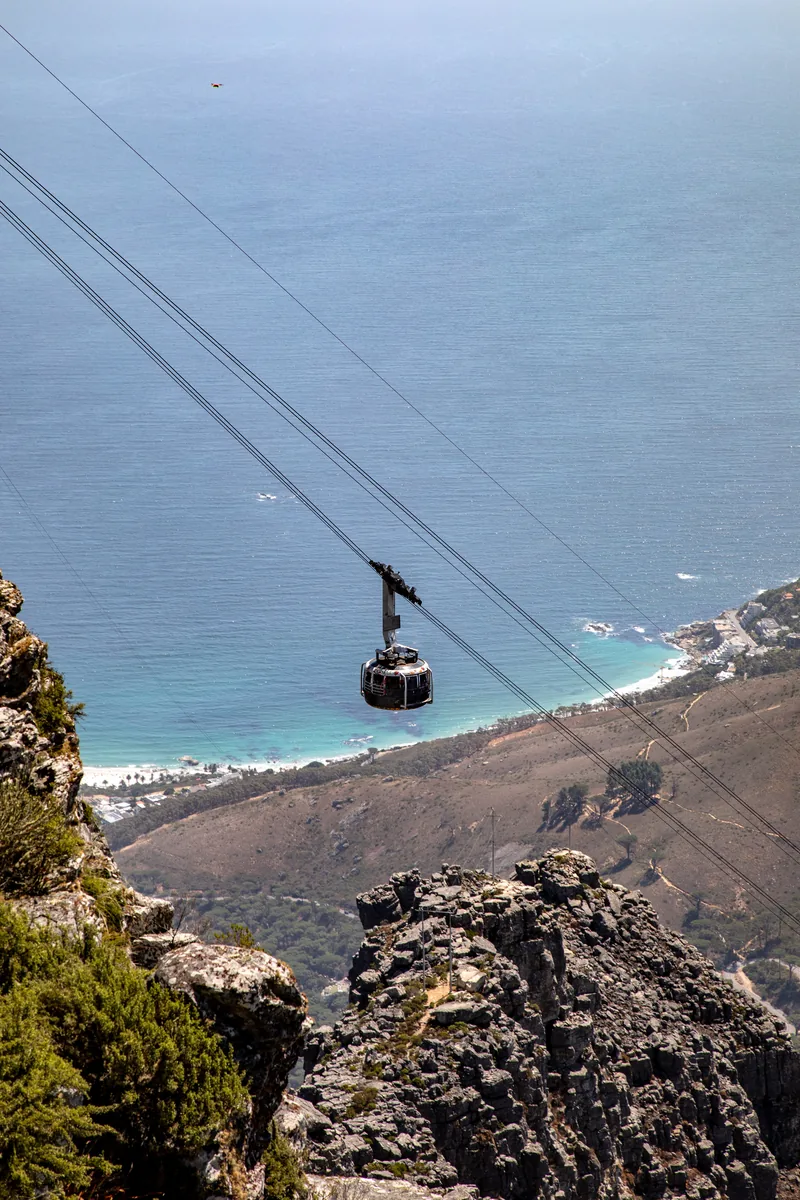
Since 4 October 1997 round cars with a rotating floor, the “Rotair”, have been running. Each holds 65 people, and the system carries about 800 people per hour at up to 10 metres per second on cables 1.2 kilometres (0.75 mi) long. According to the operator it is the only rotating cable car system in Africa; similar cars run on Titlis and in Palm Springs.
The cars are round so they sit steadily in the wind, and run on a double cable. In its floor each carries a tank of 3,000 litres of water: ballast on windy days and the fresh water supply at the top. The cables hang from counterweights of 134 tonnes each.
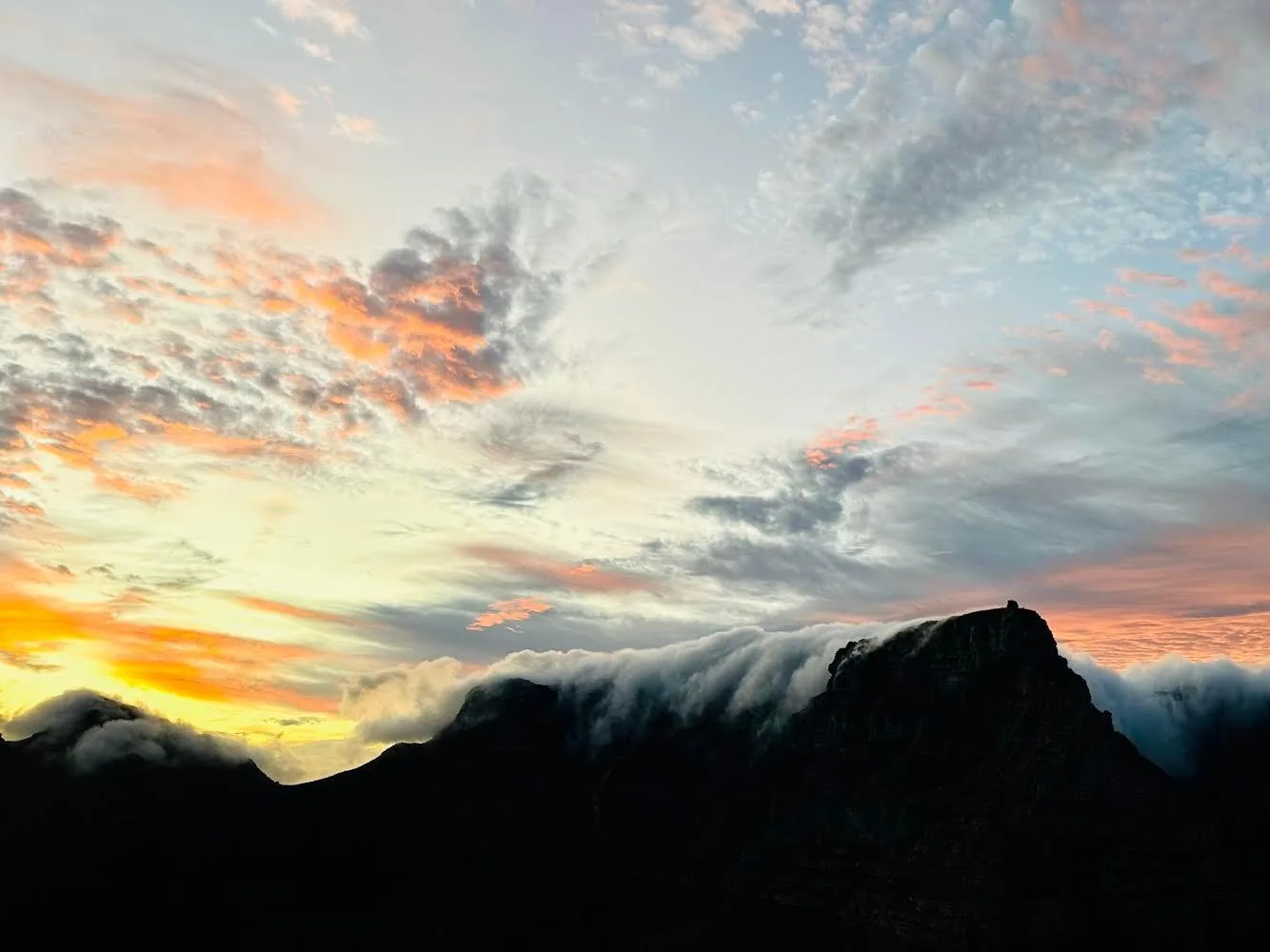
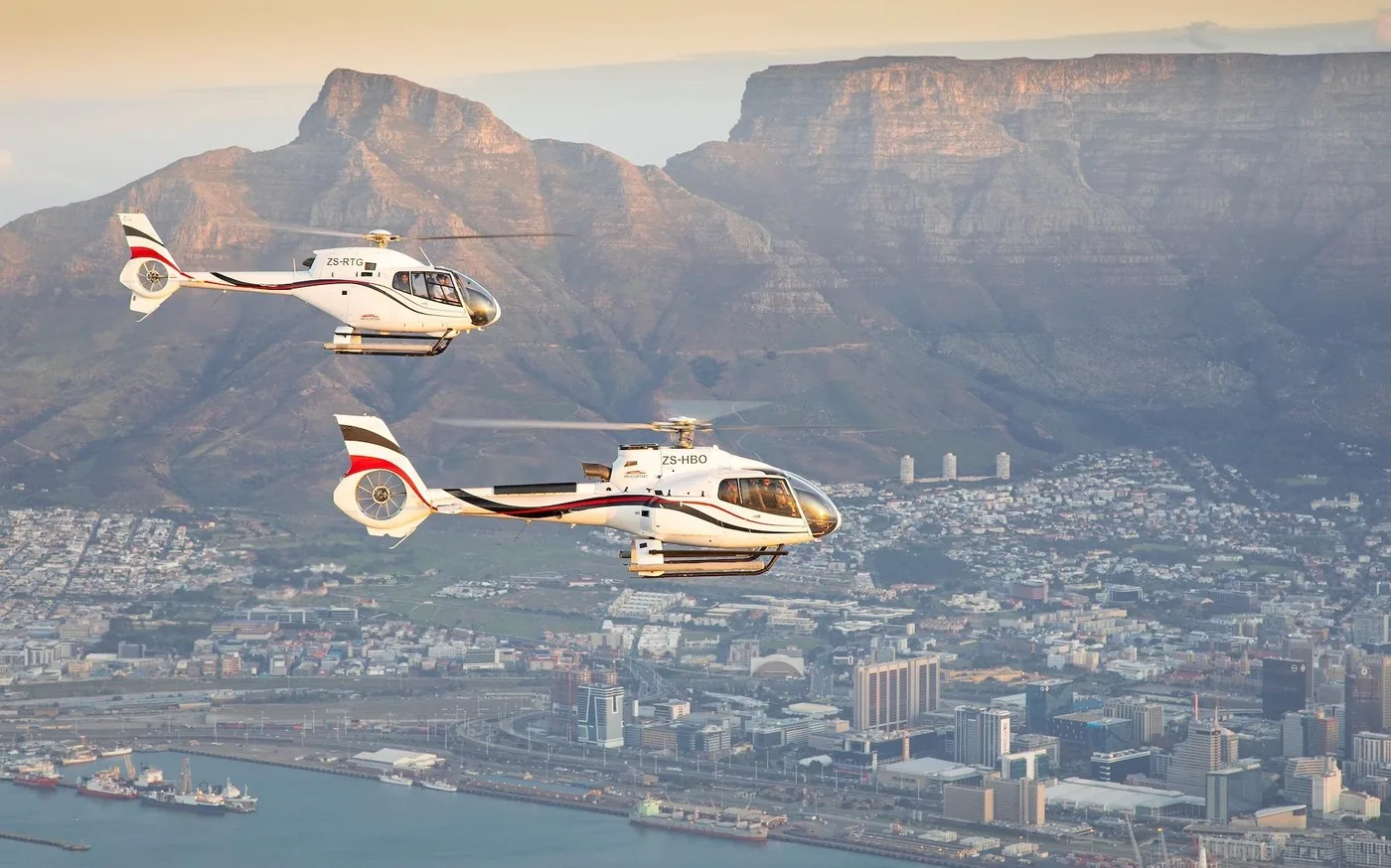
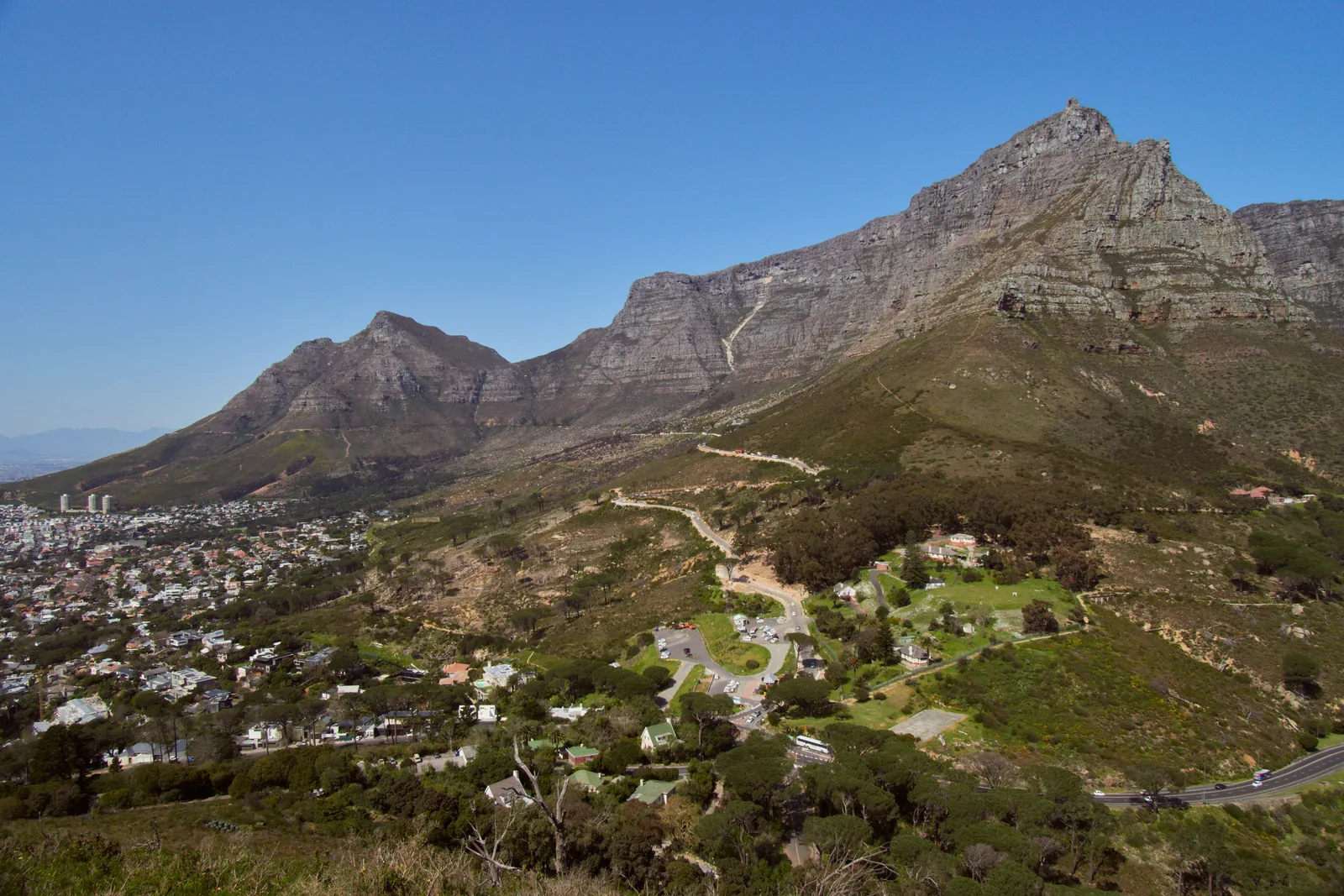
The operator gives the mountain’s highest point, Maclear’s Beacon, as 1,085 metres (3,560 ft); SANParks gives 1,088 metres. If the hooter sounds at the top, high winds are approaching and the Upper Station will close — go back to the station straight away.
Table Mountain Aerial Cableway: information guide (PDF) ↗
The park in numbers
- Opened
- 4 October 1929
- Rotating cars since
- 4 October 1997
- Ride
- just over 5 minutes
- Cable length
- 1.2 km (0.75 mi)
- Car capacity
- 65 people
- Capacity
- about 800 people per hour
- Top speed
- 10 m/s
- Payload per car
- 5,200 kg
- Water tank in the floor
- 3,000 litres
- Counterweight
- 134 t each
- Highest point of the mountain
- 1,085 m (3,560 ft), Maclear’s Beacon