National Parks Atlas
Map

00 · Wildlife migration in the Serengeti and Maasai Mara · Serengeti-Mara ecosystem · Tanzania and Kenya

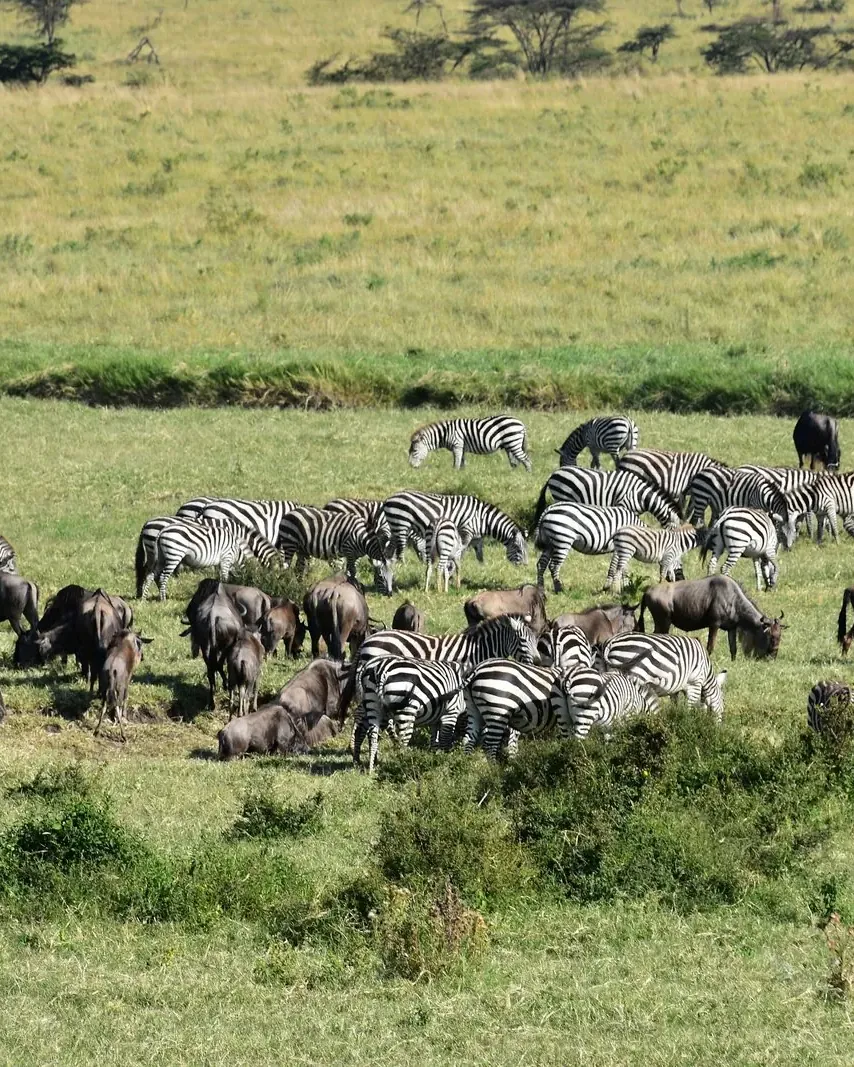
Great Migration

The herds follow the rain, not the calendar.

Park feesGetting there & parkingOpening times

View plan

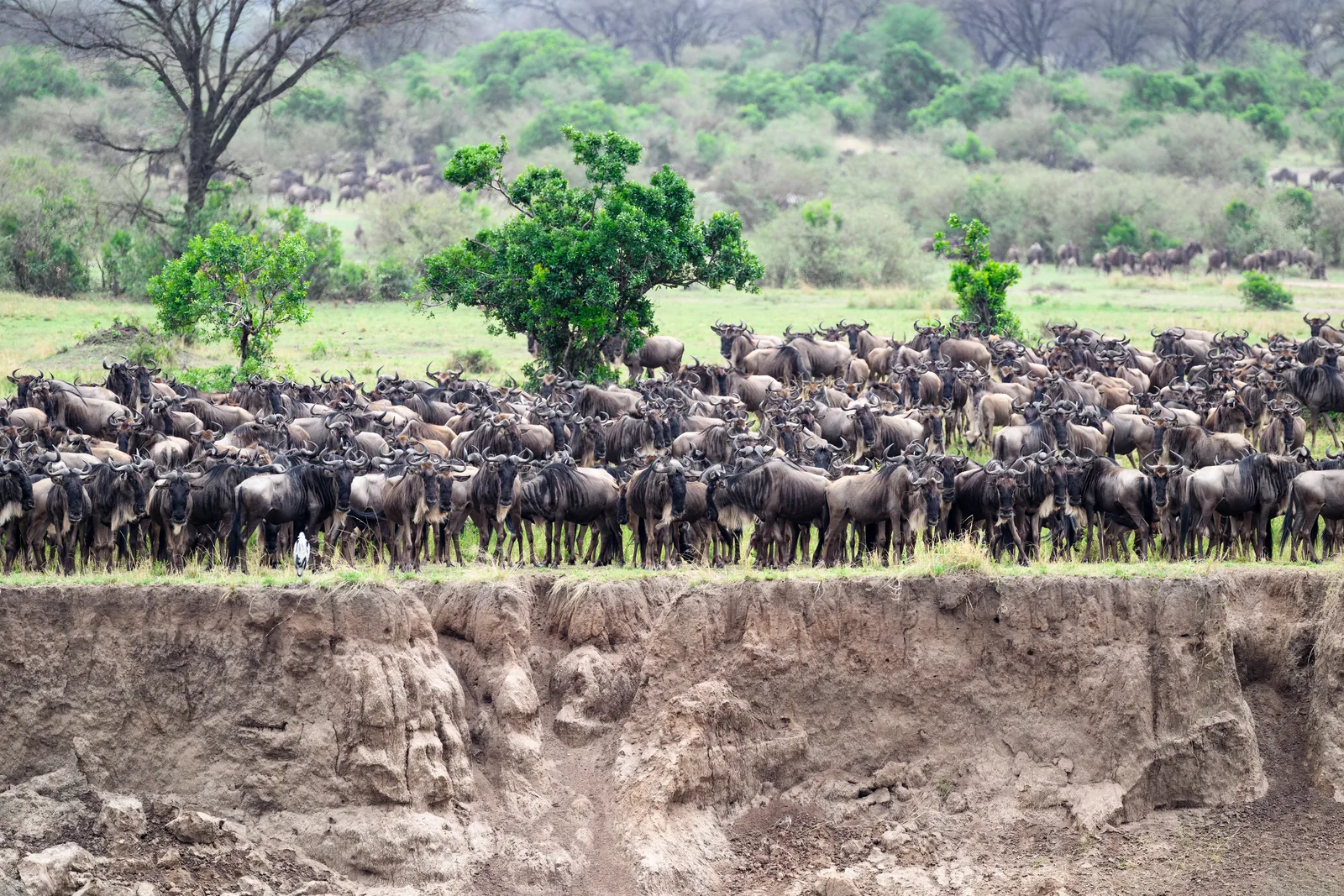
Photo: Richard Mortel ↗ · CC BY 2.0 ↗

2 millionWildebeest (TANAPA)

more than two million, plus zebras and gazelles

1,800 kmCircuit

about 1118 mi, through the Serengeti and Maasai Mara

500,000Calves

over 500,000 in 2 to 3 weeks, January to March

The Great Migration: a cycle, not a date

The months are the park authorities’ rough guide.

Every year, according to Tanzania National Parks (TANAPA), over 2 million wildebeest, together with hundreds of thousands of zebras and gazelles, move on a circuit of about 1,800 km (1118 mi) through the Serengeti in Tanzania and the Maasai Mara in Kenya. The migration goes on all year, following the rains and fresh grass; when the herds are where can shift.

TANAPA describes the cycle like this: calving in the south from January to March, moving through the central Serengeti in April and May, crossing the Grumeti River in the west in June and July, crossing the Mara River in August and September, returning through the north in October and November. In December the herds reach the southern plains again.

The authority advises staying flexible, booking early and choosing experienced guides who know where the herds are.

TANAPA: The Great Migration of Wildebeest, annual cycle (accessed 3 October 2026) ↗

In numbers

Wildebeest (TANAPA)
over 2 million
Circuit
about 1,800 km (1118 mi)
Calves
over 500,000 in 2 to 3 weeks
Calving in the south
January to March
Central Serengeti
April and May
Grumeti in the west
June and July
Mara crossings
August and September
Return through the north
October and November
Ndutu (NCAA)
late December to April
Mara Triangle (Mara Conservancy)
June/July to November

Serengeti National Park profile

01 · Plan

Park fees

You reach the migration via Arusha in Tanzania or Nairobi in Kenya.

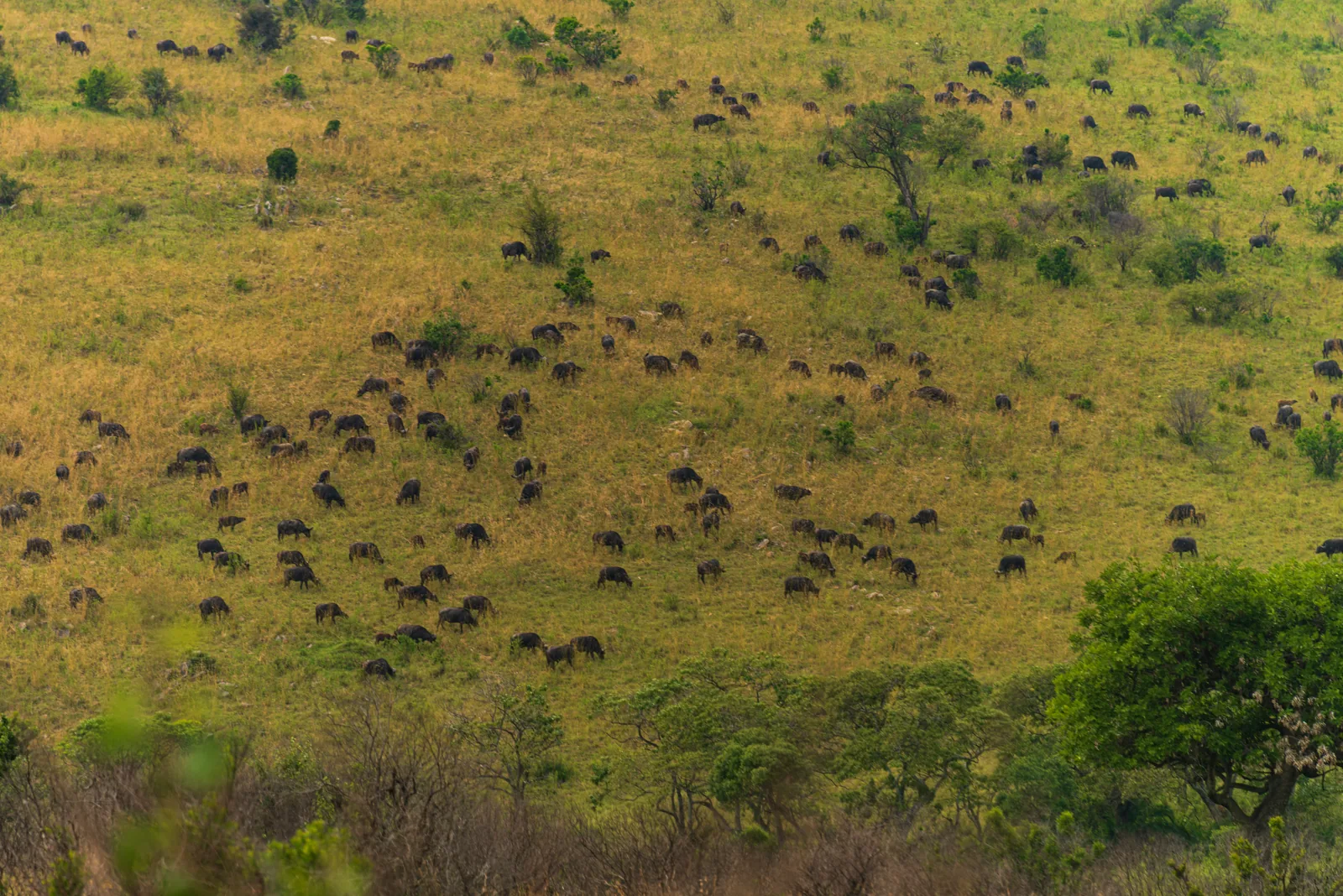
Photo: Charles J. Sharp ↗ · CC BY-SA 4.0 ↗

Getting there

You reach the migration via Arusha in Tanzania or Nairobi in Kenya.

Price list

checked 3 Oct 2026

Serengeti and Maasai Mara park fees

Two countries, two authorities, two tickets.

Serengeti daily entry for visitors from outside East Africa
ItemPrice
Age 16 and over, peak season 16 May to 14 March70 USD
Age 16 and over, low season 15 March to 15 May60 USD
Children aged 5 to 1520 USD
Children under 5free

Per person per day; the tariff list shows amounts excluding VAT. The list is headed 2023/2024; check with TANAPA before you travel. TANAPA: tariff list 2023/2024 (PDF) (accessed 3 October 2026) ↗

Serengeti: two seasons

Visitors aged 16 and over pay 70 USD per day from 16 May to 14 March and 60 USD from 15 March to 15 May; children aged 5 to 15 pay 20 USD. The tariff list is headed 2023/2024.

TANAPA: tariff list 2023/2024 (PDF) (accessed 3 October 2026) ↗

Mara Triangle: double from July

Adult visitors from outside East Africa pay 100 USD per day from 1 January to 30 June and 200 USD from 1 July to 31 December, the migration season. Children aged 9 to 17 pay 50 USD; up to age 8 it is free.

Mara Conservancy: conservation fees, fee table (file name 2024) (accessed 3 October 2026) ↗

A Mara ticket lasts 12 hours

The Mara Triangle ticket is valid from 6:00 to 18:00 whatever time you enter and does not carry over the night. The Conservancy does not take cash, only M-Pesa and credit card.

Mara Conservancy: conservation fees, fee table (file name 2024) (accessed 3 October 2026) ↗

Great Migration month by month

The park authority’s calendar, with its own warning that timing can shift.

02 · On site

Where to see the Great Migration

Where the herds can be seen, and why a crossing cannot be scheduled.

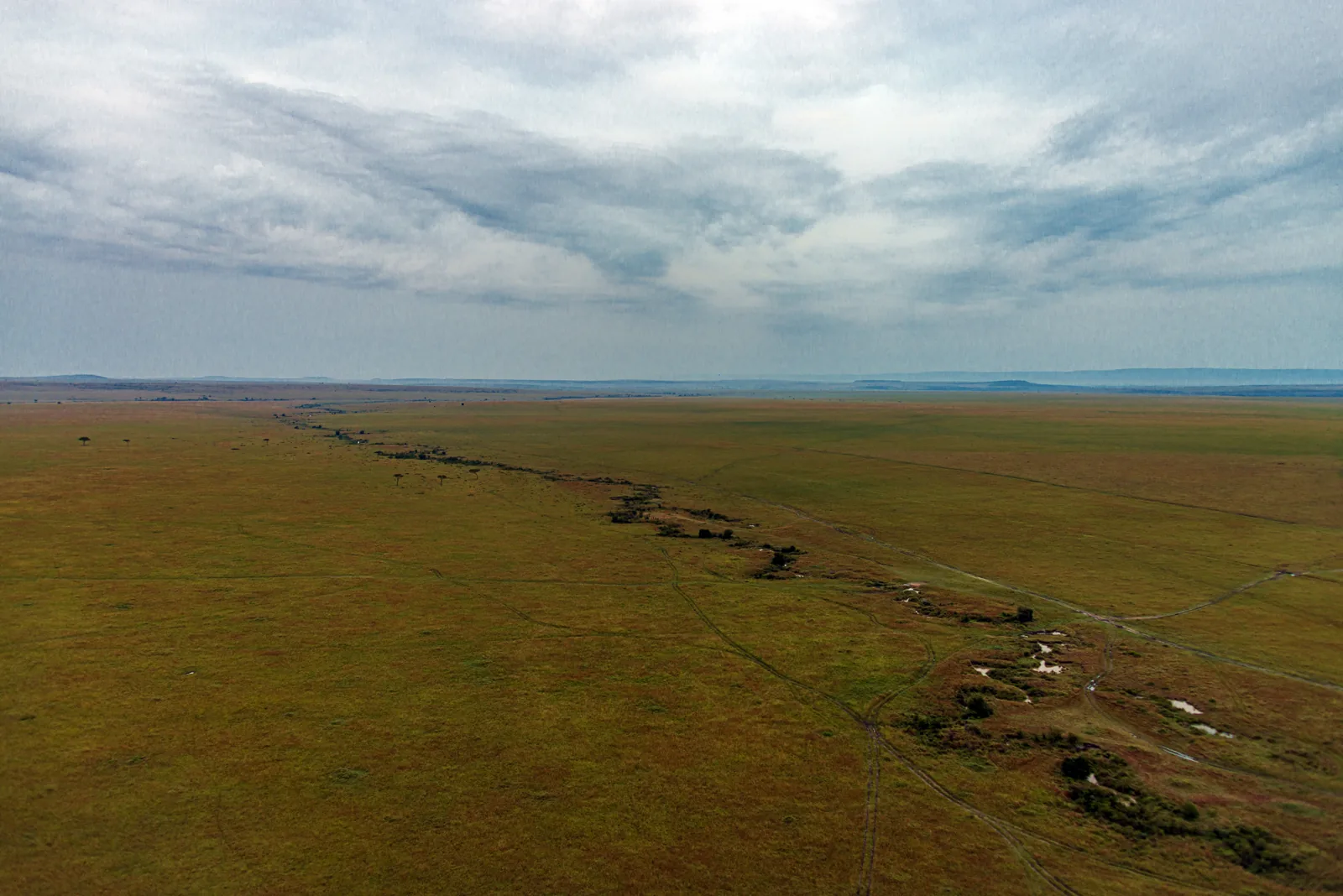
Photo: Eric Kilby ↗ · CC BY-SA 2.0 ↗

„Timing can shift. The herds follow the rain.“

Tall clouds over the southern Serengeti, where the wildebeest calve.

Where to see the Great Migration

Where the herds can be seen, and why a crossing cannot be scheduled.

03 · Nearby

Onward from here

Most of the migration takes place in Serengeti National Park; in the second half of the year the herds cross into Kenya’s Maasai Mara. Fees, gates and lodging are in the park profiles.

Photo: Richard Mortel ↗ · CC BY 2.0 ↗

Map

Great Migration on the terrain map

Five points, each verified against an OpenStreetMap object. All points are on the Serengeti National Park map, with details and photos.

Show on mapSerengeti National Park map · 3D terrain

Field book · Great Migration

checked 3 Oct 2026

01Good to know

Rules at the crossings, and why they matter.

Stay in the vehicle

At a crossing, stay inside the vehicle, keep quiet, do not get too close to the crossing point and never block the animals. Getting out is only allowed at designated points; standing on the roof and sitting in the window are also banned.

Mara Conservancy: The Greatest Show on Earth, wildebeest migration in the Mara Triangle with FAQ (accessed 3 October 2026) ↗

Why distance matters

Harassed wildebeest cross at bad spots. The Conservancy reports crossings in which hundreds died after vehicles pushed them towards banks that were too steep.

Mara Conservancy: The Greatest Show on Earth, wildebeest migration in the Mara Triangle with FAQ (accessed 3 October 2026) ↗

No timetable

TANAPA describes the migration as year-round and unpredictable: timing can vary. Stay flexible, book early and choose experienced guides.

TANAPA: The Great Migration of Wildebeest, annual cycle (accessed 3 October 2026) ↗

02Great Migration: frequently asked questions

Short answers, with sources.

When is the best time to see the Great Migration?

It depends on what you want to see: calving in the south from January to March, the Grumeti River in the west in June and July, Mara River crossings in August and September. The migration runs all year, and timing can shift.

TANAPA: The Great Migration of Wildebeest, annual cycle (accessed 3 October 2026) ↗

When do the wildebeest cross the Mara River?

According to TANAPA, in August and September on the way into Kenya’s Maasai Mara. In October and November the herds return through the north.

TANAPA: The Great Migration of Wildebeest, annual cycle (accessed 3 October 2026) ↗

Where can you see the calving season?

On the Ndutu plains in the Ngorongoro Conservation Area on the edge of the southern Serengeti. The NCAA names late December to April as the best time.

Ngorongoro Conservation Area Authority: Ndutu Plains, best time for the migration (accessed 3 October 2026) ↗

How many animals take part in the migration?

TANAPA gives over 2 million wildebeest plus hundreds of thousands of zebras and gazelles, on a circuit of about 1,800 km (1118 mi).

TANAPA: The Great Migration of Wildebeest, annual cycle (accessed 3 October 2026) ↗

When is the migration in the Maasai Mara?

According to the Mara Conservancy, it usually starts sometime in June or July and lasts until November.

Mara Conservancy: The Greatest Show on Earth, wildebeest migration in the Mara Triangle with FAQ (accessed 3 October 2026) ↗

How much is the Serengeti entrance fee?

For visitors aged 16 and over from outside East Africa, 70 USD per day from 16 May to 14 March and 60 USD from 15 March to 15 May, excluding VAT according to the tariff list.

TANAPA: tariff list 2023/2024 (PDF) (accessed 3 October 2026) ↗

03Sources and last checked

Operator, municipality and park authority, each fact cited individually.

Places on the map

  • Mara River at Kogatende Crossings in the northern Serengeti

    TANAPA says the herds cross the Mara River in the northern Serengeti in August and September and names the north as a viewing area from August to November.

    Location source ↗
  • Lake Masek Calving grounds near Ndutu

    Lake on the edge of the Ndutu plains in the Ngorongoro Conservation Area. According to the NCAA, the best time for the migration there is late December to April.

    Location source ↗
  • Sand River Arrival in the Maasai Mara

    According to the Mara Conservancy, the first herds appear here in the Mara before heading for the Mara River.

    Location source ↗
  • Lookout Hill Hill east of the Mara River

    According to the Mara Conservancy, the herds pass Lookout Hill on their way down to the Mara River.

    Location source ↗
  • Mara River Crossings at the Mara Triangle

    Near Purungat Bridge, the entrance to the Mara Triangle. Crossings are frequent but hard to predict.

    Location source ↗
  1. TANAPA: The Great Migration of Wildebeest, annual cycle (accessed 3 October 2026) ↗
  2. Mara Conservancy: The Greatest Show on Earth, wildebeest migration in the Mara Triangle with FAQ (accessed 3 October 2026) ↗
  3. Ngorongoro Conservation Area Authority: Ndutu Plains, best time for the migration (accessed 3 October 2026) ↗
  4. Ngorongoro Conservation Area Authority: gates and opening hours (accessed 3 October 2026) ↗
  5. TANAPA: tariff list 2023/2024 (PDF) (accessed 3 October 2026) ↗
  6. Mara Conservancy: conservation fees, fee table (file name 2024) (accessed 3 October 2026) ↗
  7. Mara Conservancy: driving to the Mara Triangle (accessed 3 October 2026) ↗
  8. Mara Conservancy: flying to the Mara Triangle (accessed 3 October 2026) ↗
  9. OpenStreetMap: airstrips Seronera (node 538901795), Lobo (way 30802006), Kogatende (way 84607970), Kirawira (way 1338353629), Ndutu (node 538901537) (accessed 3 October 2026) ↗

How current is this information?

Researched 3 Oct 2026. Not a live status. Prices, timetables and opening hours change; please check with the operator before you travel.

Current information from the operator ↗

Image and map credits

Location sources: every point on the map links to the OpenStreetMap object its coordinate comes from. Markers do not imply that access is permitted.

End of the field book · Park authority ↗